← Outdoor Survivalist Trainer Your area

Trapping and fishing · Trapping and catching food course

Skin, gut and cook small game

The manuals' order: bleed, skin, gut, inspect, cook. Small animals are easier and more plentiful than big ones, so this lesson follows a rabbit or squirrel-sized animal and notes where a deer differs. This is knowledge for a real emergency; outside one, game laws and seasons apply.

Why this matters

The survival manual says to put your effort into small animals unless you have a real chance at big game. Small animals are more plentiful and much easier to prepare. It also warns that poor cleaning or storage can ruin meat you worked hard for, which is why the order here matters: bleed, skin, gut, check, cook.

The winter survival handbook adds that wild animals can carry diseases, some of which you can catch while handling the animal. Working fast and clean, keeping gut contents off the meat, and cooking it all the way through are the protection. This is knowledge for a real emergency; outside one, your state's hunting rules and seasons apply.

What you need

  • A sharp knife. There is no good way to do this without a blade.
  • Water to wash the meat and your hands, ideally a stream.
  • Gloves if you have them, and never with open cuts on your hands uncovered.
  • A fire for cooking, and cord to hang meat in the shade.

Step by step

  1. Bleed the animal by cutting its throat. If you can, work near a stream so you can wash the meat and your hands. The manuals say to dress game (clean it) quickly. Water close by lets you wash off anything that spills and wash your hands as you go. The winter survival handbook adds that an animal with fleas should go straight into cool water until the fleas are washed off or dead.
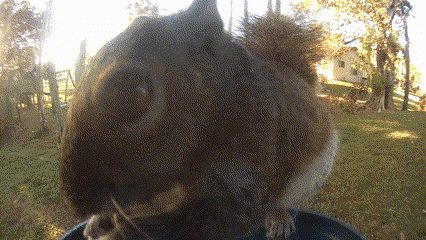
    An eastern gray squirrel in fallen leaves
    Gray squirrels are common small game
  2. Lay it belly up. Slip the knife under the skin with the blade turned up, so you cut hide and not hair or gut, and split the hide from throat to tail, cutting around the sex organs and anus. Turning the blade up means the sharp edge faces out, toward the hide, so only the hide gets cut. You did it right when the cut is clean, there is no hair on the meat, and the thin belly wall underneath is not torn.

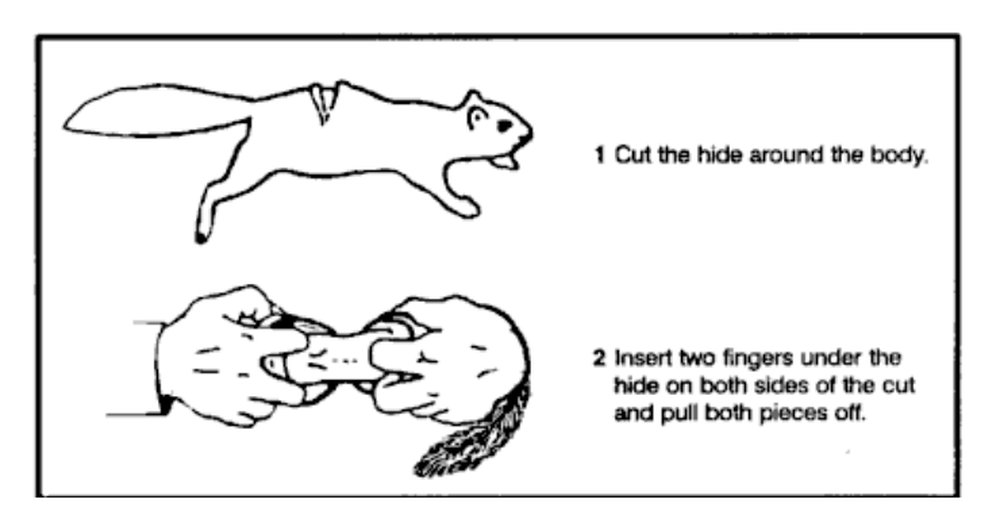
  3. Small animal: cut the hide all the way around the middle of the body, push two fingers under the hide on each side of the cut, and pull the two halves off toward the head and tail like a sweater. Done right, the hide comes off in two pieces, one toward the head and one toward the tail, and the meat stays clean.

    Drawing of cutting the hide around a small animal and pulling it off
    Skinning a small animal
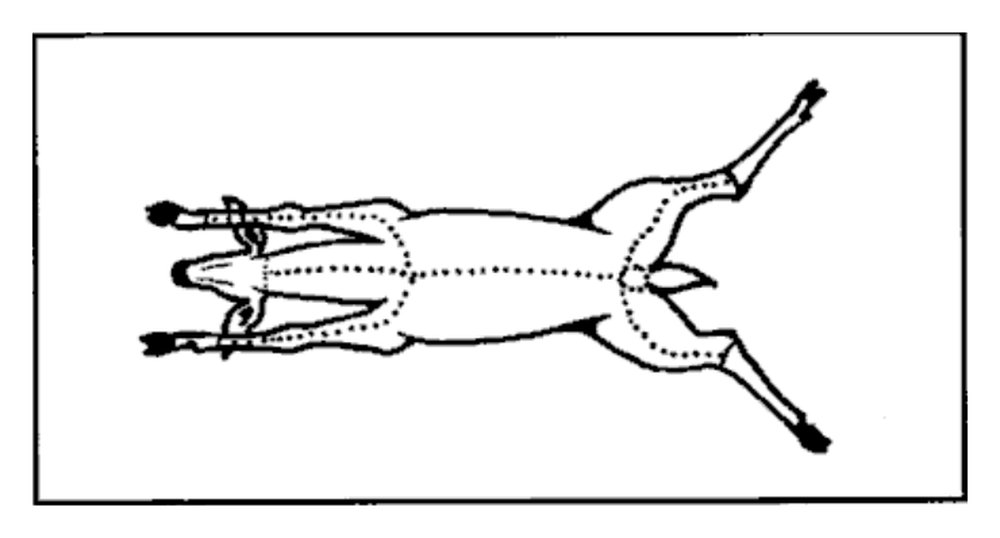
  4. Deer-sized: cut up each leg from above the foot to the body cut, then pull the hide away, cutting the connective tissue as you go. Cut out the musk glands behind the knees and near the anus so they do not taint the meat. Connective tissue is the thin white film that holds the hide to the meat. Musk glands are smelly scent glands; cut them out whole and keep them away from the meat.

    Drawing of the cuts for skinning a large animal
    The cuts for skinning large game
  5. Gut it. On a small animal, split the belly and pull the entrailsentrails The guts of an animal: stomach, intestines and other organs inside the belly. out with your fingers, chest cavity included. On a large one, cut the gulletgullet The tube that runs from an animal’s mouth to its stomach, also called the throat or esophagus. free of the diaphragmdiaphragm The thin sheet of muscle that separates the chest (heart and lungs) from the belly. and roll the entrails out, cut around the anus and pull the lower gut through. Pinch off the bladder and cut below your fingers so no urine touches the meat. The diaphragm is the thin sheet of muscle between the chest and the belly. Try not to break open the guts. If urine does spill on the meat, wash it off right away so the meat does not taste bad.

  6. Keep the heart and liver. Cut each open and look for worms or spots. A healthy liver is smooth, wet and deep red or purple. A bad liver goes in the fire; the muscle meat is still fine to eat. Worms, spots or an odd color are signs the animal may have been sick. The heart, liver, kidneys and other organs cook the same way as muscle meat.

  7. Cut off the head and feet. On a large animal, take the front legs off (no joint holds them on), cut the hindquarters at the hip joint, lift the tenderloinstenderloins Two long, soft strips of meat inside the body along the backbone. The most tender meat on the animal. from either side of the spine, and break the ribs before cutting them. The front legs are held on only by muscle, so you slice through it. At the hip, cut around the big bone to the ball-and-socket joint, cut the tough bands around it, and bend the leg back to free it. Tenderloins are the long strips of muscle on each side of the backbone.

  8. Cook it through. Roast big pieces on a spit or boilrolling boil Big bubbles breaking the whole surface, not just a few at the edge. One full minute of this kills the germs that make you sick. them. Stew small pieces and anything still on the bone into broth so nothing is wasted. Organs, brain and tongue cook the same way. The recovery manual calls boiling the most nourishing way to cook, as long as you drink the broth. The winter survival handbook says cooked meat should reach at least 165 degrees F (74 C) inside and should be eaten right away. Skin the tongue and boil it until tender.

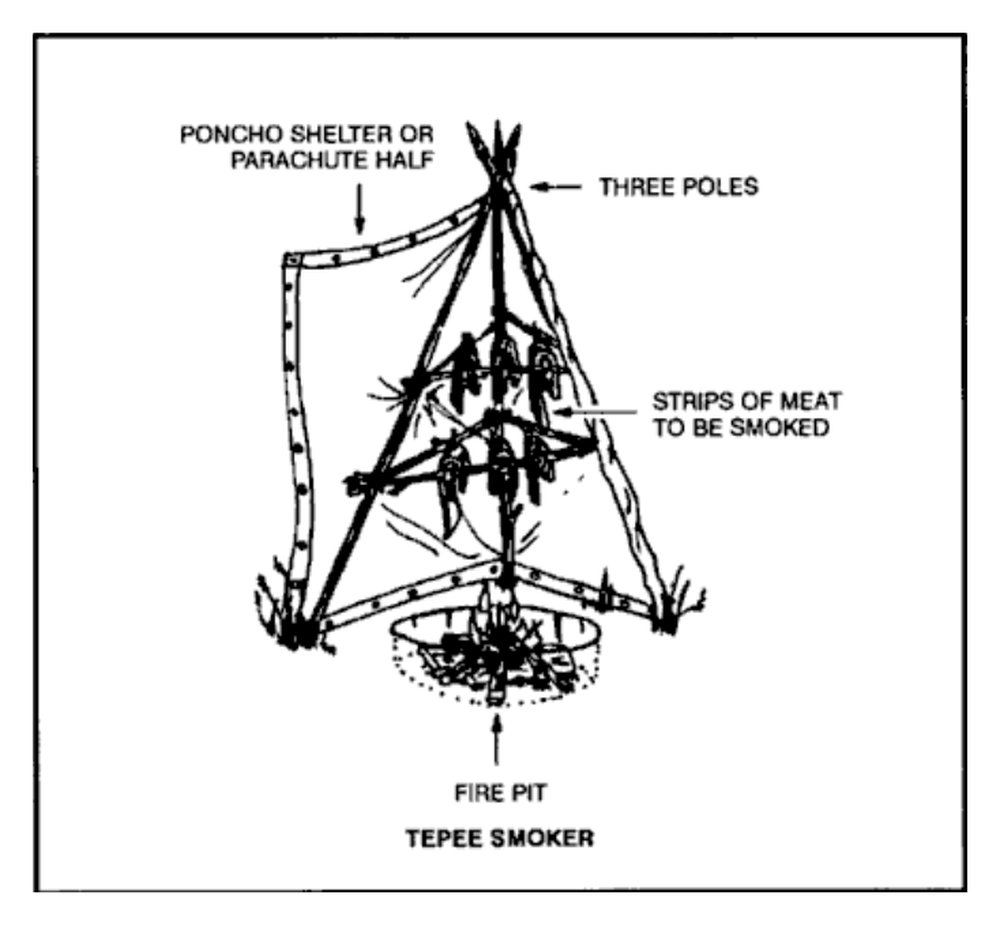
  9. To keep meat: smoke thin slices overnight in a poncho tent over a small hardwoodhardwood Wood from trees with broad leaves, like oak, maple and hickory. Burns long and makes good coals. fire for a week's keeping, two days for 2 to 4 weeks, or cut 6 mm strips with the grain and dry them in the sun out of reach of flies. 6 mm is about 1/4 inch. The fire is for smoke, not heat: use hardwood, never pine, fir or other sappy wood, whose smoke ruins the meat. Smoked meat is done when it looks like a dark, curled, brittle stick; dried meat is done when it feels dry and crisp and not cool to the touch.

    Drawing of a tepee smoker with strips of meat over a small fire
    A tepee smoker
  10. Other ways to keep meat: in freezing weather it keeps as long as it stays frozen, but you must still cook it. Or soak it in salt water that covers it fully, or pack it in salt, and wash the salt off before cooking. The manual says freezing keeps meat as long as it stays frozen, but freezing is not cooking: cook it all the way before eating. For salt, the brine must cover the meat completely.

  11. Never eat an animal that looked sick, and cook everything. Raw and undercooked wild meat carries parasitesparasites Tiny worms or bugs that live in or on an animal (or you) and feed off it. Wild meat and water can carry them; full cooking or boiling kills them.. Parasites are tiny worms and other living things that can live in meat; thorough cooking kills them. The winter survival handbook names wild pigs and bears as common carriers of trichinosistrichinosis An illness from tiny worms in undercooked meat, especially wild pig and bear. Cook those meats all the way through., and warns about catching tularemiatularemia A germ found in wild rabbits and some other small animals. You can catch it by handling the meat with cuts on your hands. by handling infectedinfection Germs growing in a wound. Watch for redness that spreads, swelling, heat, pus, a bad smell or a fever. meat with open sores. The recovery manual adds: never store food in your shelter, because it draws animals.

Tips from survival instructors

  • Cool the meat fast. Cleaning the animal soon and letting air reach the meat keeps it from spoiling.
  • Wear gloves or keep cuts covered when you clean game, and cook the meat all the way through.

Common mistakes

  • Cutting with the blade facing in. Turn it up so you cut hide only and keep hair off the meat.
  • Breaking the bladder or guts. Pinch the bladder off and cut below your fingers, and wash any spill off the meat at once.
  • Leaving the musk glands on a large animal. Cut them out before they taint the meat.
  • Smoking meat over pine or other sappy wood. Use hardwood and keep the fire small and smoky.
  • Eating meat that is still pink or cold inside. Cook it all the way through.
  • Keeping meat in your shelter. Hang it in the shade, covered against flies, away from where you sleep.

Practice it safely

You can practice the knife work with a whole chicken from the grocery store. Find the ball-and-socket joint at the hip, cut the thigh free at the joint the way the manual describes, take the breast meat off the bone, and boil the bones into broth. Use a kitchen thermometer to see what 165 degrees F (74 C) looks like inside.

To learn on wild game, go with a licensed hunter during the legal season or take your state's hunter education course, and follow your state wildlife agency's rules. Never trap rabbits or squirrels in many states; they are hunting-only.

Quick check

What is the first thing you do after killing the animal?

  • Skin it
  • Bleed it
  • Cook it whole
Show the answer

Bleed it

Take the quiz and earn the badge

The app checks your answers, keeps your place in the Trapping and catching food, and works with no signal once saved.

Before you rely on thisA learning tool, not a replacement for training. In an emergency, call 911. Do not eat any plant, berry or mushroom here. This app never tells you a wild food is safe.

Sources

Photo credits
Photo: Josiah Londerée, CC BY 4.0, sourcePhoto: US Army, FM 21-76 Survival (1992), Public Domain, sourcePhoto: US Army, FM 21-76 Survival (1992), Public Domain, sourcePhoto: US Army, FM 21-76 Survival (1992), Public Domain, source

More on trapping and fishing