← Outdoor Survivalist Trainer Your area

Trapping and fishing · Trapping and catching food course

Deadfalls, pit traps and the traps never to build

A deadfalldeadfall A trap that drops a heavy weight, like a log or rock, when an animal touches the trigger. drops a weight; a pit holds an animal that falls in. The manual teaches these for real emergencies. It also shows two traps that can kill a person. Here you learn how each works and which ones never to build.

Why this matters

Deadfalls need no wire or cord at all, only sticks and a rock, which is why the manual includes them. They are also the traps most likely to hurt the person setting them, so learning the risks matters as much as the method.

Step by step

  1. Figure 4trigger The part of a trap that holds tension until the animal moves it. The heart of every trap. Practice it, then take it apart. deadfall: three notched sticks lock into the shape of a 4 and hold up a heavy flat rock or log. A nudge on the bait stick lets it all go. The lesson "How a trap trigger works" shows how to practice the trigger at a table.
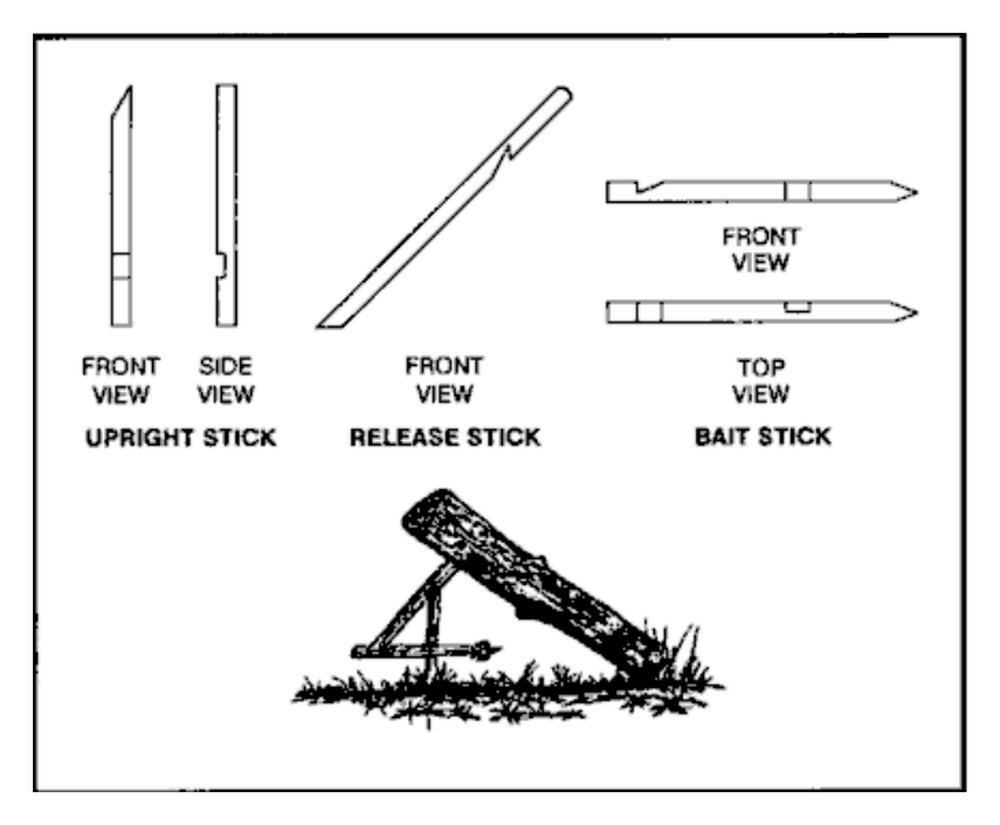
    Drawing of the three notched sticks of a figure 4 trigger
    The three sticks of a figure 4 trigger
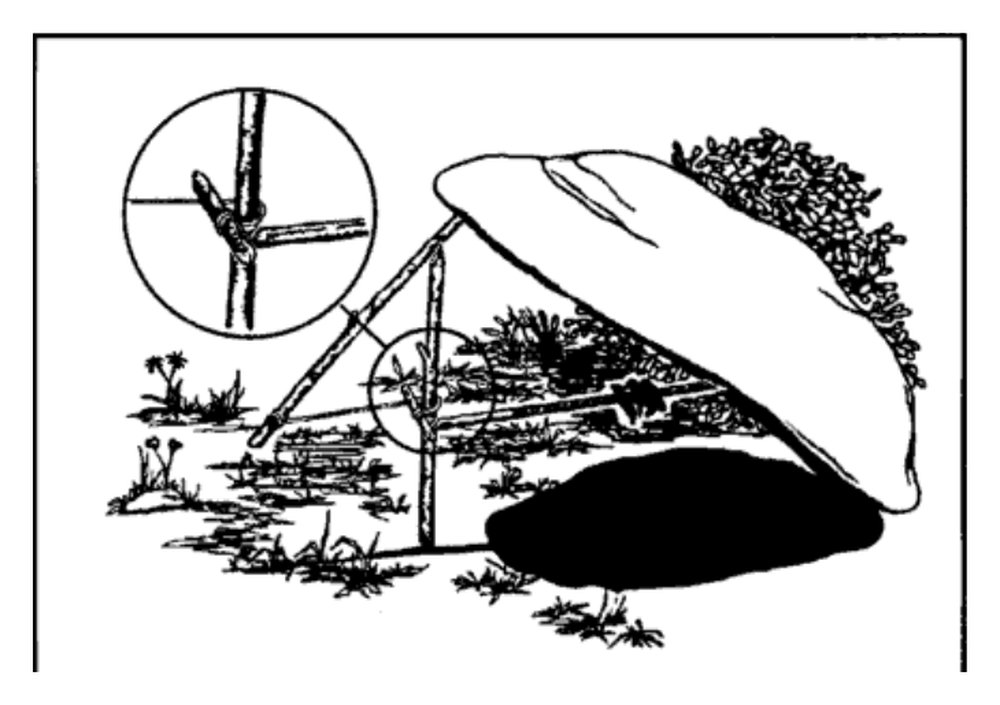
  2. Paiute deadfall: like the figure 4, but a short cord and a small catch stick replace one notch, so it is easier to set. When the bait stick is moved, the catch stick slips free and the weight drops.

    Drawing of a Paiute deadfall with a cord and catch stick
    A Paiute deadfall
  3. The weight must be heavy enough to stop the animal at once. A weight that only injures is cruel and wastes the catch.

  4. Bottle trap: a hole 30 to 45 cm deep, wider at the bottom than at the top, with barkbark slabs Big sheets of bark peeled off a dead log. Laid like shingles, bottom row first, they shed rain. propped 2.5 to 5 cm above it on small stones. Mice and voles hide under the cover, fall in, and cannot climb the sloped walls.

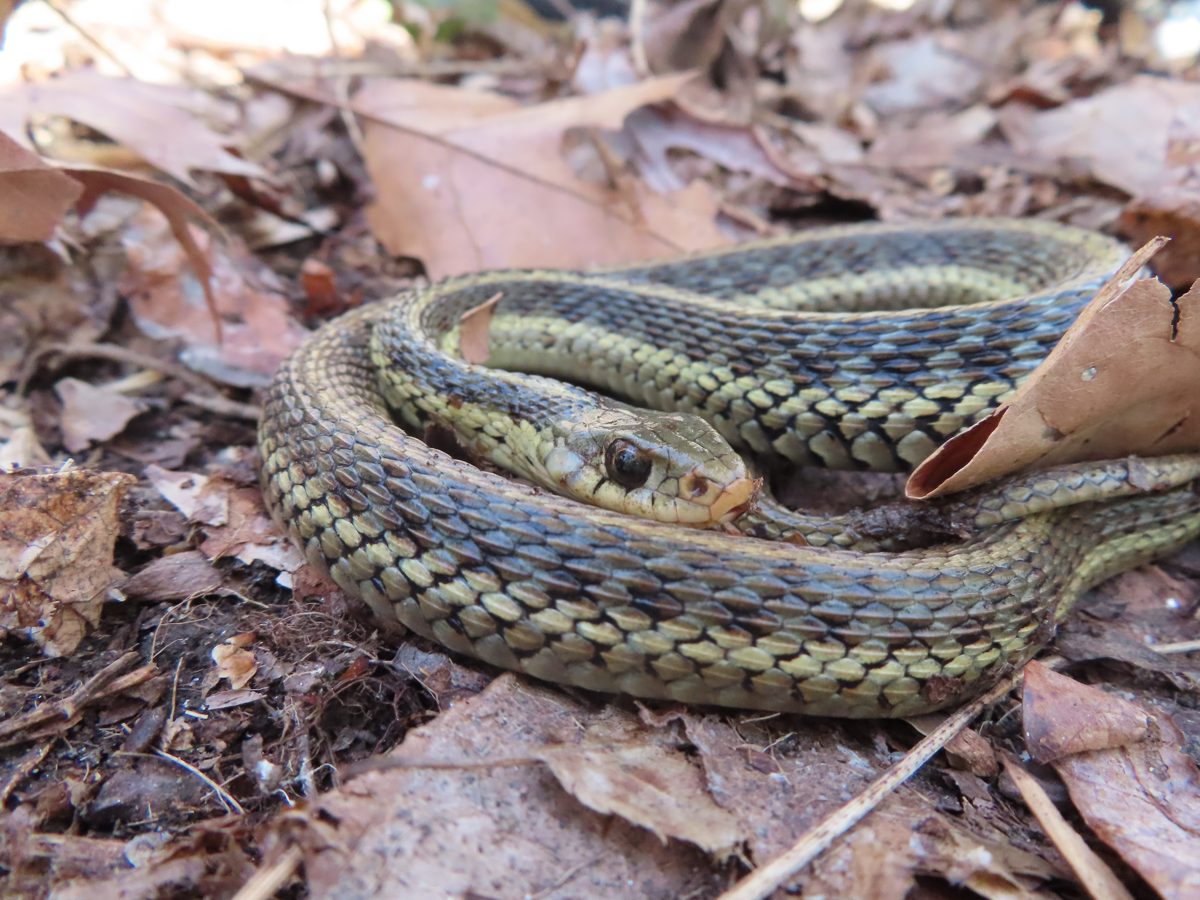
  5. Check a bottle trap with care. The manual warns it is a perfect hiding place for snakes. Look before you reach.

    A garter snake in dead leaves
    Snakes hide in holes and under cover: look before you reach
  6. The manual also shows a bow trap and a spear trap set on a trip line. Both can kill a person who walks into them. They are illegal, and this trainer never shows how to build them.

  7. Practice only the figure 4 and Paiute triggers, at a table, under a light book. Take them apart when you are done.

Tips from survival instructors

  • Deadfalls are dangerous to the builder. Most injuries happen while setting the trigger, when the weight slips onto your hand.
  • Practice with a light board or a book, never a heavy log or rock, until the trigger works every time.

Common mistakes

  • Setting the trigger with your hand under the weight. Keep fingers clear and use a light book for practice.
  • A weight too light to stop the animal at once.
  • Reaching into a pit or under a cover without looking first. Snakes hide there.
  • Building any trap on a trip line. Those can kill people and are illegal.

Practice it safely

At a table, set the Paiute trigger under a light book with a short string and a small catch stick. Nudge the bait stick and watch it drop. Take it apart.

Quick check

Which traps from the manual can kill a person and must never be built?

  • The bottle trap
  • The bow trap and the spear trap
  • The figure 4 at a table
Show the answer

The bow trap and the spear trap

Take the quiz and earn the badge

The app checks your answers, keeps your place in the Trapping and catching food, and works with no signal once saved.

Before you rely on thisA learning tool, not a replacement for training. In an emergency, call 911. Do not eat any plant, berry or mushroom here. This app never tells you a wild food is safe.

Sources

Photo credits
Photo: US Army, FM 21-76 Survival (1992), Public Domain, sourcePhoto: US Army, FM 21-76 Survival (1992), Public Domain, sourcePhoto: Mila C., CC BY 4.0, source

More on trapping and fishing