← Outdoor Survivalist Trainer Your area

Trapping and fishing · Trapping and catching food course

Snares and nooses: how they work

A snaresnare A trap made of a loop of wire or cord that tightens around an animal that walks or pokes its head through. is a trap built around a noosenoose A loop in a cord or wire that gets smaller and tighter when pulled.. The manual explains that traps crush, choke, hang or tangle, and that the power always comes from something simple: the animal pulling, gravity, or a bent saplingsapling A young, thin tree, usually thinner than your wrist. Springy and easy to bend.. This lesson explains how the manual's snares work. Outside a real emergency, practice the knots and parts at home and take them apart.

Why this matters

Snares are the manual's main trap because a few feet of wire and a knife can feed you. Understanding how the noose, the anchor and the power source work together also teaches you to spot illegal snares on public land so you can report them.

Step by step

  1. Simple snare: a noose set over a rungame trail A narrow path worn through grass or brush by animals using it over and over. A trap goes on a trail an animal already uses. or a den hole and tied to a stake driven deep. As the animal walks through, the loop slides tight. Wire holds best; cord can loosen and slip off.
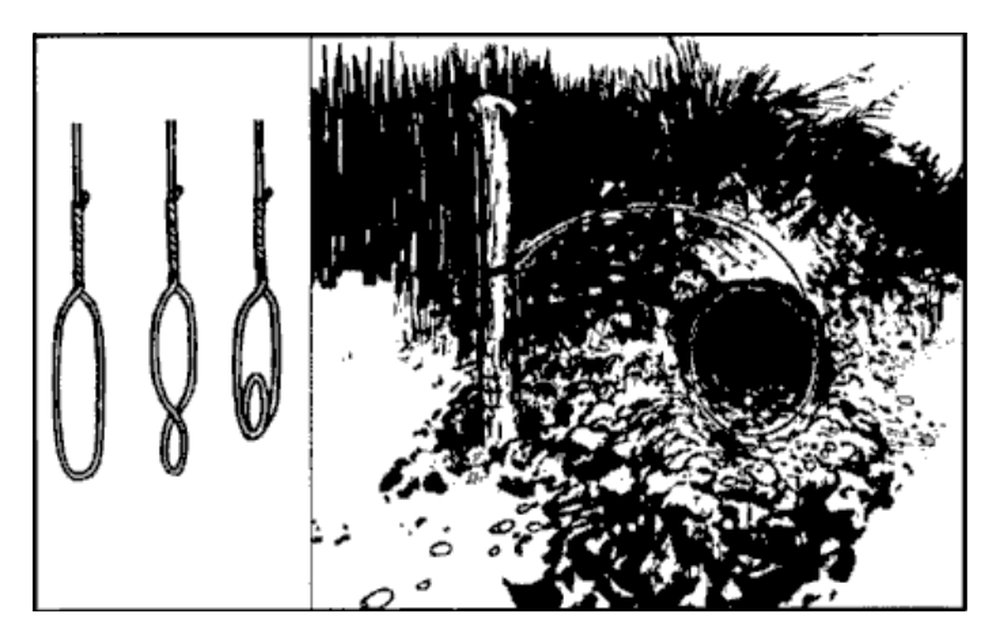
    Drawing of wire snare loops set over a den hole
    A simple snare over a den hole
  2. The loop must be big enough to slip over the head freely. Small twigs or grass stems hold it up and open. A noose meant for the head should never hang low enough for a foot to step in.

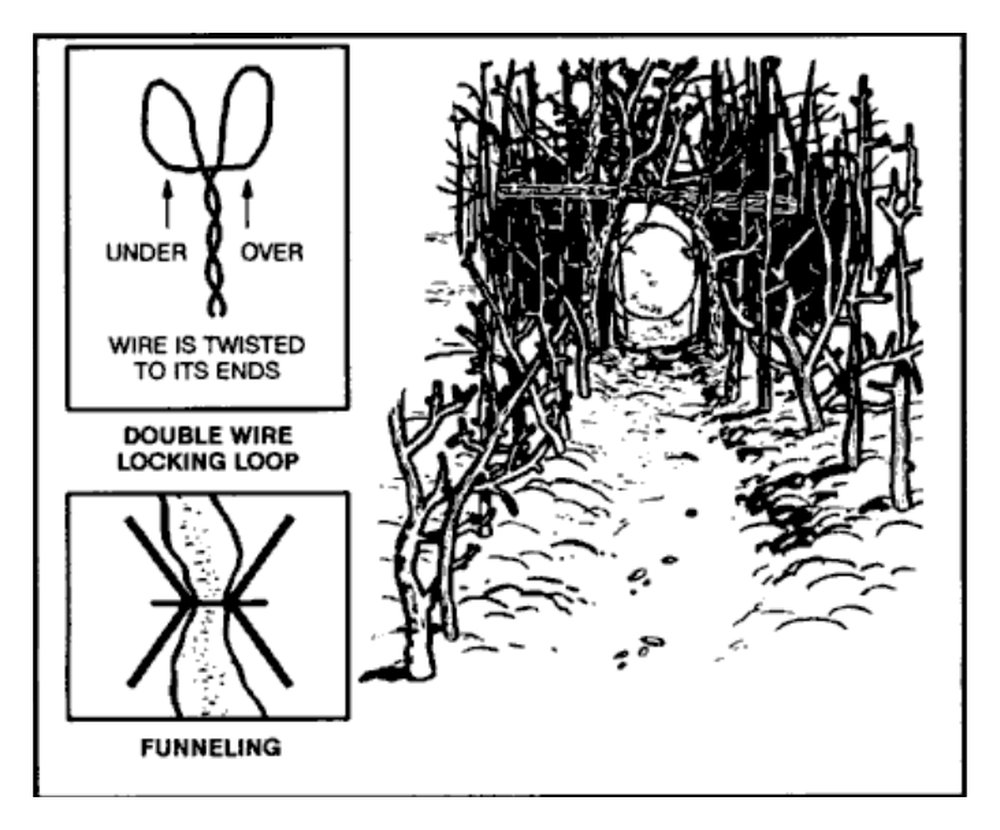
  3. Drag noose: the noose hangs from a stick laid across two forked sticks beside a run. When it tightens, the animal pulls the stick loose and drags it until it snags in the brush.

    Drawing of a drag noose on a run, with sticks funneling the animal in
    A drag noose with brush funneling the run
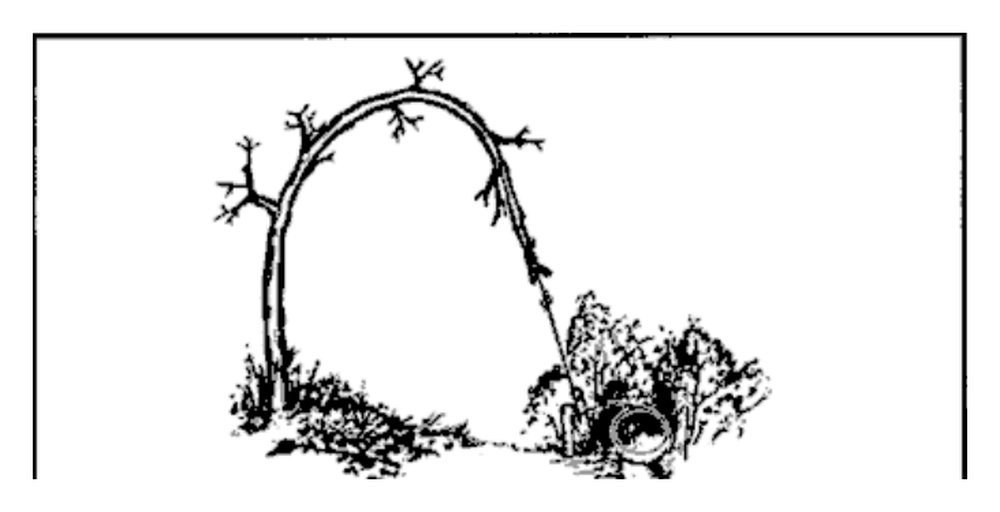
  4. Twitch-uptwitch-up A springy young tree bent over and held down by a trigger. When the trigger lets go, the tree snaps up and pulls the snare tight.: a springy hardwoodhardwood Wood from trees with broad leaves, like oak, maple and hickory. Burns long and makes good coals. sapling, stripped of branches and bent over, gives a snare power. Two forked sticks with short legs that hook together hold it down; a pull on the noose unhooks them and the sapling springs up.

    Drawing of a twitch-up snare made from a bent sapling
    A twitch-up snare
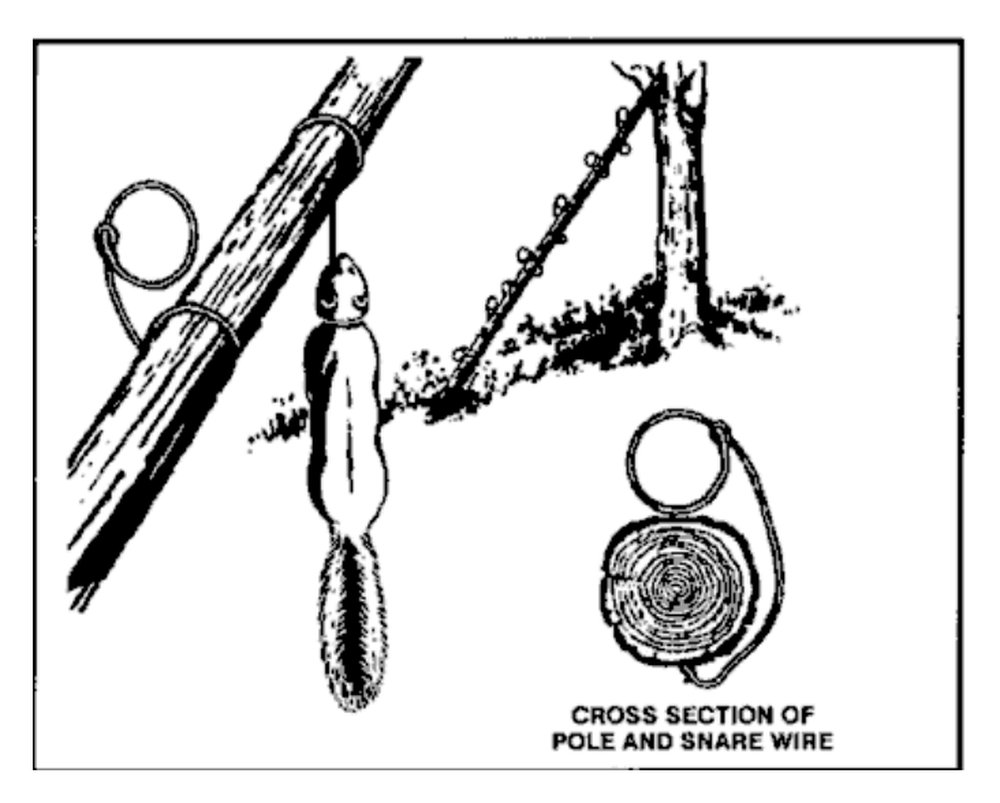
  5. Squirrel polepoles Dead, straight sticks about as thick as your wrist and 2 to 3 meters long. Dead standing wood is best: dry, and it snaps clean.: a long poleridge pole The one long, strong pole that the whole shelter hangs from. About as long as you are tall plus an arm, and at least wrist thick. leaned against a tree squirrels use, with several small wire nooses along it. Squirrels take the easy path up the pole.

    Drawing of a squirrel pole leaned on a tree with wire nooses
    A squirrel pole
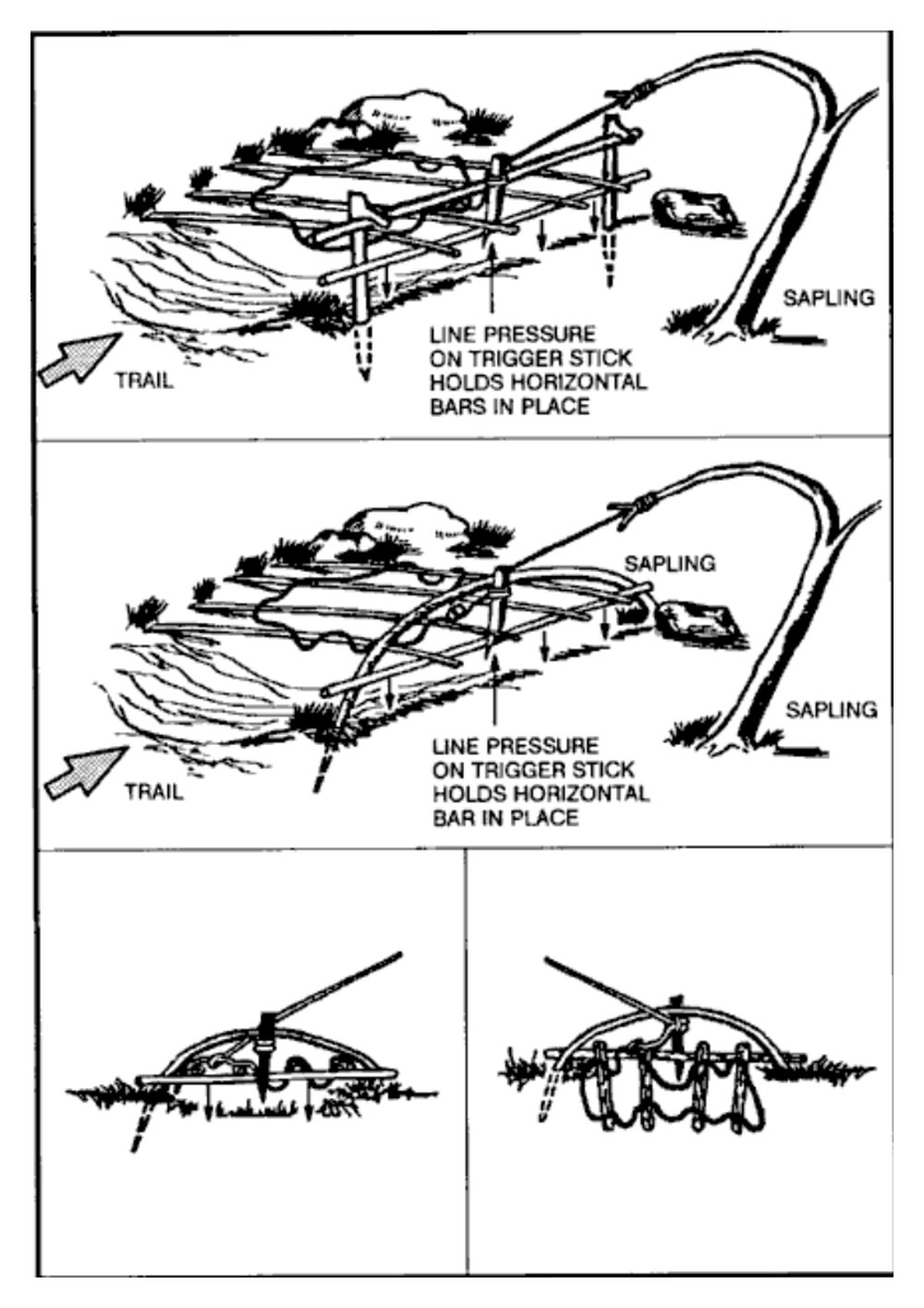
  6. Treadle snaretreadle A small platform or set of sticks that an animal steps on. Its weight trips the trigger.: sticks laid over a shallow hole in the trail hold a small triggertrigger The part of a trap that holds tension until the animal moves it. The heart of every trap. Practice it, then take it apart. in place. When an animal steps on a stick, the trigger slips and the noose catches the foot. The trail looks disturbed, so it needs a channel.

    Drawing of a treadle snare set in a trail, step by step
    How a treadle snare holds and springs
  7. Never use green sticksgreen wood Wood cut from a living tree, still full of sap. It will not burn easily, which is why it makes the base under a fire on snow and the reflector wall behind one. for trigger parts. The sap can glue them together.

  8. Practice like this: tie a slip noose in cord, set it over a can on a table, and pull the can through. Then untie it. A snare set outdoors keeps working when you are gone and can catch pets and protected animals.

Tips from survival instructors

  • The loop must be the right size: about a fist wide for a rabbit, and set a few fingers off the ground at head height.
  • Thin wire holds better than string, which an animal can chew through.

Common mistakes

  • A loop too small or too low, so it catches a foot instead of passing over the head.
  • Cord instead of wire, which loosens and lets the animal slip out.
  • Green trigger sticks that stick together with sap.
  • Setting a snare outdoors for practice. A snare keeps working when you leave.

Practice it safely

Tie a slip noose in light cord. Set it upright over a soup can on the table with two twigs holding it open, and pull the can through. Watch how it closes. Untie it and put the cord away.

Quick check

What does the manual say makes the best simple snare?

  • Cotton string
  • Wire
  • Grass
Show the answer

Wire

Take the quiz and earn the badge

The app checks your answers, keeps your place in the Trapping and catching food, and works with no signal once saved.

Before you rely on thisA learning tool, not a replacement for training. In an emergency, call 911. Do not eat any plant, berry or mushroom here. This app never tells you a wild food is safe.

Sources

Photo credits
Photo: US Army, FM 21-76 Survival (1992), Public Domain, sourcePhoto: US Army, FM 21-76 Survival (1992), Public Domain, sourcePhoto: US Army, FM 21-76 Survival (1992), Public Domain, sourcePhoto: US Army, FM 21-76 Survival (1992), Public Domain, sourcePhoto: US Army, FM 21-76 Survival (1992), Public Domain, source

More on trapping and fishing