Insects: look under rotting logs, stones and boards and in grassy fields. Avoid anything that stings or bites, hairy or brightly colored insects, caterpillars, anything with a strong smell, and all spiders, ticks, flies and mosquitoes. Rotting logs lying on the ground are the best place to look, because insects are easy to see there. The manual says insect larvaelarvae The soft, wormlike young stage of an insect, before it becomes an adult. Grubs under logs are a common example., such as grubs, count too.
Trapping and fishing · Trapping and catching food course
Fish, insects, worms and crayfish: the easy protein
The manual's advice is to work the small, plentiful food first. Insects are 65 to 80 percent protein, worms and crayfishcrayfish Small freshwater lobsters that hide under stones in streams. They must be boiled at least 5 minutes before eating. are everywhere there is damp ground or a creek, and fish come to you if you know where they rest.
Why this matters
Small, plentiful food is the best place to start. The survival manual says insects are the most common animals on earth, easy to catch, and 65 to 80 percent protein compared with about 20 percent for beef. Worms are everywhere there is damp ground, and fish are usually more plentiful than larger animals and quiet to catch.
The manual also says there are no poisonous freshwater fish, which makes creeks and ponds a good place to look. The dangers are elsewhere: spoiled fish, raw insects and wild meat with parasitesparasites Tiny worms or bugs that live in or on an animal (or you) and feed off it. Wild meat and water can carry them; full cooking or boiling kills them., and stinging or brightly colored bugs. In many states, fishing needs a license for most people, and snakes are protected: leave them alone.
What you need
- Insects and worms: your hands, a stick to roll logs, and a container.
- Crayfish: string and a scrap of bait, or your hands under creek stones.
- Fish: a hook and line if you have one, and a fishing license outside an emergency.
- A knife, and a fire or a pot to cook.
Step by step
Cook insects with a hard shell, such as beetles and grasshoppers, because they carry parasites, and pull off wings and barbed legs. Grind a handful into a paste or mix them into greens if the look puts you off. Parasites are tiny living things inside the insect that cooking kills. The recovery manual says to remove all hard parts like the legs, to cook anything grasshopper-sized, and never to save dead insects, because they spoil fast.
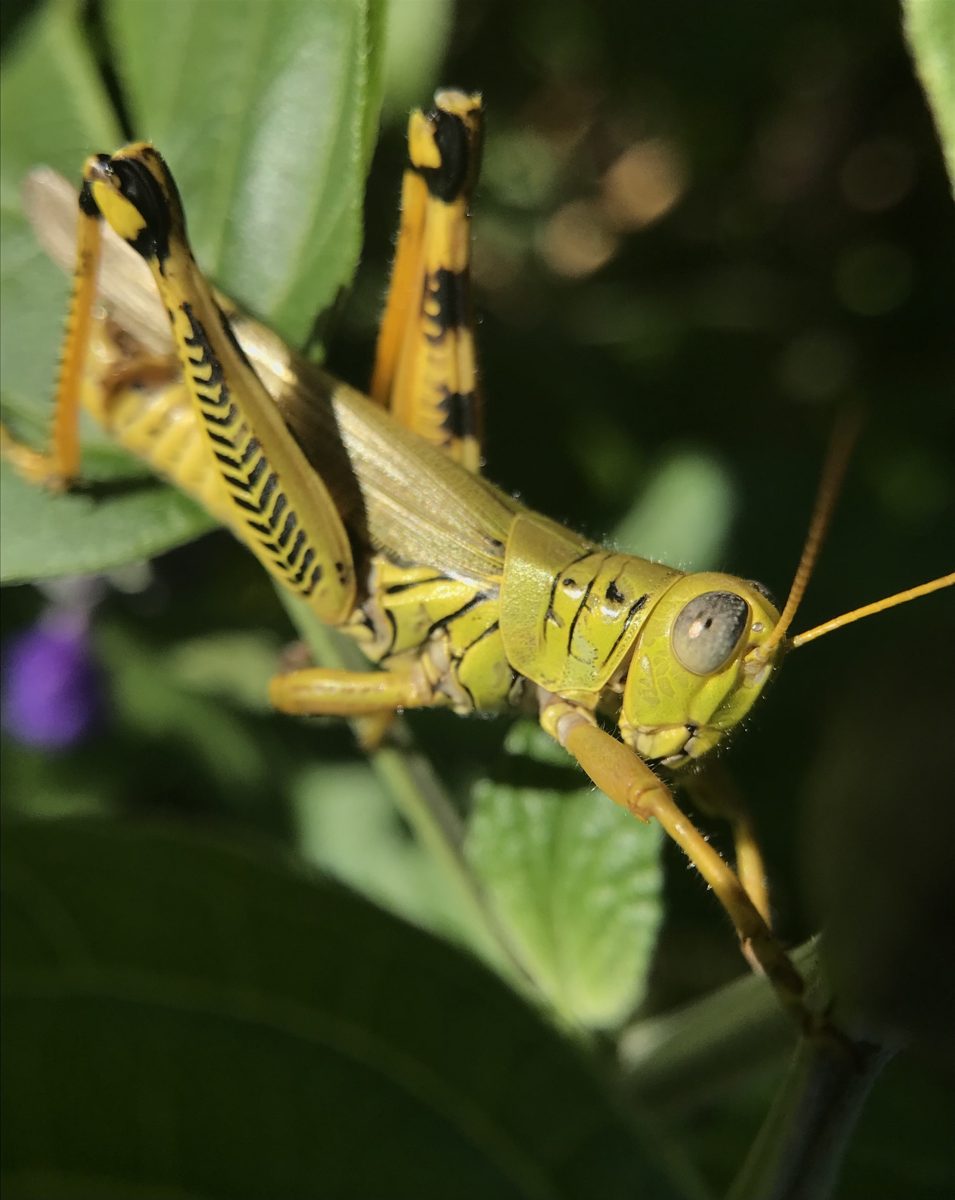
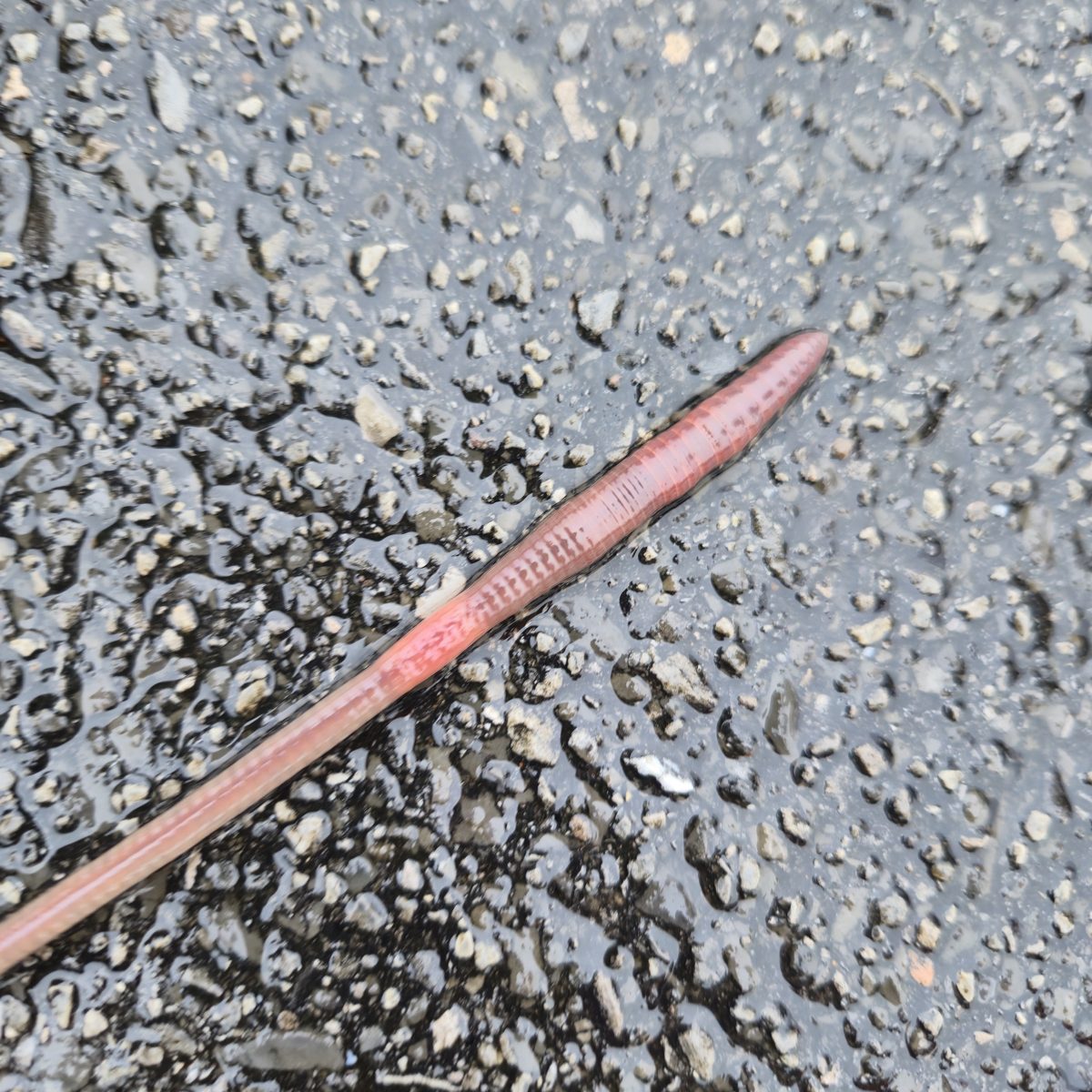
Cook hard-shelled insects like grasshoppers Worms: dig in damp humus or pick them up after rain. Drop them in clean water for a few minutes to purge themselves, then eat them raw or cooked. Purging means the worms wash the dirt out of themselves in the clean water. Use clean, safe water for this.
Pick worms up after rain Crayfish: lift stones in streams by day, or tie a bit of offaloffal The leftover guts and scraps from cleaning an animal or fish. Useful as bait. to a string at night and pull slowly to shore when one grabs it. Boilrolling boil Big bubbles breaking the whole surface, not just a few at the edge. One full minute of this kills the germs that make you sick. until red. Crayfish look like small lobsters, with five pairs of legs and big front pincers. They are most active at night; by day, look under and around the chimney-like mud holes they breathe through. The recovery manual says to cook them all the way through to kill parasites.
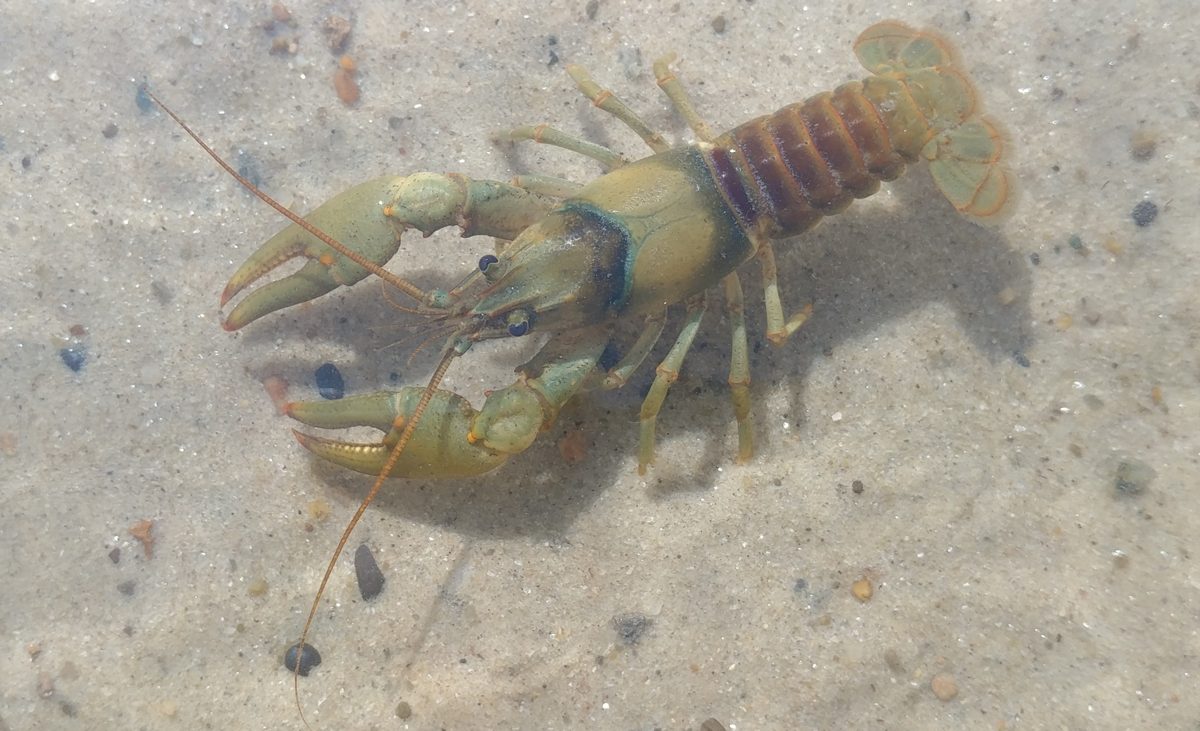
Crayfish hide under stones in streams Fish rest in deep pools, under cut banks and overhanging brush, and around sunken logs. They feed hard before a storm and little after one. Dawn and dusk are the times. Cover means shelter from current and from above: the manual's list is deep pools, overhanging brush, and sunken logs and plants. Watch catfish: the sharp spines on their fins and whiskers can cause painful puncture wounds that quickly get infectedinfection Germs growing in a wound. Watch for redness that spreads, swelling, heat, pus, a bad smell or a fever..
Clean fish at once; it spoils fast in heat. Cut out the gills and the big blood vessels along the spine, gut anything longer than 10 cm, and scale or skin it. 10 cm is about 4 inches. The recovery manual's method is to put the knife point in the vent near the tail, cut the belly open toward the head, pull out the insides, and take out the gills to slow spoiling. The survival manual says to cook all freshwater fish to kill parasites.
Boil fish with the skin on to keep the fat and make broth, or roast it on a stick, or pack it in clay and bury it in coals until the clay hardens. It is done when the meat flakes. The fat and oil sit under the skin, so boiling with the skin on keeps them in the pot as broth. You did it right when the meat flakes apart easily with a stick or a fork.
Spoiled fish: sunken eyes, odd smell, faded gills (they should be red to pink), a thumb dent that stays, a slimy body, a sharp or peppery taste. Cooking does not fix spoiled fish. If you ate it and feel ill, make yourself vomit. Fresh gills are red to pink and the scales a clear gray, not faded. The manual says sickness from spoiled fish (cramps, vomiting, itching, even paralysis or a metal taste) starts suddenly, 1 to 6 hours after eating.
Snakes: cut off the head and bury it, cut the skin 15 to 20 cm down from the neck, peel it back and pull skin and body apart. Gut, cut into sections, boil or roast. In many states, leave snakes alone outside a true emergency; the venomousvenom Poison an animal injects with a bite or sting, like a snake, spider or bee. ones are rare and protected. The survival manual says even a freshly killed snake can still bite, which is why the head is buried. In many states, this step is knowledge only: watch snakes from a distance, give them room, and never handle one.
Tips from survival instructors
- A fresh fish has clear eyes, red gills and firm flesh. Sunken eyes, gray gills or a sour smell mean throw it away.
- Cook insects and crayfish before eating. Remove the legs and wings of grasshoppers first so they do not catch in your throat.
Common mistakes
- Eating hairy, brightly colored or strong-smelling insects, caterpillars, spiders, ticks, flies or mosquitoes. The manual says avoid them all.
- Eating beetles or grasshoppers raw. Cook them, and pull off wings and barbed legs.
- Saving dead insects or letting fish sit in the sun. Both spoil fast; clean fish at once and eat insects fresh.
- Thinking cooking fixes a fish that smells off. The manual says it does not; throw spoiled fish away.
- Grabbing a catfish by the fins. Hold it carefully behind the spines.
- Catching or handling snakes in many states. Leave them alone.
Practice it safely
Buy a whole fish at a grocery store and practice: check the freshness signs at the counter (clear eyes, red to pink gills, flesh that springs back from a thumb press), then cut out the gills, gut it, scale it, and boil it with the skin on or roast it. Go fishing with a fishing license where you need one.
After a rain, dig a few worms from the garden and watch them clean themselves in a jar of clear water, then put them back. Lift creek stones gently to watch crayfish, and set each stone back the way you found it. Check park rules before collecting anything, and leave no trace.
Quick check
A fish's gills are gray and a thumb dent stays in its side. What is it?
- Fresh
- Spoiled; do not eat it even cooked
- Fine if boiled
Show the answer
Spoiled; do not eat it even cooked
Take the quiz and earn the badge
The app checks your answers, keeps your place in the Trapping and catching food, and works with no signal once saved.
Before you rely on thisA learning tool, not a replacement for training. In an emergency, call 911. Do not eat any plant, berry or mushroom here. This app never tells you a wild food is safe.
Sources
- US Army Survival Manual, pages 92 to 95 (insects, worms, crustaceans, fish), 118 to 120 (preparing fish, snakes)
- US Army Survival Manual, pages 92 (insects, worms, crayfish), 94 (fish habits, no poisonous freshwater fish, catfish spines, cook freshwater fish), 118 to 120 (spoiled fish, preparing and cooking fish, snakes) and 446 (a freshly killed snake can bite)
- Military Survival and Rescue Guide, page 87 (cleaning fish, insects, cook crawfish and freshwater fish to kill parasites)