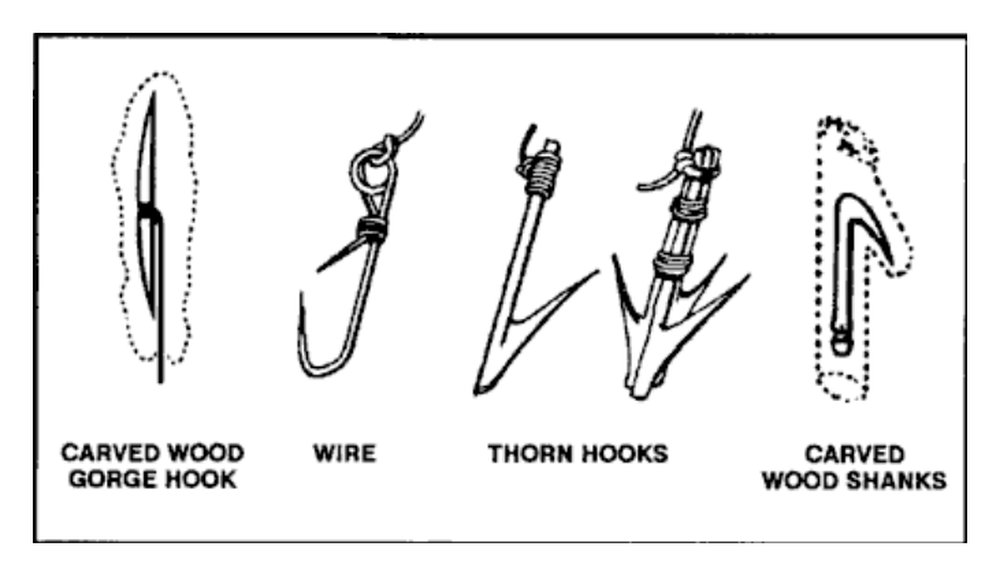
Hooks can be made from pins, needles, wire, small nails or any scrap of metal, or from wood, bone, thorns, flint or shell.
Trapping and fishing · Trapping and catching food course
Fishing is the catching skill most people can practice legally today, with a state fishing license. The manual shows how to make hooks from almost anything and how to keep lines working while you do other jobs.
Fishing is the one catching skill almost anyone can practice legally today with a state license. In an emergency, fish are often the easiest protein near water, and a few hooks weigh nothing in a kit.
Hooks can be made from pins, needles, wire, small nails or any scrap of metal, or from wood, bone, thorns, flint or shell.
Wooden hook: a piece of hardwoodhardwood Wood from trees with broad leaves, like oak, maple and hickory. Burns long and makes good coals. about 2.5 cm long and 6 mm thick as the shank. Cut a notch in one end, set a point of bone, wire or nail in it, and tie it tight so it cannot move. Smaller material makes smaller hooks.
Gorgegorge The simplest fishhook: a short stick or bone sharpened at both ends with the line tied in the middle. The fish swallows it and it turns crosswise.: a small shaft of wood, bone or metal sharpened at both ends with a notch in the middle for the line. Bait it lengthwise. When the fish swallows the bait, the gorge turns crosswise and holds.
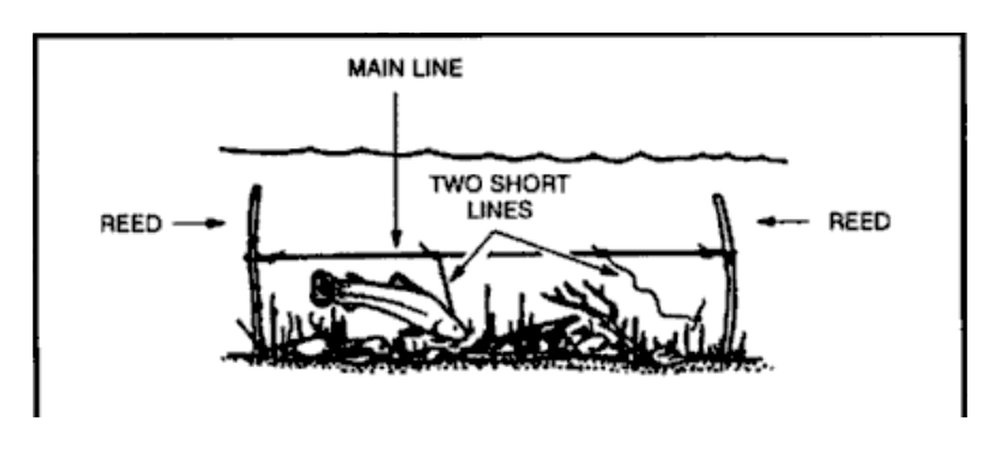
Stakeout: two springy saplingssapling A young, thin tree, usually thinner than your wrist. Springy and easy to bend. driven into the bottom with their tops just under the water, a cord between them, and short lines with baited hooks hanging from it. It fishes while you work on shelter and water.
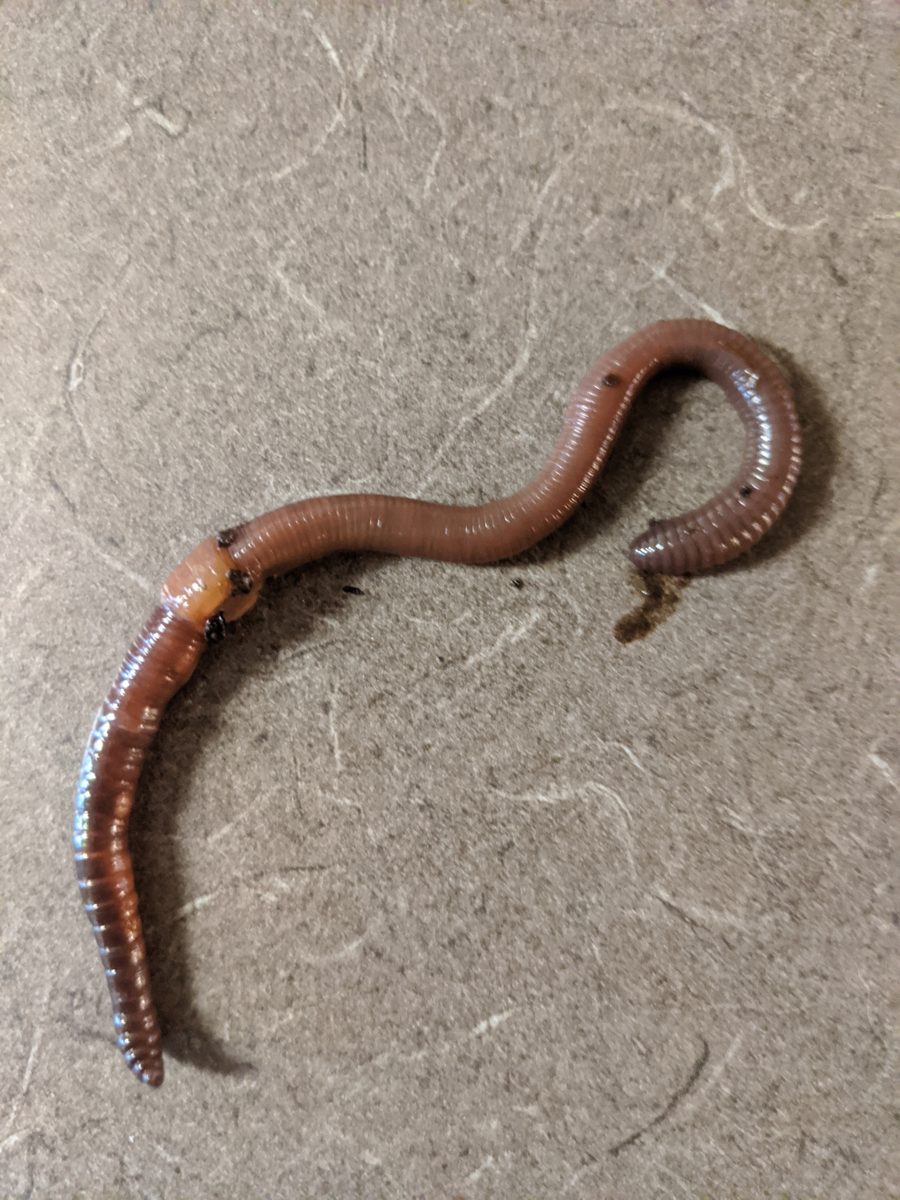
Bait nearly every fishing device. Small fish make bait for big ones. Worms, insects and bits of gutsentrails The guts of an animal: stomach, intestines and other organs inside the belly. all work.
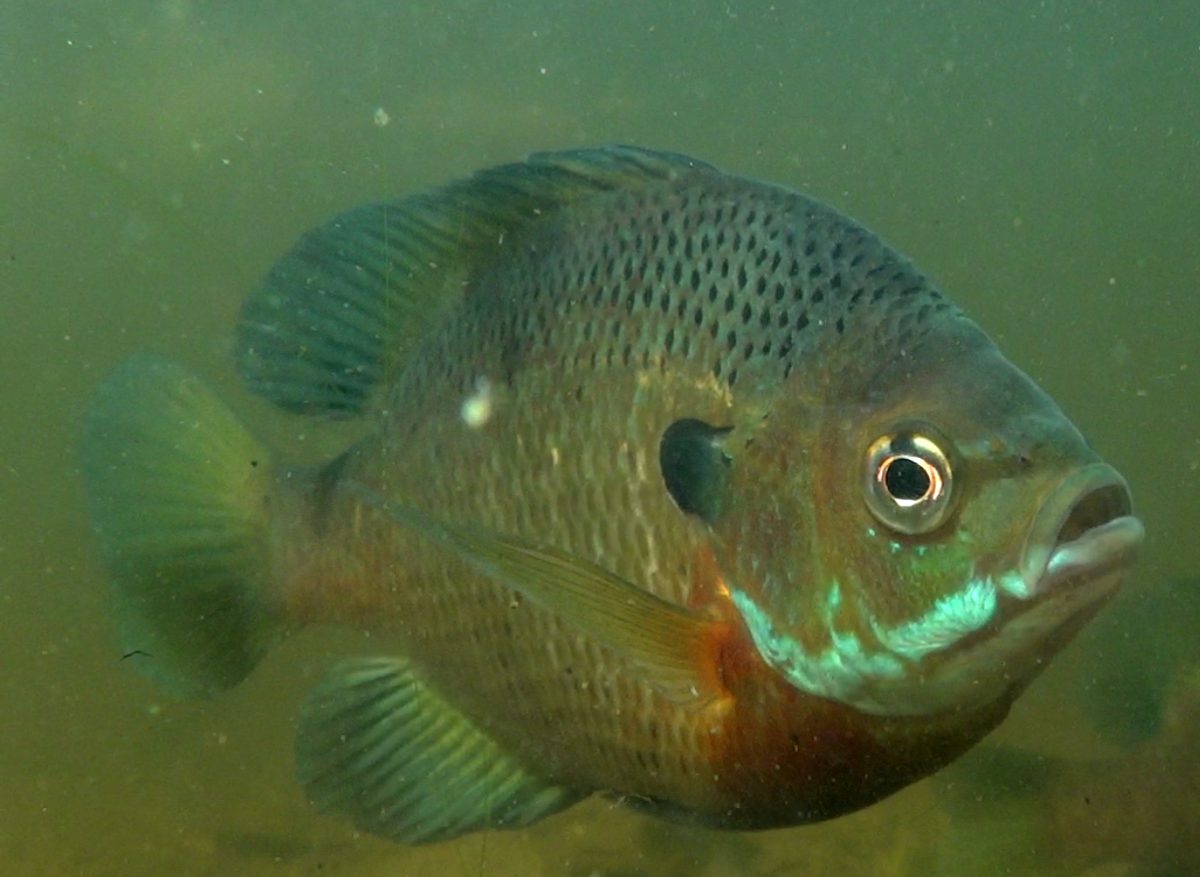
Fish rest in deep pools, under cut banks and brush, and around sunken logs. They feed hard just before a storm. Dawn and dusk are best.
Take care of your gear. Dry lines and nets after use, and tie hooks on tight or you will lose them.
Today, practice this with a state fishing license and real tackle first, then try a homemade hook on the same water. Check your state's rules on how many lines and hooks you may use.
With a fishing license, catch a fish on store tackle, then try a wooden hook or a gorge on the same spot. Keep track of which one works.
Which of these can become a fishhook?
A pin, a nail, a thorn or a piece of bone
The app checks your answers, keeps your place in the Trapping and catching food, and works with no signal once saved.
Before you rely on thisA learning tool, not a replacement for training. In an emergency, call 911. Do not eat any plant, berry or mushroom here. This app never tells you a wild food is safe.