← Outdoor Survivalist Trainer Your area

Fire · Fire course

Fire in rain and snow

Wet ground, wet wood and snow that melts into the fire are what put most fires out. The manuals answer with a base of green logsgreen wood Wood cut from a living tree, still full of sap. It will not burn easily, which is why it makes the base under a fire on snow and the reflector wall behind one., wood chosen off the ground, and a few kinds of wood that burn hot even when the weather is against you.

Why this matters

Most fires that fail in bad weather go out for the same few reasons: the ground is wet, the wood is damp, or melting snow drips onto the flame. Each step here takes one of those away.

Cold, wet weather is also when you need a fire the most, to warm up and dry out. The cold-weather manuals expect you to light fires on snow, so they show how.

What you need

  • Green logs or polespoles Dead, straight sticks about as thick as your wrist and 2 to 3 meters long. Dead standing wood is best: dry, and it snaps clean., about wrist-thick, for a base on snow.
  • Dry tindertinder The driest, finest material you have, which catches a spark or small flame: shredded inner bark, dry grass, birch bark curls, cattail fluff. kept in a pocket or a sealed bag, and char clothcharred cloth Cotton cloth heated until it is black but not burned. It catches a spark and holds a glow long enough to light tinder from it. if you only have a spark maker.
  • Dead twigs still on the trees for kindlingkindling Pencil-thin dead twigs that catch from tinder and build the fire up. They should snap, not bend..
  • Anything that helps it catch, such as a plastic spoon.

Step by step

  1. On snow, build a dry base first. Cut or break several green logs and lay them side by side on top of the snow, add one or two more layers, and lay the top layer crosswise to the one below. Wrist-thick trunks break easily in extreme cold. FM 31-70 says the same: in deep snow a fire base of green wood keeps the fire from sinking into the snow. A fire sitting on snow melts the snow under it and sinks into a puddle, which puts it out. Green, living wood holds a lot of water, so it is slow to burn and works as a floor. The MWTC handbook also allows digging down to bare earth instead.
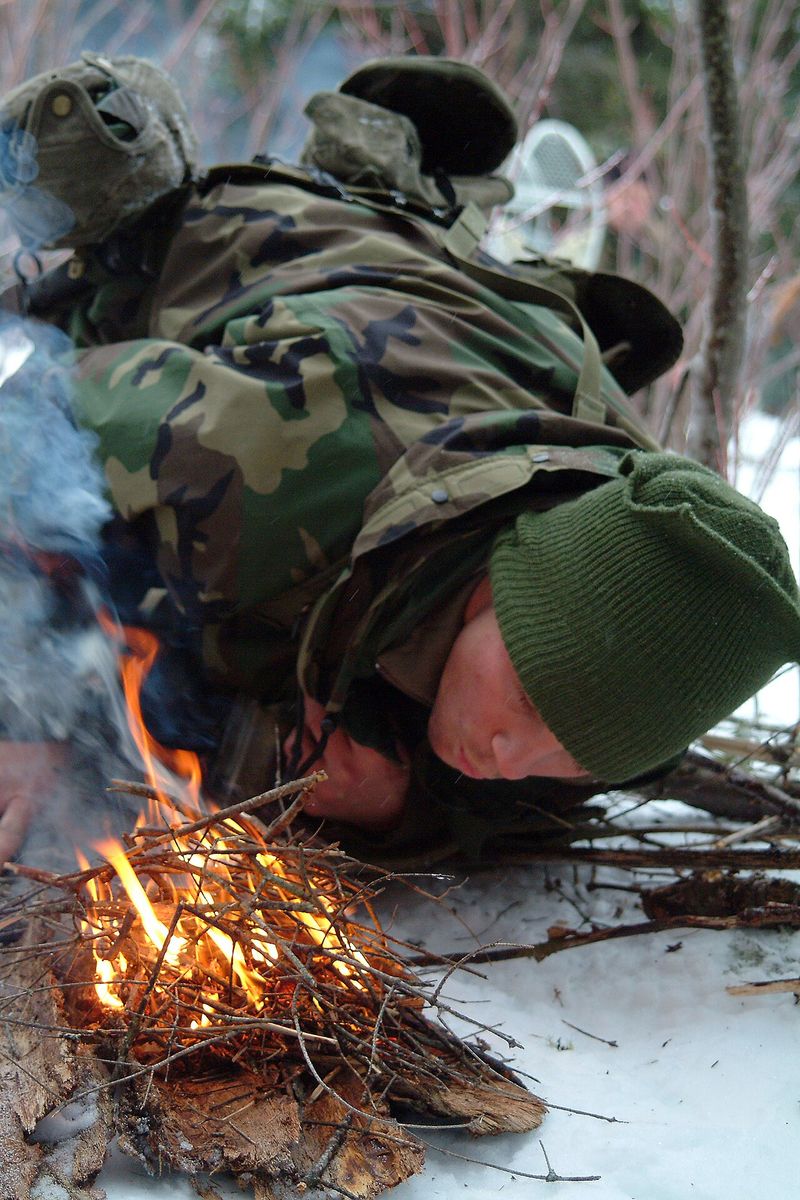
    A survival student bending low to light a small fire on the snow
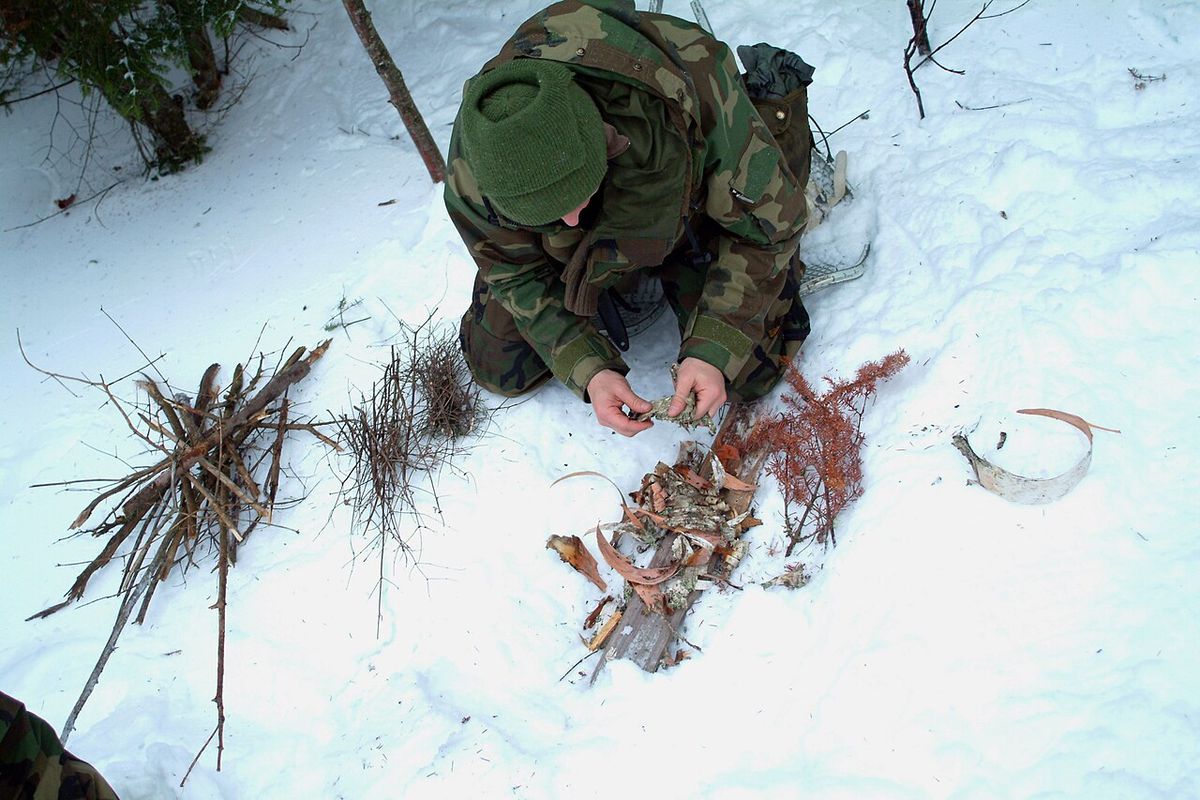
    A fire lit on a platform laid over the snow
  2. Pick a dry spot out of the wind, and if there is snow over the ground where a signal firesignal Anything in threes means help: three fires, three whistle blasts, three piles of rocks. has to go, clear it or build a platform so melting snow will not put the fire out. Melting snow under a fire or above it is enough to drown a small flame. Clearing or raising the spot keeps it dry.

  3. Wood on the ground soaks up water. It may look dry, but the manual says not to choose it. Dead twigs still on the tree are the kindling. Keep your firewood dry, and dry damp wood beside the fire as it burns. The MWTC handbook says dead branches still on standing trees, or windfalls held off the ground, have soaked up less water. Stack your wood under cover or upwind of the fire, close enough to reach but far enough to stay safe.

  4. Tinder must be absolutely dry. Keep some in a pocket against your body, and carry charred cloth if you only have a spark maker. Dew and damp air can soak tinder overnight. Your body heat keeps it dry. The MWTC handbook says to save a double handful of dry tinder for the next morning.

  5. The tepeetepee A fire lay shaped like a cone: kindling leaned in a circle over the tinder. Catches fast, even with damp wood. lay burns well even with wet wood: tinder and a few sticks of kindling in a cone, lit at the center, so the outside sticks fall inward and feed it. The cone shape lets each layer of sticks dry out from the flame below before it starts burning. That is why the manual trusts it with wet wood.

  6. Know the woods that burn in bad weather. Birch burns hot and fast as if it were soaked in oil. Willow and alder burn hot and fast with little smoke. Spruce burns almost smoke free in late fall and winter. These are trees you can learn to spot. FM 21-76 says birch often grows near streams and lakes, and willow and alder grow in wet ground near water. Spruce makes a lot of smoke in spring and summer.

    A student kneeling in snow breaking birch bark into small pieces
    Birch bark broken up for tinder: it burns hot even when damp
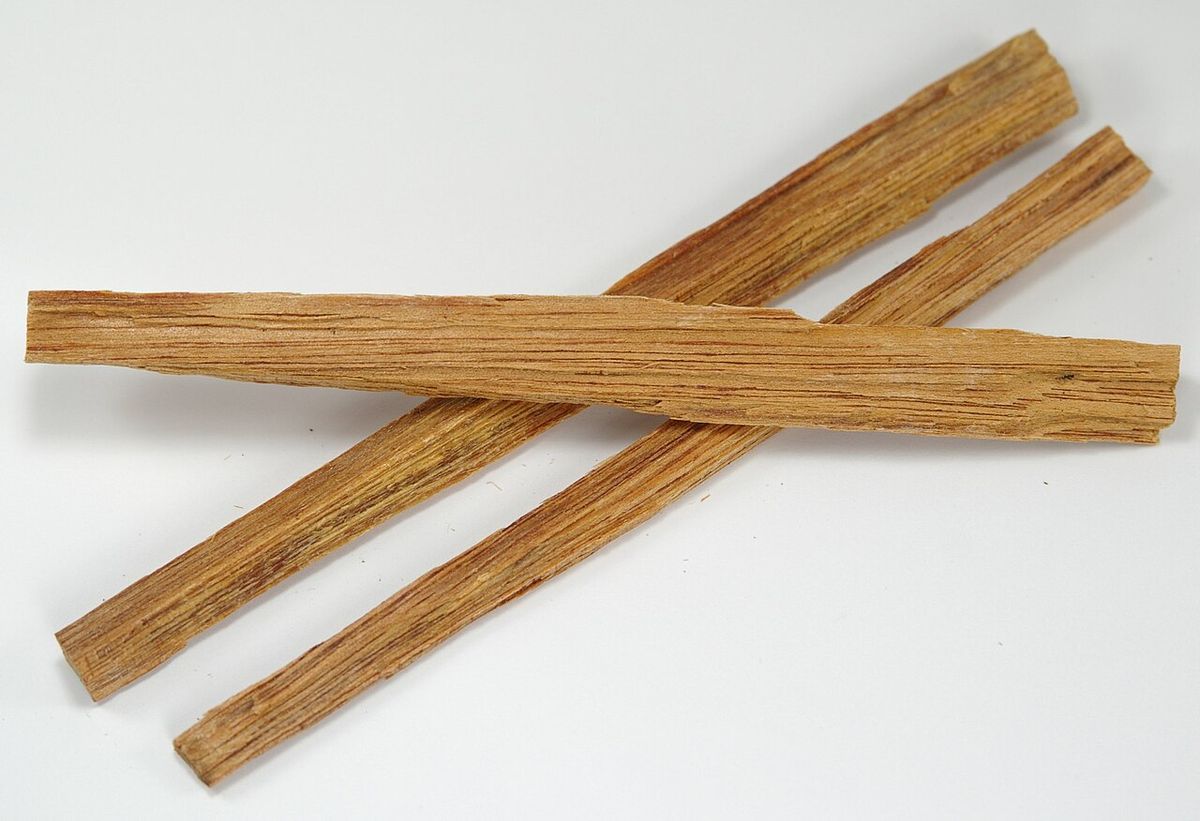
    Three slivers of resin-dark pine wood on a white background
    Fatwood: resin-soaked pine that catches in wet weather
  7. On open ground, dried moss, grass and scrub willow bundled or twisted into a solid mass burn slower and give more heat than loose handfuls. A tight bundle burns slowly from the outside in, like a log, instead of flaring up and going out.

  8. Some plastics, like an MRE spoon, light from a match and burn about 10 minutes, long enough to help start a stubborn fire. Some plastics catch fast from a match and keep burning. Burn them outside only, and stay out of the smoke.

  9. Watch what is above you. Snow melting out of overhead branches can soak you, bury your gear and put the fire out. Inside a snow shelter, too much heat melts the insulationinsulation Anything that traps still air and slows heat from leaving: dry leaves, pine needles, snow, wool, a puffy jacket. around you. Branches full of snow drop it when the fire warms them. Build in the open. If you use a snow shelter, FM 21-76-1 says that unless you can see your breath inside, it is too warm and should be cooled to stop melting and dripping.

  10. Once it is going, bank the fire so the coals live through the night, and carry lighted punkpunk Dry, rotten, crumbly wood that catches a spark and smolders for a long time. Good for carrying fire from one camp to the next. when you move so you do not have to start from a spark again in the rain. Banking means pushing the coals together and covering them so they stay hot overnight. Punk is dry, rotten wood that smolderssmolders Burns slowly with smoke and a glow but no flame yet. a long time, so you can carry a glow with you.

Tips from survival instructors

  • Split wet wood. The inside of a dead branch is often dry even after rain.
  • Look for dry tinder under thick evergreen branches, inside dead logs, or in a bird's nest. Birch barkbark slabs Big sheets of bark peeled off a dead log. Laid like shingles, bottom row first, they shed rain. burns even when damp.

Common mistakes

  • Building straight on snow. Fix: lay a green log base, or dig down to bare ground.
  • Using wood from the wet ground. Fix: snap dead twigs off standing trees.
  • Keeping tinder in an outside pocket. Fix: carry it close to your body in a sealed bag.
  • Building under snow-loaded branches. Fix: move to open sky.
  • Building a fire too close to a shelter. Fix: FM 21-76 warns that fires can burn underground and resurface nearby, and that a fire inside a shelter without good airflow can cause carbon monoxide poisoningcarbon monoxide poisoning Poisoning from carbon monoxide, an invisible gas with no smell made by fires, stoves and engines in closed spaces..
  • Rushing in a downpour. Fix: gather twice the tinder and kindling you think you need before you try to light.

Practice it safely

After a rainy day, take a walk in a park and try to find dry kindling. Snap dead twigs off the lower branches of trees and compare them with sticks from the ground. Do not break branches off live trees, and follow the park rules on collecting wood.

On a snowy day, practice building a green log base in your yard with a grown-up, using cut branches you already have, not live trees. Light a fire on it only where fires are allowed, with water nearby, and put it out with drown, stir and feel. Leave No Trace: scatter cold ashes and the base when you finish.

Quick check

It has rained all day. Where do you get kindling?

  • Sticks on the ground
  • Dead twigs still on the trees
  • Green branches
Show the answer

Dead twigs still on the trees

Take the quiz and earn the badge

The app checks your answers, keeps your place in the Fire, and works with no signal once saved.

Before you rely on thisA learning tool, not a replacement for training. In an emergency, call 911.

Sources

Photo credits
Photo: U.S. Navy photo by Mass Communication Specialist 1st Class Roger S. Duncan, Public Domain, sourcePhoto: U.S. Navy photo by Mass Communication Specialist 1st Class Roger S. Duncan, Public Domain, sourcePhoto: Hustvedt, CC BY-SA 3.0, source

More on fire