Matches: make sure they are waterproof, and keep them in a waterproof container with a dependable striker pad. Waterproof matches still fail if the striker gets wet or worn. Keep the striker in the case with them.
Fire · Fire course
Lighting it: matches, lens, metal match, battery, flint, bow drill
The manual sorts ignitersigniters Anything that starts a fire: matches, a lighter, a spark rod, a lens or a bow drill. into modern and primitive. Carry the modern ones. Learn the primitive ones now, because the manual is blunt that they are exhausting and take practice to get right.
Why this matters
Matches and lighters are the easy way, but they get wet, rungame trail A narrow path worn through grass or brush by animals using it over and over. A trap goes on a trail an animal already uses. out or break. The MWTC handbook warns that modern igniters can fail when you need them. Knowing a second and third way to make a flame means one lost lighter does not leave you cold.
The primitive methods, like the bow drillbow drill A way to start a fire with friction: a bow spins a stick fast against a board until the hot dust makes an ember., are hard work. The manual says they take effort, persistence and practice. Learn them now, at home and in good weather, so the skill is there if you ever need it.
What you need
- Modern: waterproof matches in a waterproof case, a lighter, a magnifying lens, or a metal matchmetal match A rod of spark metal. Scrape a knife down it and it throws a shower of hot sparks into tinder. Works wet, so it belongs in every kit. (a ferro rod) and a knife.
- Charred clothcharred cloth Cotton cloth heated until it is black but not burned. It catches a spark and holds a glow long enough to light tinder from it. (char cloth): cotton cloth heated until black and kept in a sealed tin.
- Flint and steel: a hard, sharp-edged rock and a piece of carbon steel.
- Bow drill: a knife and a cord to make it, plus dry, seasonedseasoned Wood that has dried out for months. It lights easier, burns hotter and smokes less than fresh, green wood. wood. The MWTC handbook says it needs only the cord and knife from your kit.
- Always: plenty of dry tindertinder The driest, finest material you have, which catches a spark or small flame: shredded inner bark, dry grass, birch bark curls, cattail fluff. and your fire layfire lay How you stack tinder, kindling and fuel before you light it. Tepee, lean-to, log cabin and star are the common shapes. built before you start.
Step by step
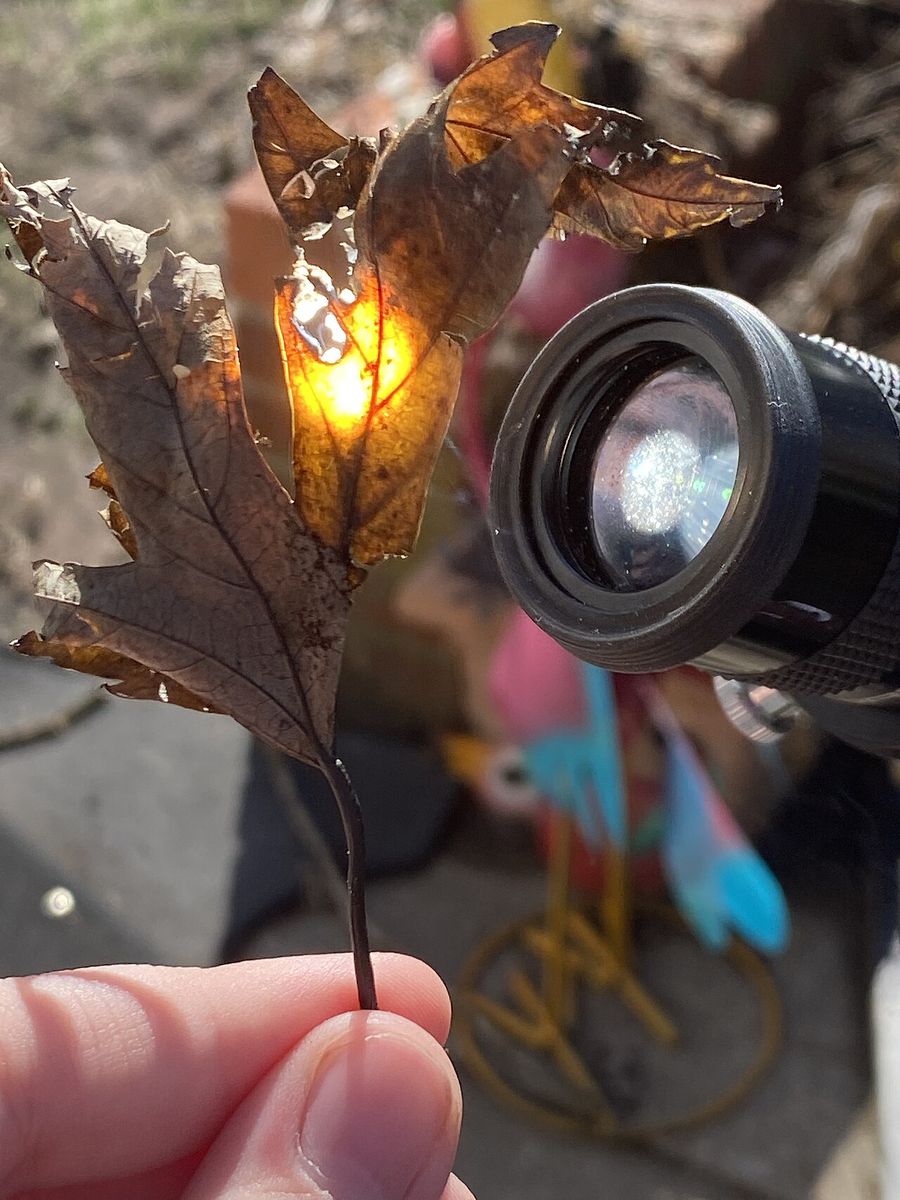
Lens: only on bright, sunny days. Use a lens from binoculars, a camera, a scope or a magnifying glass. Angle it to concentrate the sun on the tinder and hold it on the same spot until the tinder smolderssmolders Burns slowly with smoke and a glow but no flame yet.. Gently blow or fan it into flame and put it in the fire lay. The lens bends sunlight into one tiny hot spot. Move it closer or farther until the spot of light is as small and bright as you can make it, then hold very still. You know it is working when a thin line of smoke rises.
A lens focuses sunlight on dry tinder until it smokes and glows Metal match: put a flat, dry leaf under the tinder with part of it showing. Rest the tip of the metal match on the leaf, hold the match in one hand and a knife in the other, and scrape the knife down the match to throw sparks into the tinder. When it smolders, blow it to flame. A metal match is a rod that throws hot sparks when you scrape it hard. Holding the rod still and pulling the knife along it keeps you from knocking the tinder apart. The leaf keeps the tinder off damp ground.
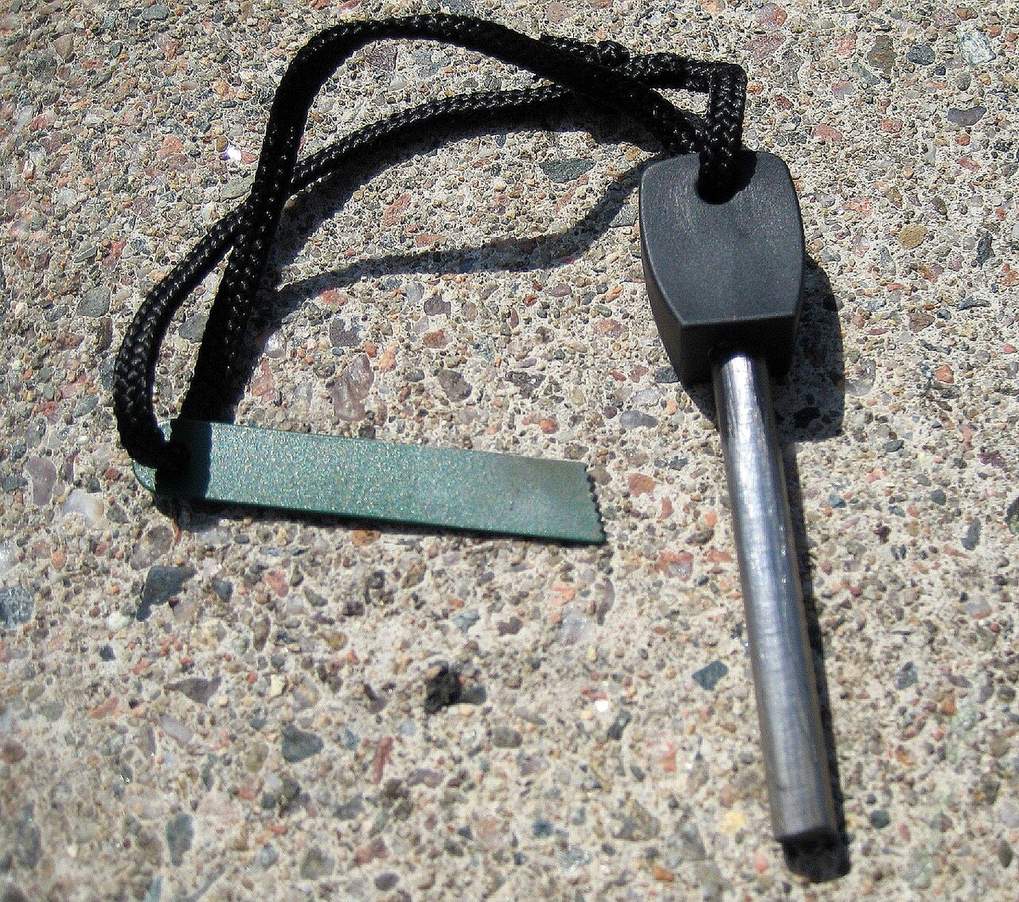
A metal match (ferro rod) and striker: scrape to throw sparks into tinder Battery: attach a wire to each terminal and touch the bare ends together next to the tinder so the sparks land in it. A spark jumps when the two bare wire ends touch. The manual says how well this works depends on the kind of battery you have.
If all you have is a spark maker, the manual says charred cloth is almost essential. It holds a spark long enough to put tinder on it and coax a flame. Make it ahead of time by heating cotton cloth until it turns black but does not burn, and keep it in an airtight container. A spark is tiny and gone in a blink. Char cloth catches it and glows for a long time, which gives you a chance to put tinder on it and blow it into a flame.
Flint and steel is the most reliable of the direct spark methods. Strike a flint or any hard, sharp-edged rock with a piece of carbon steel; stainless steel will not throw a good spark. It takes a loose wrist and practice. When a spark catches in the tinder, blow on it. The rock scrapes off a tiny flake of steel so hot it glows. Stainless steel does not throw a good spark. Aim the sparks onto char cloth or very fine tinder.
Fire plow: rub a hardwoodhardwood Wood from trees with broad leaves, like oak, maple and hickory. Burns long and makes good coals. shaft in a straight groove cut in a softer wood base. Plow the blunt tip up and down the groove; it pushes out fine wood fibers, and as you press harder on each stroke the frictionfriction The rubbing of one thing against another. It makes heat, which is how rubbing sticks can start a fire. ignites them. The fire plow uses rubbing to make heat. You are doing it right when fine, dark wood dust builds up at the end of the groove and starts to smoke.
Bow and drill, the parts: a socket (a stone, hardwood or bone with a small hollow) to press down on the drill; a drill of straight, seasoned hardwood about 3/4 inch (2 centimeters) thick and 10 inches (25 centimeters) long, round on top and blunt on the bottom; a fire board of seasoned softwoodsoftwood Wood from trees with needles and cones, like pine and spruce. Lights fast and burns hot but quickly, with sparks and pitch. about 1 inch (2.5 centimeters) thick and 4 inches (10 centimeters) wide with a hollow cut about 3/4 inch (2 centimeters) from the edge and a V notch underneath from the edge to the hollow; and a bow of green stickgreen wood Wood cut from a living tree, still full of sap. It will not burn easily, which is why it makes the base under a fire on snow and the reflector wall behind one. about 1 inch (2.5 centimeters) thick strung with any cord, no slack. Seasoned means wood that has dried out for a long time. The socket is what you press down on so the drill spins in one place. The V notch is where the hot dust collects and turns into a glowing emberember A small piece of glowing, burning material with no flame. Fold it into tinder and blow gently to make fire.. The MWTC handbook gives a bow about 30 to 36 inches long and says 550 parachute cord works best for the string.
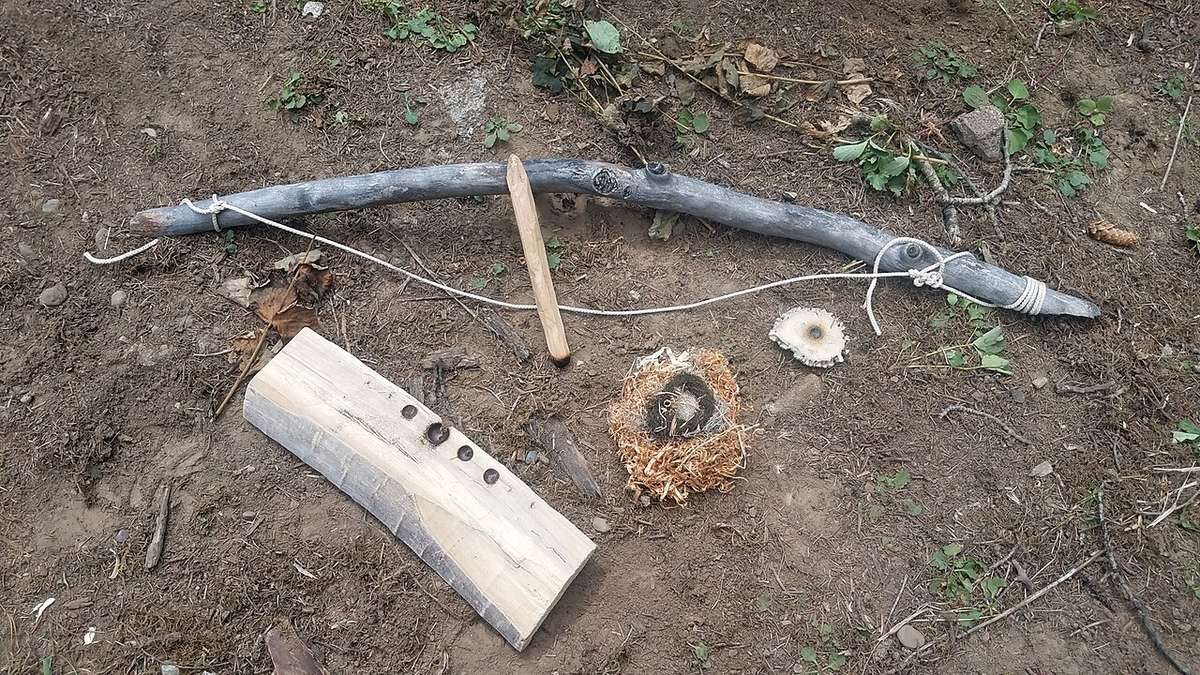
Bow and drill set: bow, drill, fireboard with its V notch, socket and tinder Bow and drill, the work: put a bundle of tinder under the V notch. Put one foot on the board, loop the string over the drill, set the drill in the hollow and the socket on top. Press down and saw the bow back and forth to spin the drill. Once the motion is smooth, press harder and go faster. Hot black powder grinds down into the tinder and a spark catches. Blow it into flame. The MWTC handbook adds that you know it is time to stop when a thick layer of smoke builds around the hole. Lift everything off gently, tap the board so the dust falls onto a piece of barkbark slabs Big sheets of bark peeled off a dead log. Laid like shingles, bottom row first, they shed rain. or leather, and fan it softly until it glows. Then drop it into a loose nest of tinder and blow gently until it bursts into flame.
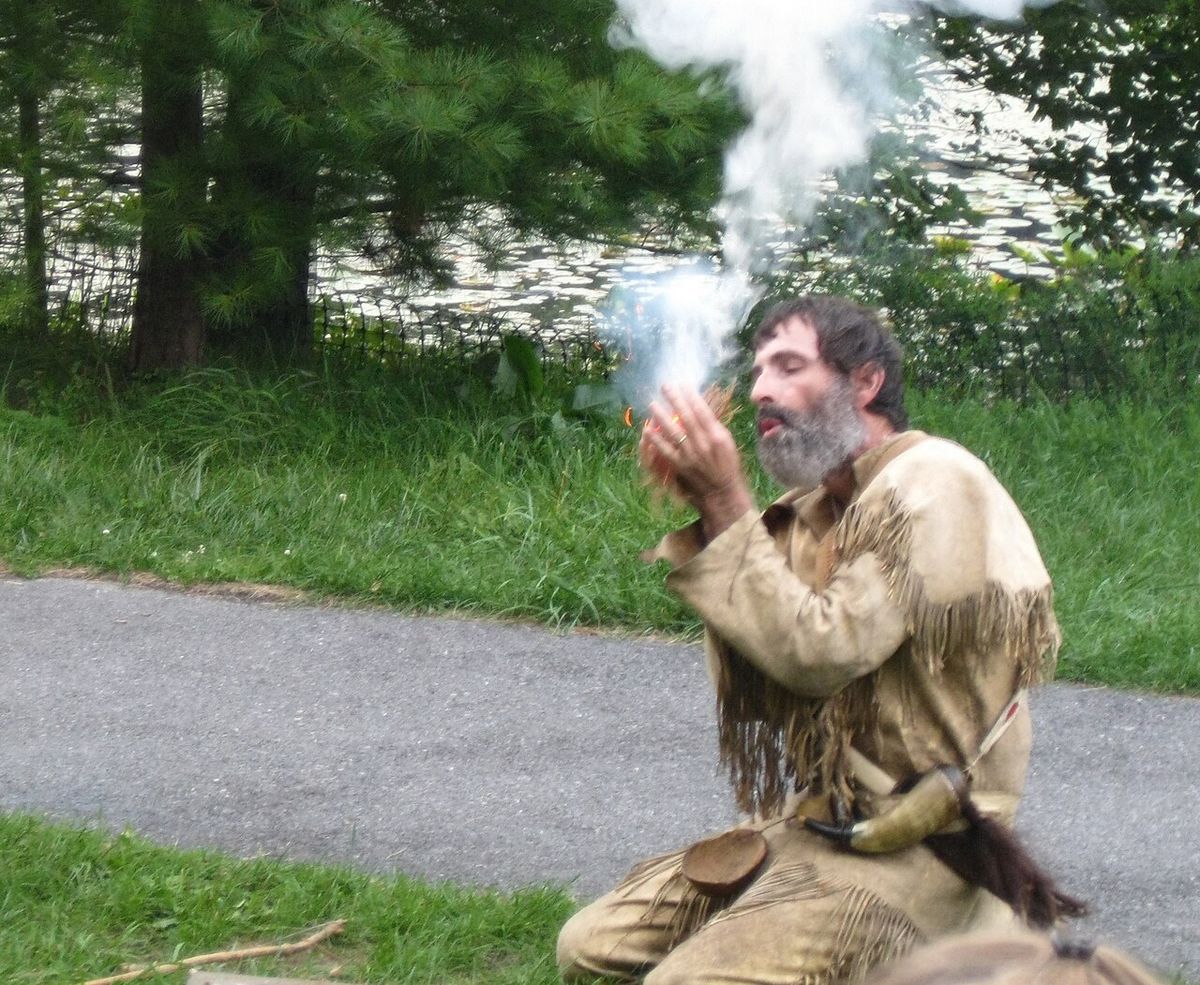
Blow gently on the glowing coal in the tinder until it flames Make it easier on yourself: collect tinder and kindlingkindling Pencil-thin dead twigs that catch from tinder and build the fire up. They should snap, not bend. along the trail, add insect repellent to the tinder, carry lighted punkpunk Dry, rotten, crumbly wood that catches a spark and smolders for a long time. Good for carrying fire from one camp to the next. when you can, and keep the firewood dry. Punk is dry, rotten wood that smolders for a long time. Carrying a glowing piece saves you from starting over at the next camp. Insect repellent helps tinder burn hotter.
Tips from survival instructors
- Keep matches and a lighter in a waterproof bag or container, and carry at least two ways to start a fire.
- Make char cloth at home by heating 100 percent cotton in a closed tin with a small hole until the smoke stops.
Common mistakes
- Not having the fire lay ready before making the flame. Fix: build the lay first, then light it.
- Using a stainless steel knife for flint and steel. Fix: use carbon steel.
- Bow drill: drill keeps popping out. Fix: the MWTC handbook says press down harder or make the hole wider and deeper.
- Bow drill: drill will not spin. Fix: press down less, or tighten the string.
- Bow drill: smoke but no ember. Fix: cut the V notch all the way into the center of the hole, and keep going until there is more heat.
- Tinder nest will not catch. Fix: make sure it is dry, weave it looser, break the fibers down more, and blow gently; blowing too hard breaks the ember apart.
Practice it safely
Practice sparks without fire danger first. On a driveway or patio, away from anything that can burn and with a grown-up, scrape a metal match or strike flint and steel and aim the sparks at a pinch of cotton or char cloth in a metal pan. Keep a bucket of water beside you and put out every glow.
Make char cloth and practice the bow drill only where fires are allowed, like a permitted backyard fire pit, with a grown-up. The manual says it takes practice, so do not expect fire on the first day; getting smoke is a good first goal. Skip battery sparks unless an adult who knows batteries is helping.
Quick check
What is charred cloth for?
- Bandages
- Holding a spark long enough to light tinder from it
- Filtering water
Show the answer
Holding a spark long enough to light tinder from it
Take the quiz and earn the badge
The app checks your answers, keeps your place in the Fire, and works with no signal once saved.
Before you rely on thisA learning tool, not a replacement for training. In an emergency, call 911.
Sources
- US Army Survival Manual, pages 85 to 86 (charred cloth) and 87 to 91 (modern and primitive igniters, bow and drill, hints)
- US Army Survival Manual, pages 85 to 86 (charred cloth) and 87 to 91 (matches, lens, metal match, battery, flint and steel, fire plow, bow and drill, helpful hints)
- Marine Corps Winter Survival Handbook, pages 24 to 27 (modern methods can fail, bow and drill sizes and steps, ember patch, bird's nest, troubleshooting)
- Military Survival and Rescue Guide, pages 65 to 66 (heat sources, friction method is hard without training, tinder helpers)