Food guide
Cottontail rabbit: catch, clean and cook
Cottontails live along every brushy edge; one rabbit is a real meal, and it is the easiest animal to skin.
Page numbers below are from the US Army Survival Manual (FM 21-76) unless another source is named. Each one opens that page.
In many states, cottontail rabbits are hunting-only: in rabbit season, with a hunting license and a legal gun or bow. Snares, deadfalls and other traps for rabbits are illegal.
Ways to catch it
Rabbits sit tight in thick brush and burst out when you get close. Walk slowly along brushy fence lines and briar patches, stop often, and watch the ground ahead.
Legal with a hunting license, in season, with a legal gun or bow. Check this year's state rules for dates and limits.
p. 99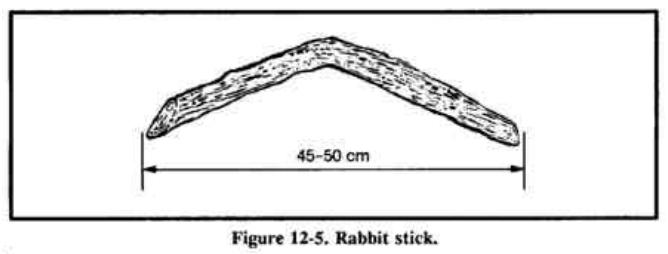 Rabbit stickPractice only
A stout stick as long as your arm, thrown overhand or sidearm. The manual calls it one of the simplest and best killing tools for small game that stops and freezes.
A thrown stick is not one of your state's legal hunting tools. Practice on a target, like a stump.
p. 112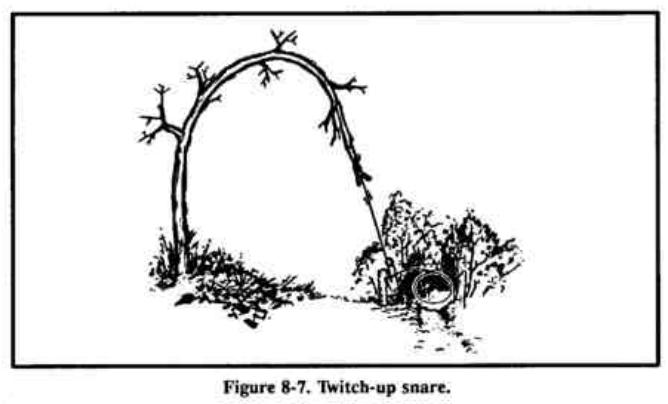 Twitch-up snarePractice only
A bent sapling (the "twitch-up") is held down by two forked sticks that hook together. A wire loop hangs over the trail. When a rabbit pushes its head into the loop, the sticks come apart and the sapling springs up. The manual says do not use green sticks for the trigger; sap glues them together.
Snares are illegal for rabbits in many states. Build the trigger on a table to learn how it works, then take it apart. Never set it outdoors.
p. 103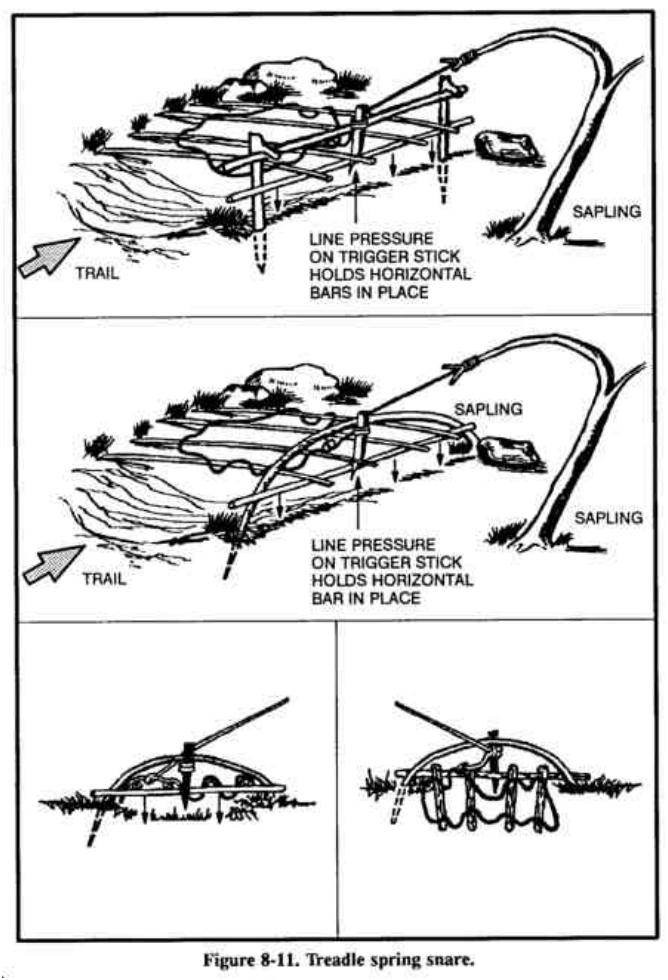 Treadle spring snarePractice only
Sticks laid over a shallow hole in the trail hold a short trigger stick in place. When an animal steps on a stick, the trigger slips free and a bent sapling pulls a loop tight around its foot.
Snares are illegal for rabbits in many states. Build the trigger on a table to learn how it works, then take it apart. Never set it outdoors.
pp. 106 to 107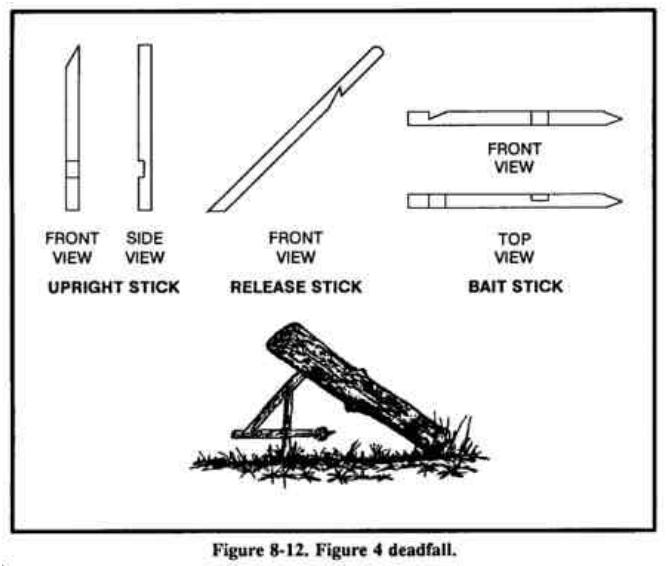 Figure 4 triggerPractice only
Three notched sticks lock together in the shape of a 4 and hold up a weight. A touch on the bait stick knocks them apart. The manual says practice making it first; the notches must fit closely.
Deadfalls are illegal in many states. Build the trigger on a table to learn how it works, then take it apart. Never set it outdoors.
pp. 107 to 108Clean it, step by step
Put on gloves. Rabbits can carry tularemia ("rabbit fever"), a germ that gets in through cuts on your hands (general food safety, not the manual).
p. 121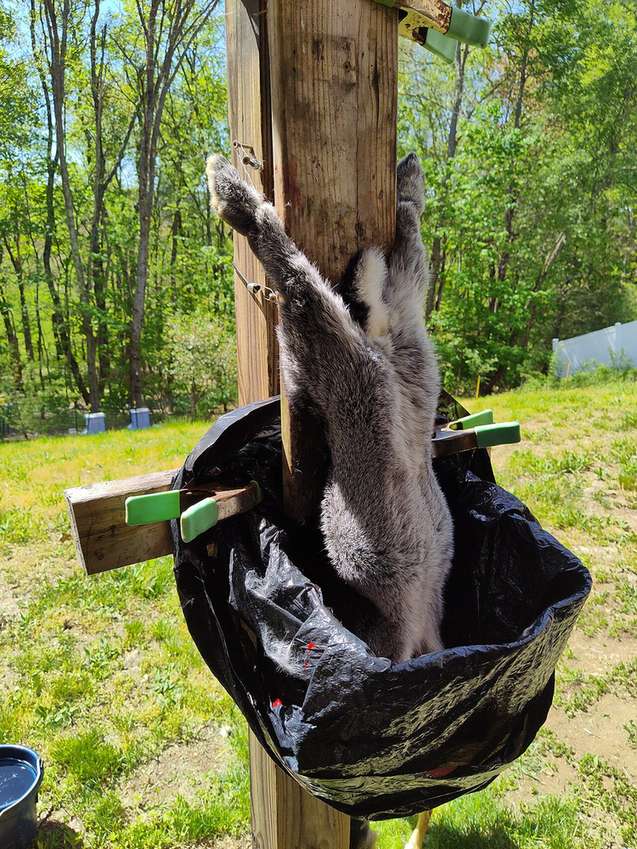
Bleed the rabbit by cutting its throat or cutting off the head. Then hang it by its back legs, or lay it on its back.
p. 121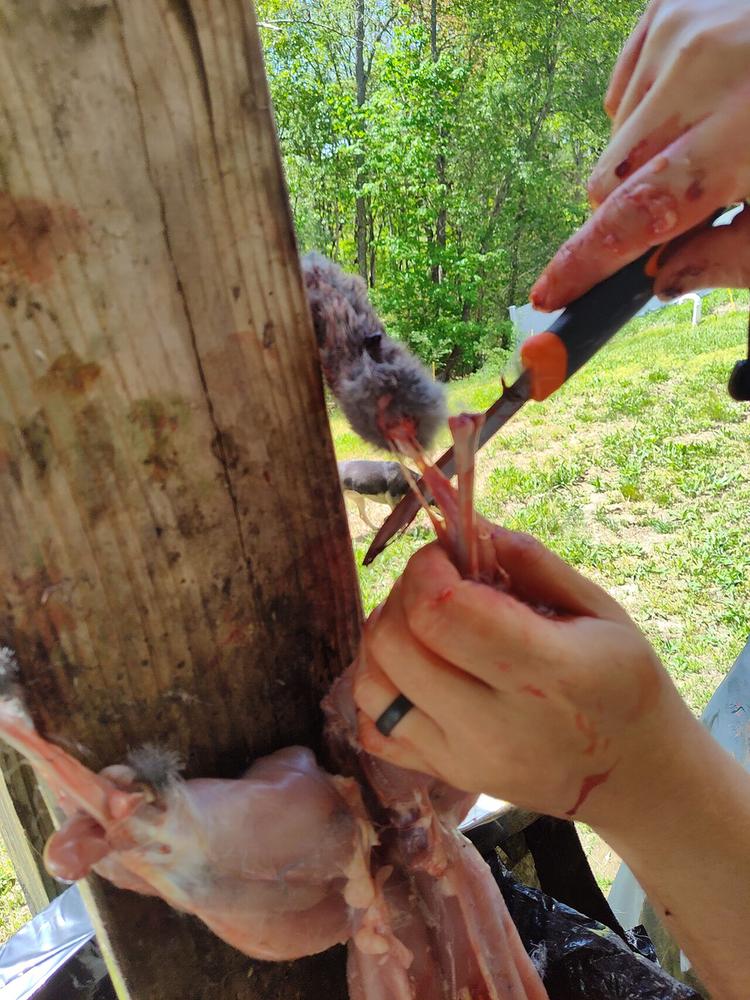
Cut off the feet at the first joint above each foot.
p. 122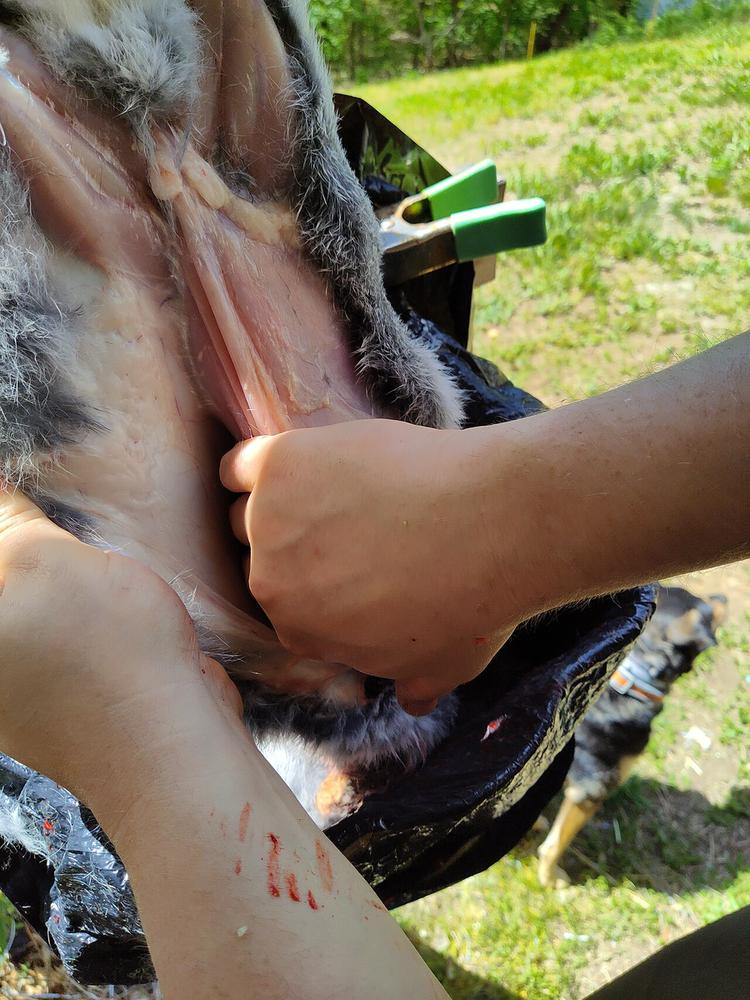
Cut the skin around the body, or down the back legs. Slide the knife under the skin with the edge facing up, so you cut only skin and no hair gets on the meat.
p. 121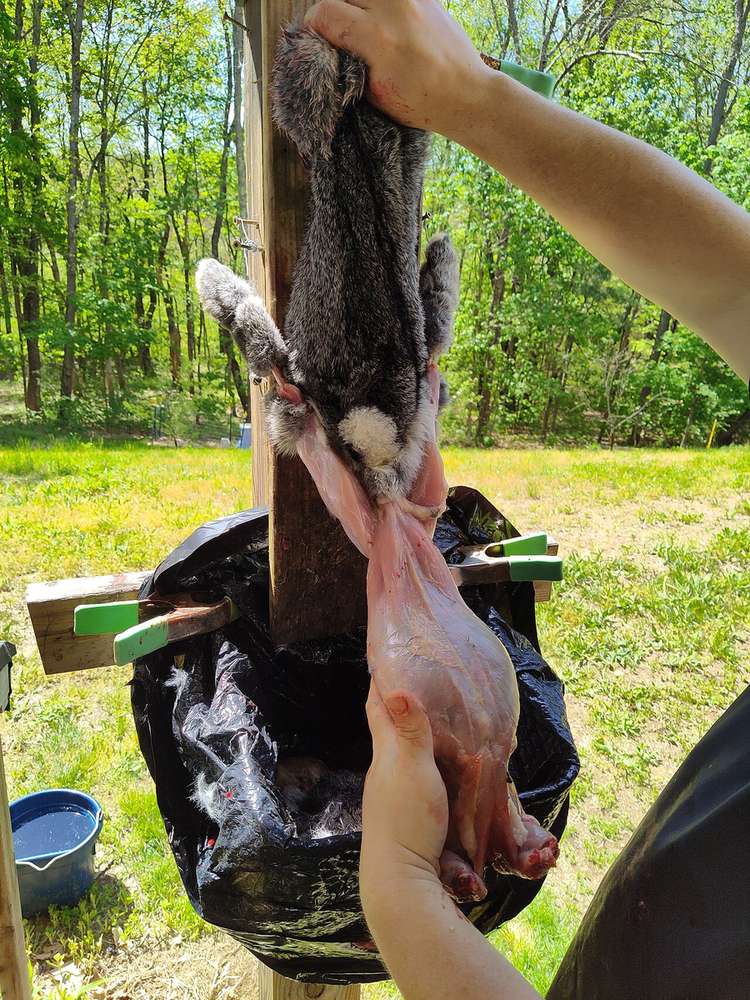
Get your fingers under the skin and pull it off, like pulling off a sweater. Rabbit skin is thin and comes off easily.
p. 121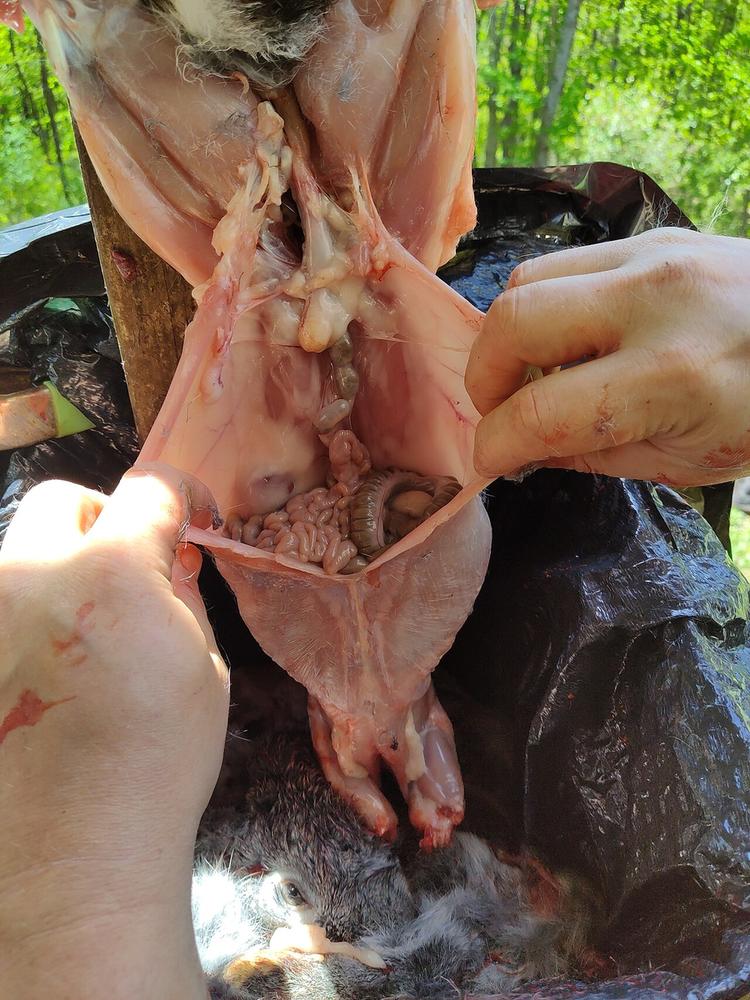
Pinch up the thin belly muscle and cut a small slit. Open the belly with two fingers under the blade so you do not poke the guts.
Military Survival and Rescue Guide, page 86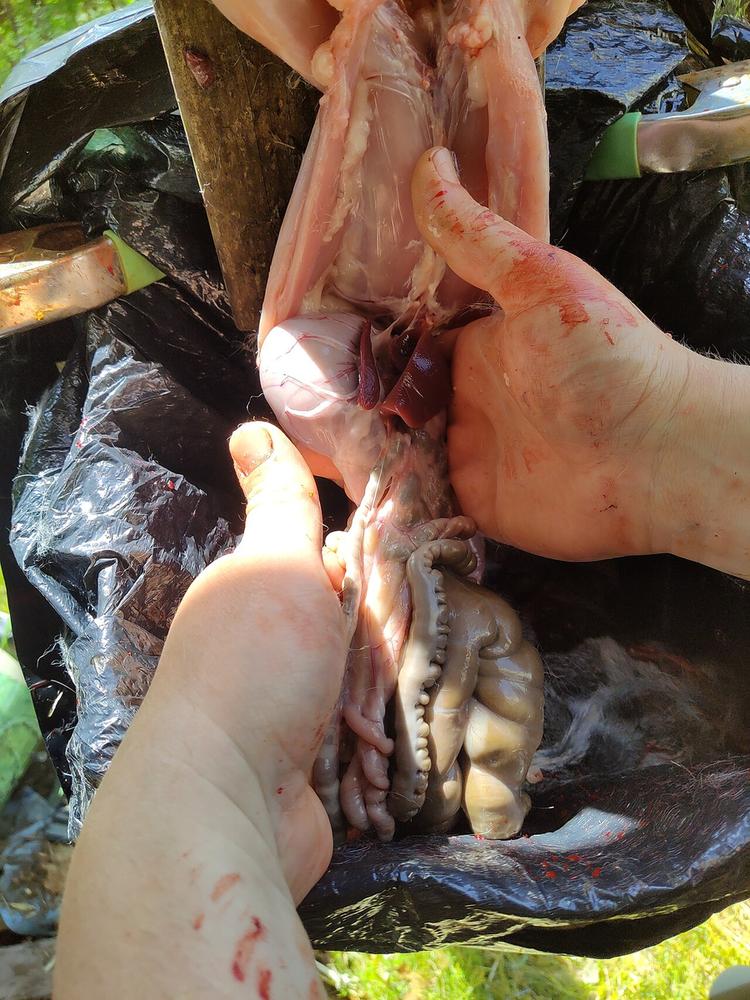
Pull the guts out with your fingers. Pinch off the bladder (the small sack of urine) and cut below your fingers. If urine spills on the meat, wash it off.
p. 122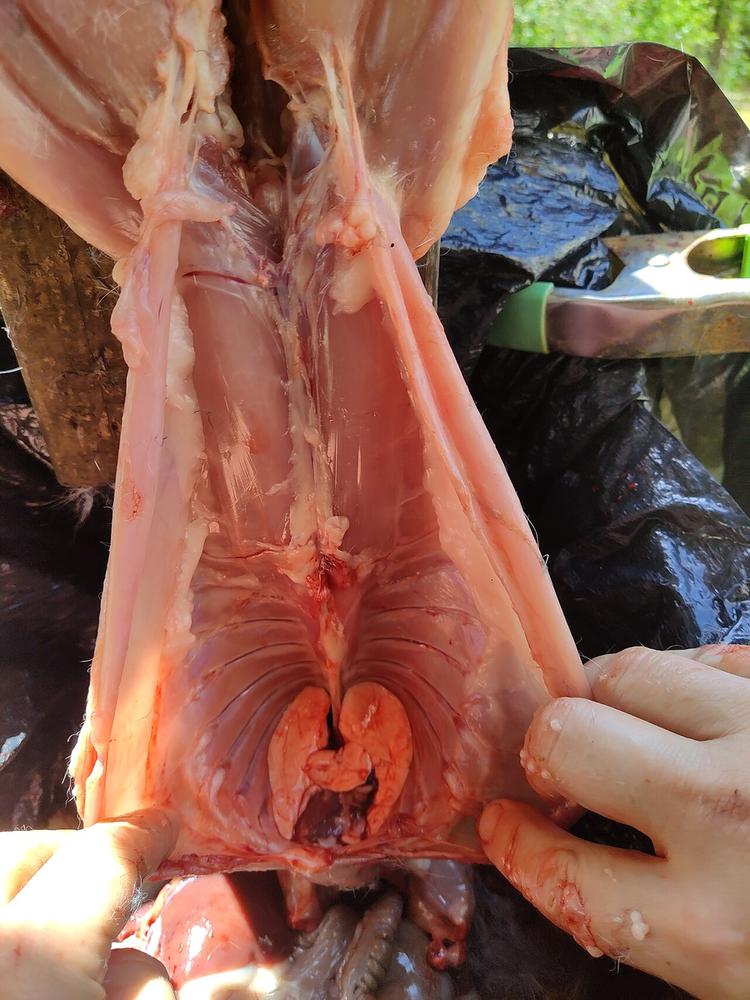
Reach up into the chest and pull out the heart and lungs. Keep the heart and liver.
p. 122Check the liver. It should be smooth, wet and deep red. White spots on a rabbit liver can mean tularemia: throw the liver away, wash up, and cook the meat very well (general food safety, not the manual).
p. 122
Cook it, step by step
Cut the rabbit into two back legs, two front legs and the back. The front legs come off with no joint to cut; just slice the muscle.
p. 122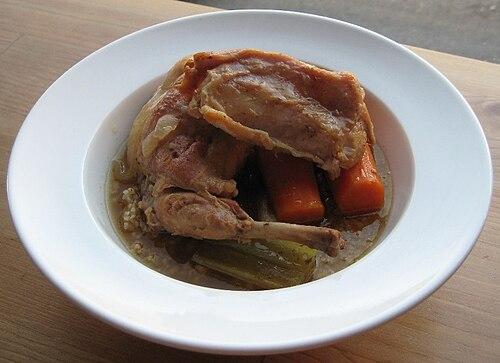
Boil or stew the pieces until tender. Rabbit is very lean, so add any fat you have, and drink the broth.
p. 123Or roast the pieces on a stick (a spit) over coals, turning them.
p. 123Cook until no pink is left, 165 F inside. Rabbit must always be cooked well (general food safety, not the manual).
Military Survival and Rescue Guide, page 87
Stay safe
- Wear gloves and cook rabbit well. Tularemia ("rabbit fever") spreads from wild rabbits through cuts and undercooked meat (general food safety, not the manual).
- Do not eat an animal that looked sick or acted strangely. p. 299
- Rabbit meat is so lean that living on rabbit alone leaves you hungry and weak. Eat fat and plants with it (general knowledge, not the manual).
The app shows what has been seen near your ZIP code, with photos, and can read a photo you take.