Food guide
Groundhog (woodchuck): catch, clean and cook
A groundhog is a big, fat ground squirrel that lives in one burrow and feeds in the same field every day, so it is easy to find and gives a lot of meat.
Page numbers below are from the US Army Survival Manual (FM 21-76) unless another source is named. Each one opens that page.
In many states, groundhogs may be hunted with a hunting license during a long season that covers most of the year. Check this year's dates and any closed days. Snares and deadfalls are illegal.
Ways to catch it
Groundhogs dig burrows with a big dirt pile at the door, along field edges and fence rows. They come out in daylight to feed, mostly morning and evening. Sit still a long way off with a clear view of the field.
Legal with a hunting license, in season, with a legal gun or bow. Get the landowner's permission first.
Military Survival and Rescue Guide, page 78The manual hides near a den hole with a long pole that has a wire loop on the end, and jerks the loop tight when the animal comes out. Carry a stout club; a cornered animal fights.
Not a legal way to take a groundhog in many states. Make the tool to learn it; do not use it on an animal.
p. 106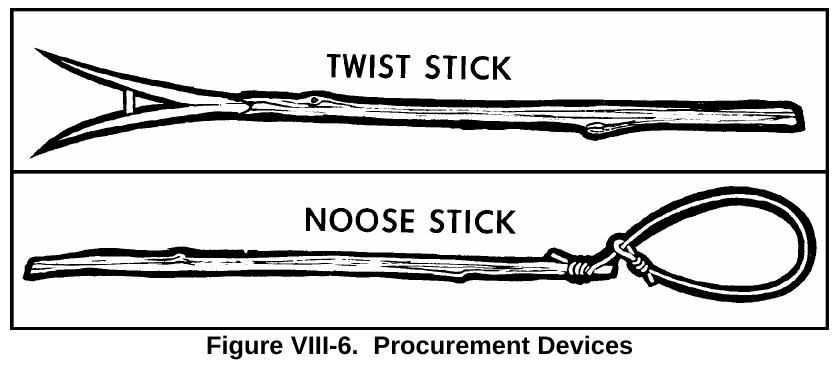 Twist stickPractice only
The 1999 manual pushes a long forked stick into a den until it meets something soft, then twists it to wind the fur into the fork and pulls the animal out. Be ready: it may be dangerous.
Not a legal way to take a groundhog in many states. Make the tool to learn it; do not use it on an animal.
Military Survival and Rescue Guide, page 81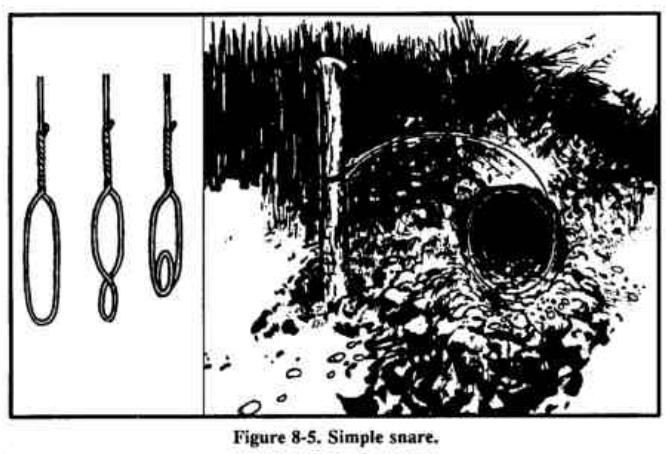 Simple snare at a den holePractice only
A wire loop set over a den hole and tied to a stake. The more the animal pulls, the tighter it gets. The manual says wire works best; cord can slip off.
Snares are illegal for this in many states. Build the trigger on a table to learn how it works, then take it apart. Never set it outdoors.
p. 101Clean it, step by step
Clean a groundhog right away; the fat spoils fast in warm weather. Wear gloves (general food safety, not the manual).
p. 121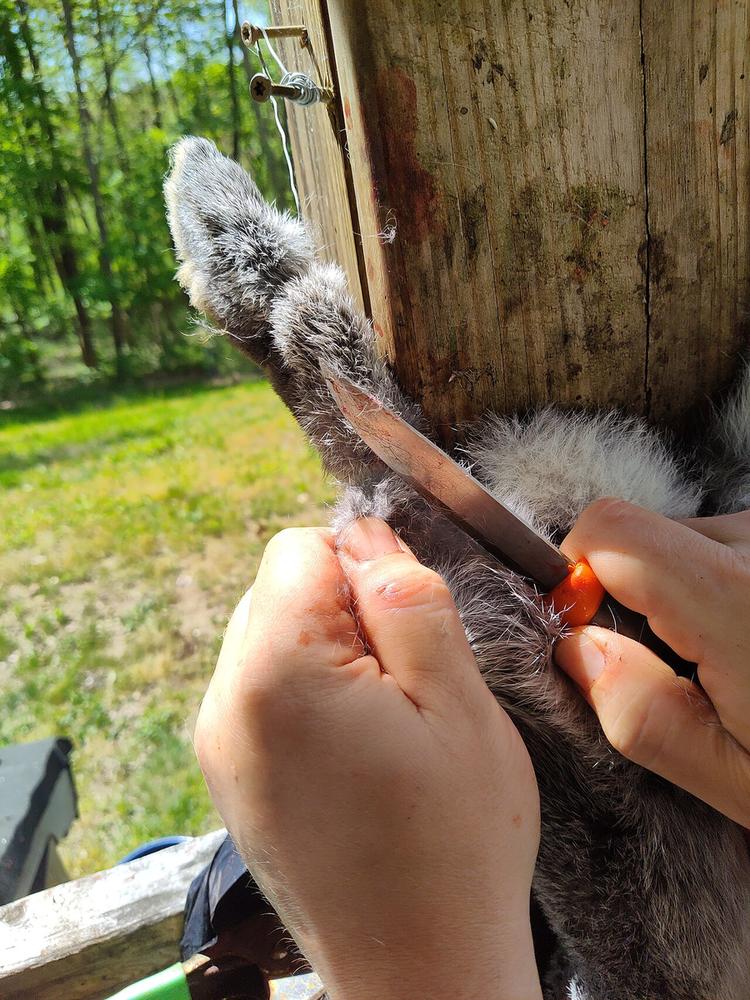
Lay it on its back. Cut through the skin from the throat to the tail, going around the sex organs. Keep the blade edge up under the skin so you cut only skin.
p. 121The manual says to cut out the musk glands. On a groundhog they are small, waxy lumps under the front legs and along the small of the back (where they are: general practice, not the manual). Do not cut into them; they make the meat taste bad.
p. 121Cut along each leg from the foot to the belly cut. Pull the skin off, cutting the thin tissue that holds it. Groundhog skin is tougher than rabbit skin and needs more cutting.
p. 122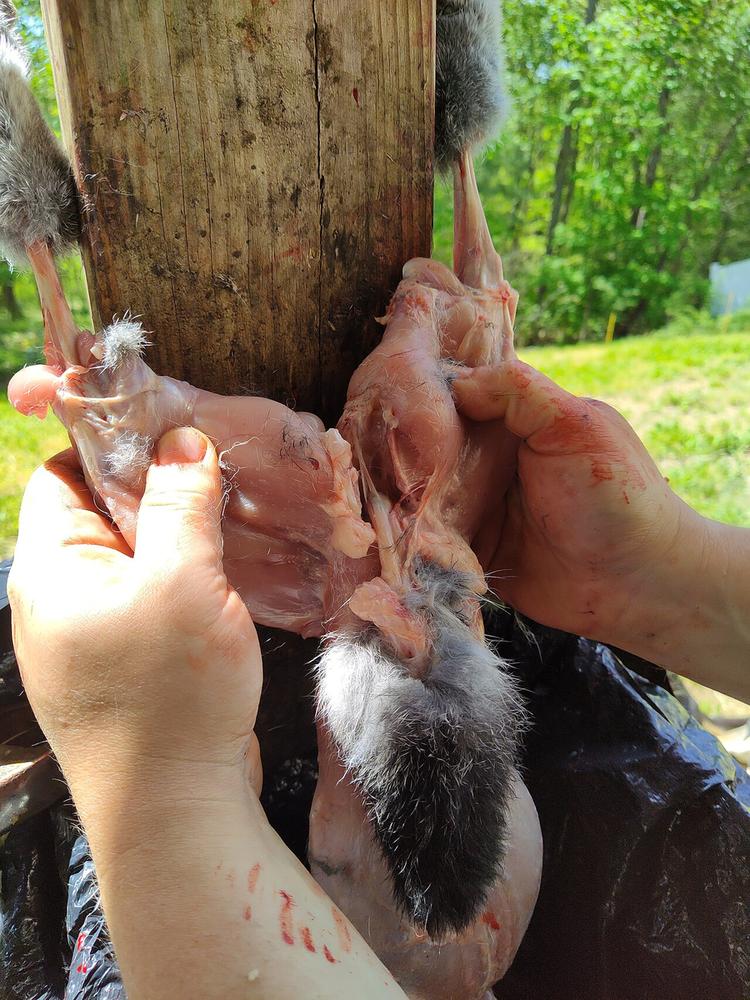
Open the belly without cutting the guts and pull them out, chest too. Pinch off the bladder and cut below your fingers. Splitting the narrow bone between the back legs makes the lower gut easier to pull out (general practice, not the manual).
p. 122Check the heart and liver for worms and spots. Keep them if they look smooth, wet and dark red.
p. 122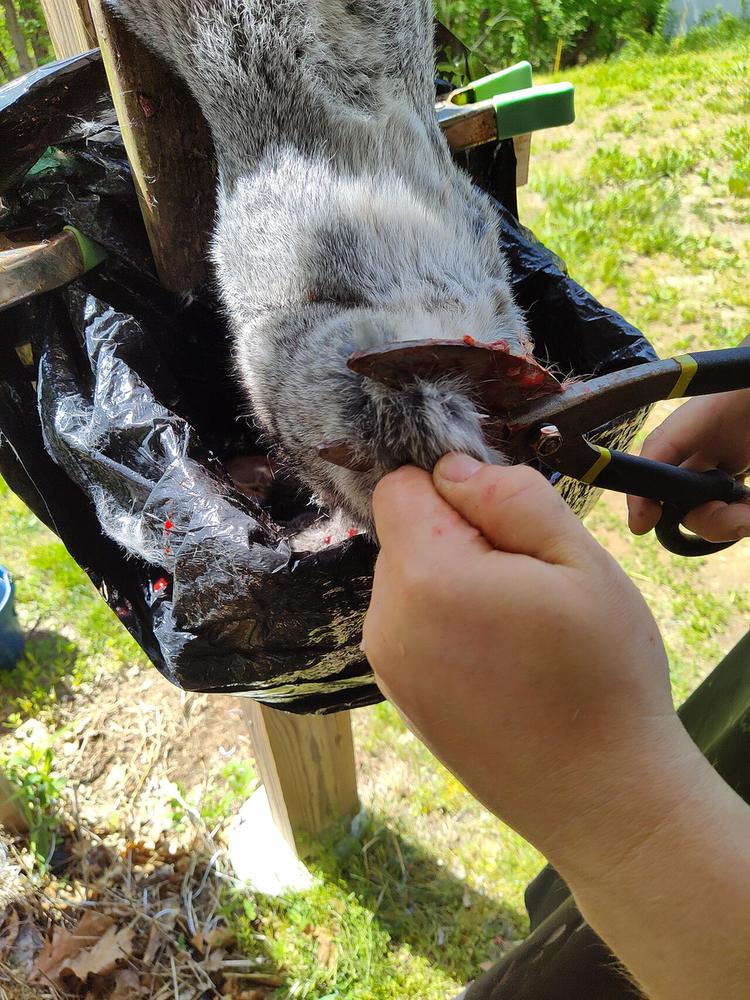
Cut off the head and feet, then cut off the legs: the front legs have no joint to the body, so just slice the muscle.
p. 122Trim off the thick layer of fat if you do not need it. You can melt it down for grease.
p. 23
Cook it, step by step
Boil the pieces in water first (parboiling) until they start to get tender. Pour that water off if the meat tastes strong.
Military Survival and Rescue Guide, page 87Then stew the meat with greens and roots, or roast it over coals until no pink is left.
p. 123Cook to 165 F inside (general food safety, not the manual).
Stay safe
- Groundhogs bite hard and fight when cornered. Do not reach into a burrow; the 1999 manual says avoid reaching into dark holes. Military Survival and Rescue Guide, page 82
- Groundhogs can carry fleas and ticks. Check yourself for ticks after handling one (general knowledge, not the manual).
- Do not eat an animal that looked sick or acted strangely. p. 299
The app shows what has been seen near your ZIP code, with photos, and can read a photo you take.