Food guide
White-tailed deer: catch, clean and cook
One deer gives 40 pounds or more of meat, plus sinew for lashing and a hide; this guide walks through bleeding, gutting, skinning, cutting it up, and smoking or drying the meat so it keeps.
Page numbers below are from the US Army Survival Manual (FM 21-76) unless another source is named. Each one opens that page.
In many states, deer may be taken only by hunting in deer season: with a hunting license and a deer permit, and the gun or bow allowed in that season. Wear hunter orange in gun seasons, and report every deer through your state's game check. Traps and snares for deer are illegal. Check this year's state rules.
Ways to catch it
Deer walk the same trails from bedding cover to food and water at dawn and dusk. Find a trail with fresh tracks and droppings and wait beside it, downwind (the wind blowing from the deer to you).
Needs a hunting license and deer permit, in season, with a legal gun or bow. Check this year's rules.
p. 99Move only when the deer is looking away or feeding. Freeze when it raises its head or turns its ears toward you. Keep trees and rocks between you, and squint so your eyes do not shine.
A way to hunt; it still needs the license, permit and season.
p. 284Look for heart-shaped tracks, piles of small pellets, rubbed bark on saplings and nibbled twigs. A trail used by many animals is wide and clear; a run used by one kind is smaller.
Looking for sign is allowed anytime.
p. 99Clean it, step by step
Bleed the deer by cutting its throat, unless it was already shot through the chest. If you can, clean it near a stream.
p. 121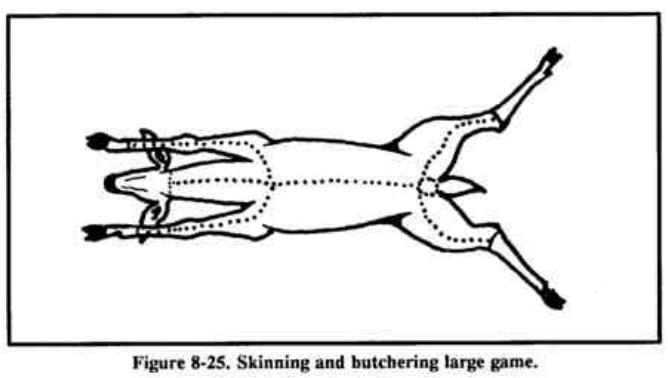
Roll it onto its back. Slide the knife under the skin with the edge up and cut from the throat to the tail, going around the sex organs. Do not cut the guts.
p. 121The manual says to remove the musk glands so they do not taint the meat. On a deer these are the dark tufts of hair inside the back legs. Either cut them off carefully, or leave them on and never touch them and then the meat (general hunting practice, not the manual).
p. 121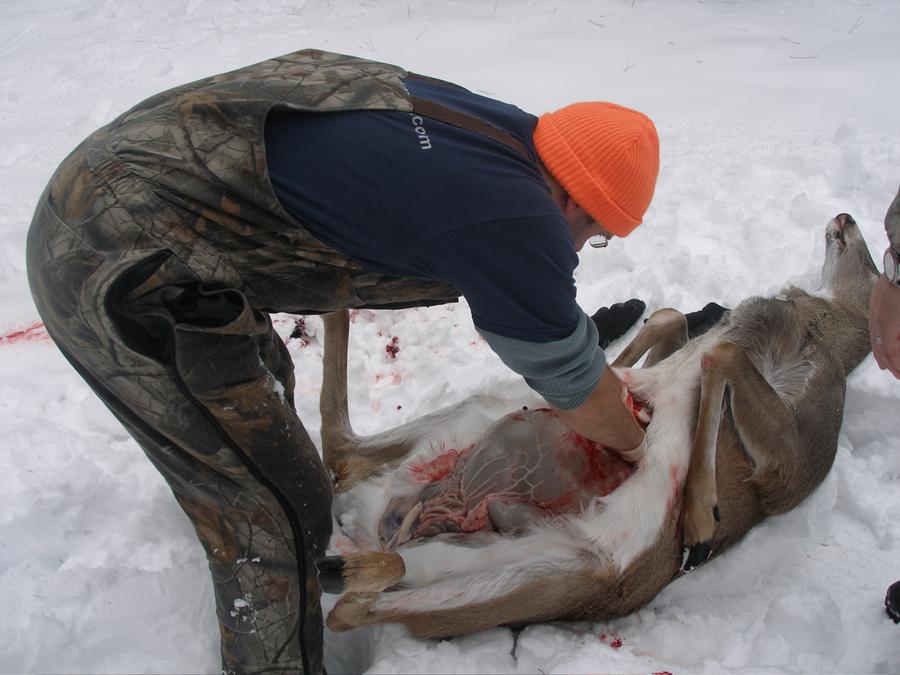
Field dress the deer (field dressing means gutting it where it fell, so the meat cools fast). Cut the gullet (the food tube) away from the thin wall below the lungs, then roll the guts out of the body.
p. 122Cut around the anus, reach into the lower belly, grab the lower intestine and pull it out. Pinch off the bladder and cut below your fingers. If urine spills on the meat, wash it.
p. 122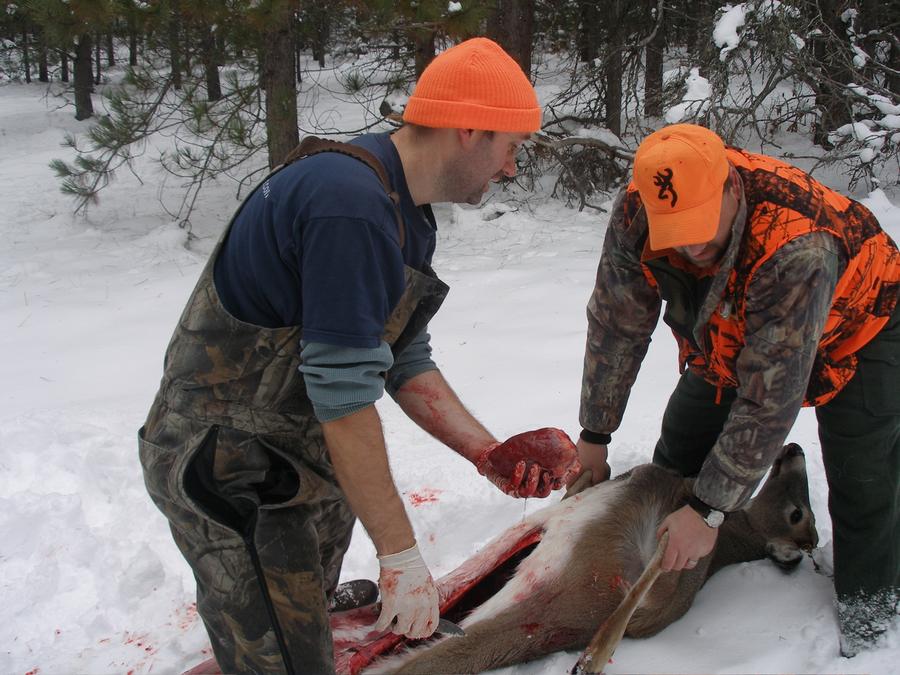
Save the heart and liver. Cut them open and look for worms. A good liver is smooth, wet and deep red or purple. Throw away a bad liver; the muscle meat can still be eaten.
p. 122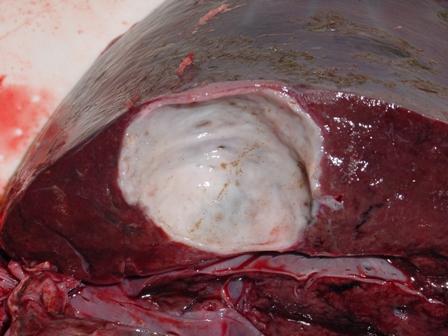
This is what worms in a liver can look like: a hard pocket with flat worms (liver flukes) inside. Throw a liver like this away.
p. 122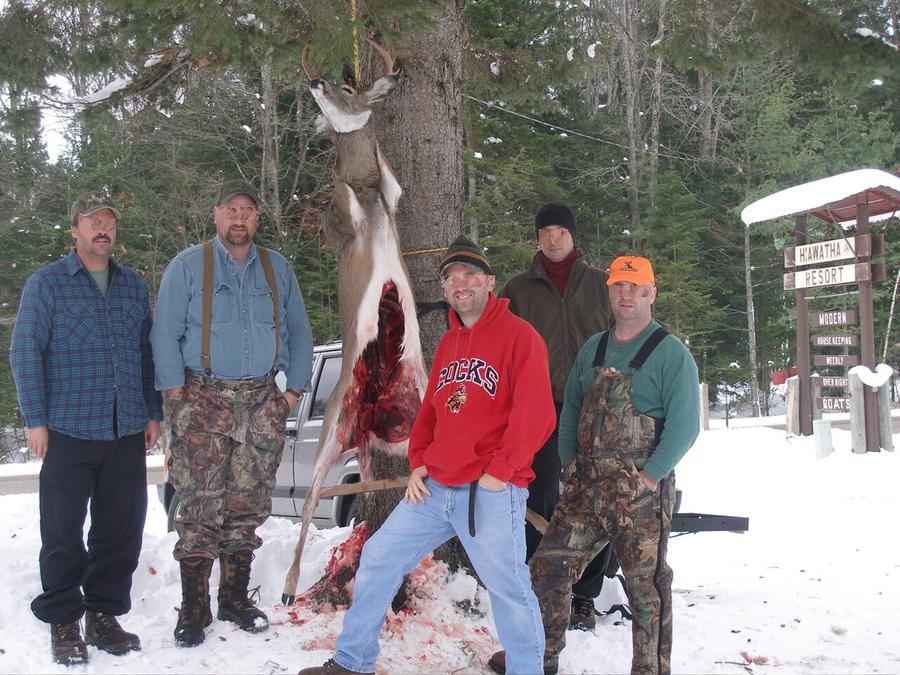
Hang the deer in the shade so it cools and drains. Cover it in the daytime to keep flies off.
Military Survival and Rescue Guide, page 89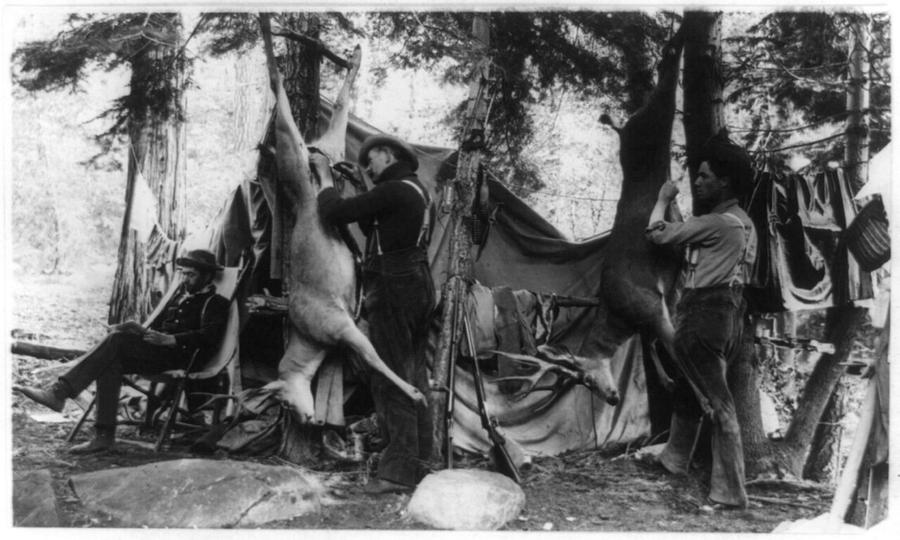
Skin it: cut along each leg from above the hoof to the belly cut. Pull the hide away from the body, cutting the thin tissue where it sticks. Cut off the head and feet.
p. 122Quarter it (cut it into four big pieces plus the back). Slice the muscle that holds each front leg; there is no bone joint there. For each back leg, cut around the big top bone to the ball-and-socket hip joint, cut the tough bands around it and bend it back.
pp. 122 to 123Cut out the two long tenderloins along the inside of the spine and the backstraps along the top. Break the ribs first, then cut through the breaks; it saves your knife.
p. 123Save the long tendons from the legs and back. Dried and pounded, they make sinew, the best natural lashing for small jobs.
p. 162
Cook it, step by step
Roast big pieces on a spit over the fire, or boil them. Stew the small bits left on the bones for soup.
p. 123Cook the heart, liver and kidneys the same way as the meat. Cut out the tongue, skin it and boil it until tender.
p. 123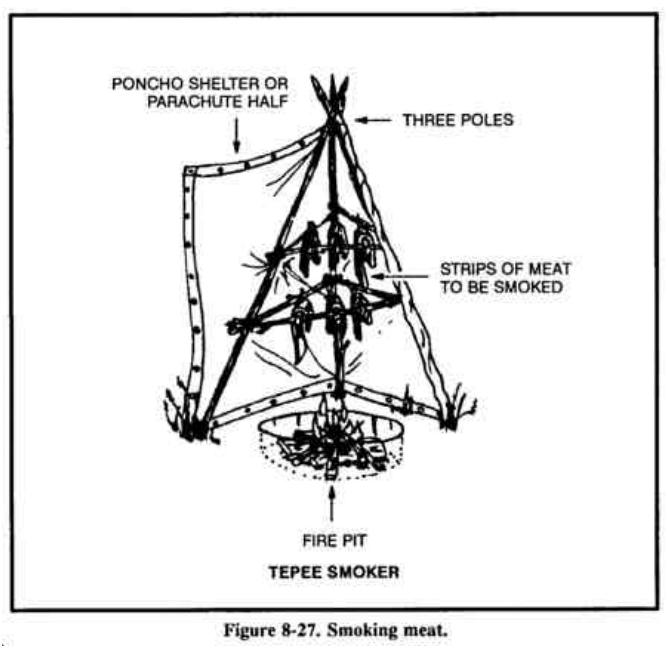
To smoke meat to keep it: build a small tepee of three poles and wrap it with a poncho or tarp. Make a small, smoky fire of hardwood that is a little green (soak it if it is dry). Never use pine or other sappy wood; the smoke ruins the meat.
p. 123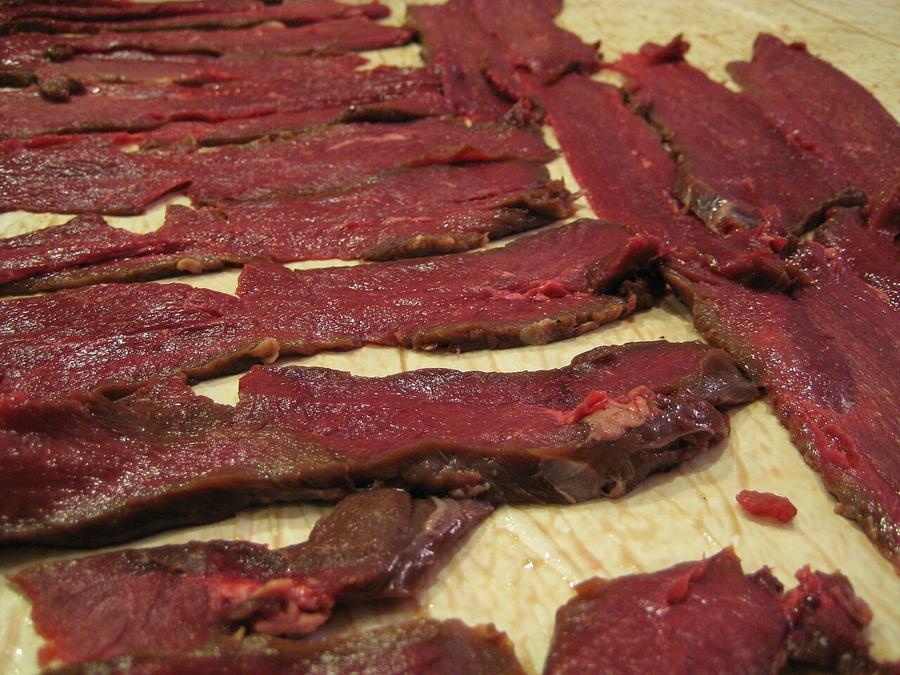
Slice the meat thin and hang it on the frame so no piece touches another. Keep the fire low; you want smoke, not heat.
p. 123Smoked overnight, the meat keeps about 1 week. Smoked 2 days without stopping, it keeps 2 to 4 weeks. It is done when it looks like a dark, curled, brittle stick, and you can eat it without more cooking.
p. 123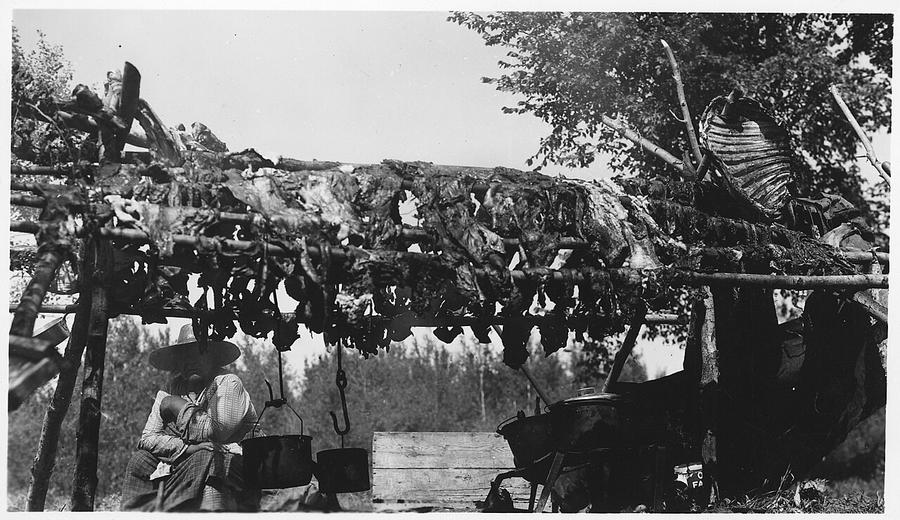
To dry meat instead: cut 6 mm (quarter-inch) strips along the grain. Hang them on a rack in sun and wind, out of reach of animals, covered from flies. They are done when dry and crisp and no longer feel cool.
pp. 124 to 125Cook fresh venison to 165 F inside (general food safety, not the manual).
Stay safe
- Do not eat a deer that looked sick, thin or wobbly. Many states test deer for chronic wasting disease; check your state wildlife agency's advice before eating a deer from a tested area (general knowledge, not the manual). p. 299
- Inspect the liver every time, and throw away any part that smells bad or looks wrong. p. 122
- Keep yellow jackets in mind; they come to fresh meat while you clean it. p. 144
- Do not store meat in your shelter. It draws animals. Military Survival and Rescue Guide, page 89
The app shows what has been seen near your ZIP code, with photos, and can read a photo you take.