← Outdoor Survivalist Trainer Your area

Water · Water course

Make water safe to drink

Clear water can still carry germs that put you down for days with vomiting and diarrhea, which costs you more water than you drank. Clean it in two stages: clear it, then kill what is in it.

Why this matters

Water can look clear and still carry germs you cannot see. The manuals list sickness from dirty water such as dysenterydysentery A gut infection from dirty water or food: bad, often bloody diarrhea with fever and cramps. It drains water from you fast., choleracholera A sickness from dirty water that causes huge amounts of watery diarrhea. It can dry a person out dangerously within hours. and typhoidtyphoid A serious fever sickness spread by water or food that has human waste in it., plus tiny worms and leeches. The MWTC handbook warns that a germ called Giardiagiardia A tiny germ that lives in streams and lakes, even clear mountain ones, and causes days of cramps and diarrhea. is common even in clear mountain streams.

Getting sick from water makes you lose more water through vomiting and diarrhea, which is the opposite of what you need. That is why the manuals treat clean water as a top priority.

Cleaning water has two separate jobs. Clearing it takes out the dirt you can see. Purifyingpurification tablets Making water safe to drink by killing the germs in it: boiling it, or adding tablets, iodine or plain bleach and waiting. it kills the germs you cannot. You usually need both.

What you need

  • A pot or can that never held fuelfuel wood Dead wood from finger to wrist thick that keeps the fire going once the kindling has caught. or oil, and a fire or stove, for boiling.
  • Or a chemical: water purification tablets, 2 percent tincturetincture A medicine dissolved in alcohol, sold in a small bottle with a dropper. Iodine tincture is the brown liquid in many first-aid kits. of iodineiodine A brown chemical that kills germs. A few drops in clear water, then a 30-minute wait, makes it safer to drink., or plain household bleach. FEMA says to use bleach only if the label shows hypochloritehypochlorite The germ-killing chemical in plain household bleach. Use only bleach whose label lists it as the only active ingredient. as the only active ingredient, so no scented or splash-free kinds.
  • For clearing: a cloth, sock or hollow tube, plus sand, small crushed rock and charcoal from a fire.
  • With nothing at all, FM 21-76-1 gives a last resort: take water from a clear, cold, clean, fast-running source and set it in a clear container in the sun. Use it only when you truly cannot boilrolling boil Big bubbles breaking the whole surface, not just a few at the edge. One full minute of this kills the germs that make you sick. or treat.

Settling takes about 12 hours, a boil takes a few minutes, chemicals need 30 minutes (longer in cold water), and removing a bad taste with charcoal takes 45 minutes.

Step by step

  1. Clear it first. Muddy or foul water: let it stand for 12 hours, then pour off the clear top. Or pour it through layers of sand and charcoal in a cloth, a sock or a hollow bamboo. Clearing does not kill germs. Letting water stand lets the dirt sink so you can pour off the clear part. A filter of sand and charcoal in a cloth or a sock catches more. Both make water look and taste better, but germs can still pass through, so always go on to the next steps.
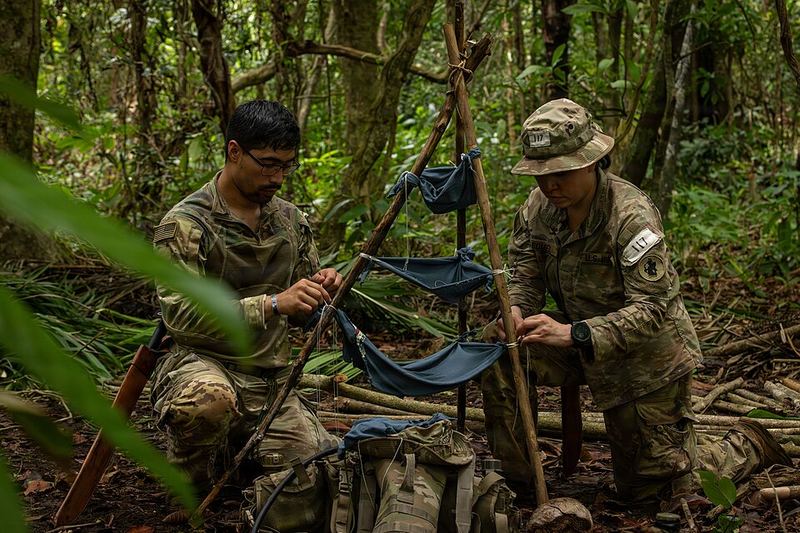
    Two soldiers tie layers of cloth onto a tripod of sticks in the jungle
    Cloth layers on a tripod strain water before it is treated
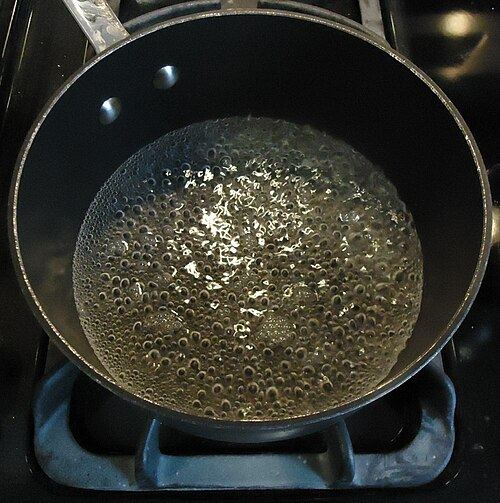
  2. Boil it. Bring it to a rolling boil for 1 minute at sea level, and add 1 minute for every 300 meters (1,000 feet) above sea level. If you cannot judge the height, boil 10 minutes. A rolling boil is when big bubbles keep breaking the surface even while you stir. Water boils at a lower heat high in the mountains, which is why the manual adds time as you go up. The 10 minute rule covers you when you do not know how high you are.

    Water at a full rolling boil in a metal pot
    Rolling boil: big bubbles that keep coming
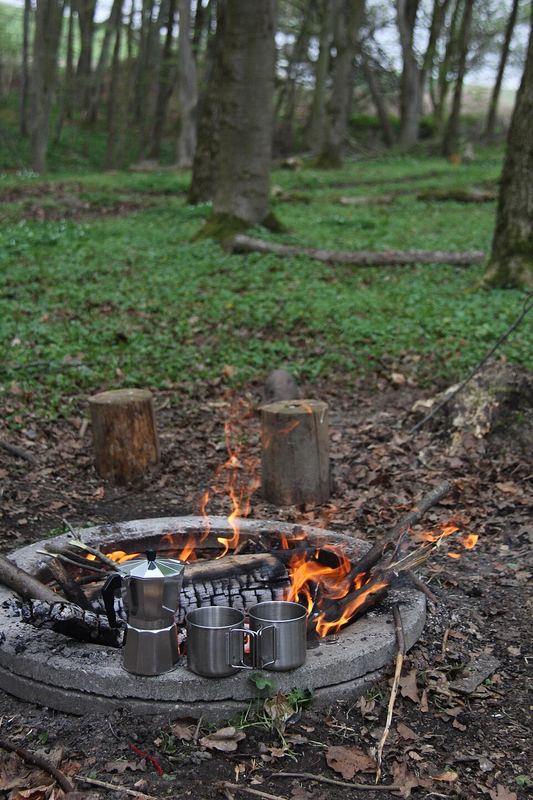
    Metal pots and a kettle heating over a campfire in a stone ring
    Metal pots can sit over a fire to boil water
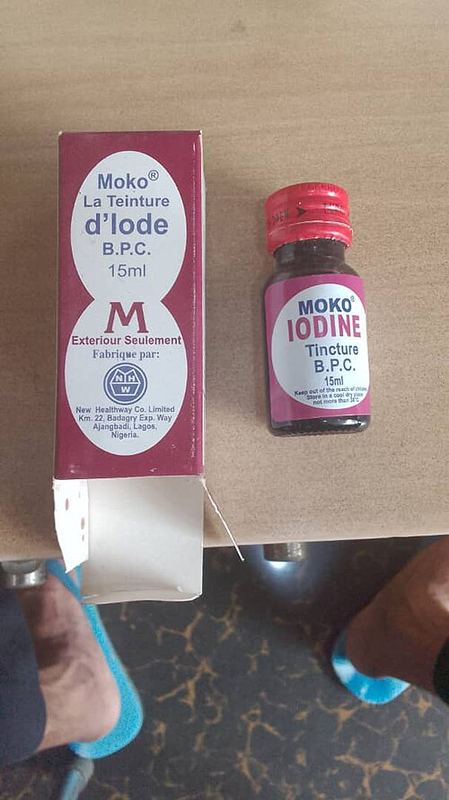
  3. Iodine: 5 drops of 2 percent tincture in a full canteen of clear water, 10 drops if the water is cloudy or cold. Wait 30 minutes before drinking. Tincture of iodine is the brown liquid sold for cuts. Cold or cloudy water slows it down, so it needs more drops. Wait the full 30 minutes, and longer in near-freezing water.

    A small brown bottle of iodine tincture next to its box
    Tincture of iodine: 5 drops per canteen of clear water
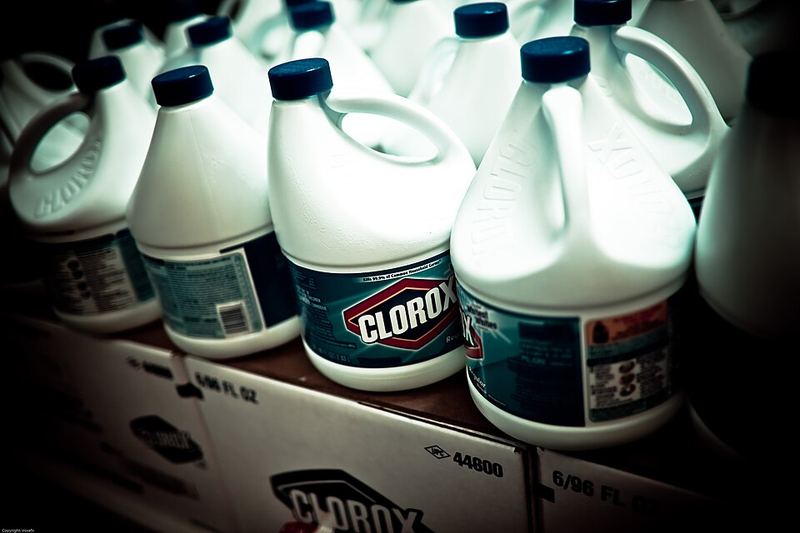
  4. Bleach: 2 drops of plain household bleach per liter of clear water, 4 drops if cloudy. Mix, wait 30 minutes. It should smell faintly of chlorine; if not, repeat. Use plain, unscented household bleach. The faint swimming-pool smell after 30 minutes tells you there was enough. If you cannot smell it, add the same dose again and wait again.

    Rows of white jugs of plain household bleach
    Plain bleach, no scent or additives, 2 drops per liter
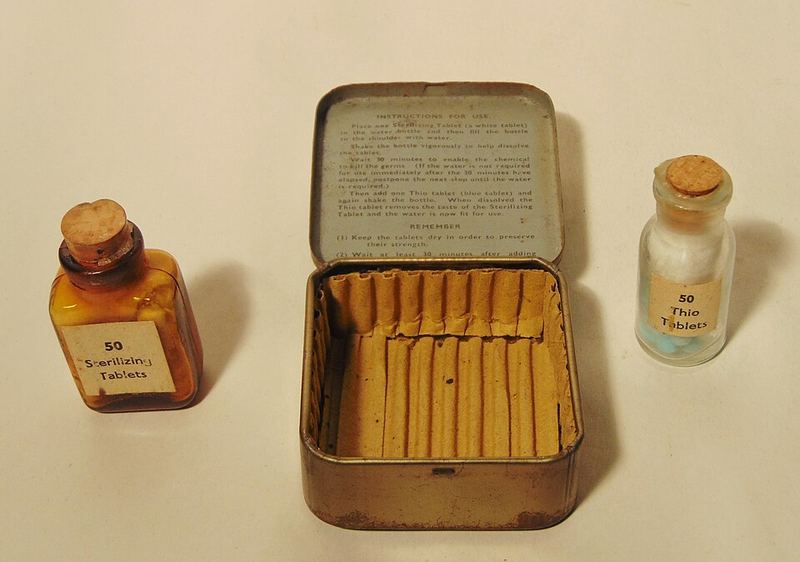
  5. Tablets: follow the package. They are the easiest thing to carry, so put some in every kit. Different tablets have different directions and wait times, so read the package before you need it. The MWTC handbook warns that cold water slows chemicals down and that some germs resist them.

    Old military tins and bottles of water purification tablets
    Purification tablets: follow the directions on the package
  6. Fix the taste. Pour treated water back and forth between two containers to put air in it, or drop in a piece of charcoal from the fire and let it stand 45 minutes. Treated water can taste flat or like chemicals. Pouring it back and forth adds air and makes it taste better. A lump of charcoal from your fire helps with bad smells.

  7. Keep clean water clean: wash your hands, keep your latrinelatrine A spot set aside as a toilet. Keep it downhill and well away from water and camp. at least 60 meters (200 feet) from any water, and never dip a dirty cup in the clean container. Most dirty water gets dirty from people and animals. A latrine is the spot you use as a toilet; keep it at least 200 feet (60 meters) from water and away from camp. Wash hands before handling food or water, and keep the clean bottle clean.

  8. Rain caught in clean containers and water from inside living plants are usually safe as they are. Everything else, including snowmelt, gets treated. The manuals treat clean rain and water from inside living plants as the exceptions. Snow and ice still get treated unless you are sure they are clean.

Tips from survival instructors

  • Bringing water to a rolling boil kills the germs. If you are high in the mountains, let it boil longer.
  • Strain cloudy water through a cloth first. Straining takes out dirt, not germs, so you still boil or treat it after.

Common mistakes

  • Thinking a filter or a cloth makes water safe. Fix: filtering only clears it; boil or treat it after.
  • Stopping the boil as soon as it starts to steam or simmer. Fix: wait for a rolling boil, then count the minutes.
  • Drinking before the chemical has had time to work. Fix: wait the full 30 minutes, and two to four times longer in near-freezing water.
  • Using scented or splash-free bleach. Fix: use plain bleach whose label shows hypochlorite as the only active ingredient.
  • Trusting a store filter forever. Fix: the MWTC handbook warns that a filter that does not add a chemical may not stop every germ, and an overused one can clog and push germs through.
  • Dipping a dirty cup into treated water. Fix: pour from the clean container instead.

Practice it safely

At home, make a practice filter: cut the bottom off a plastic bottle, turn it upside down, put a coffee filter or cloth in the neck, and add layers of sand, small gravel and a little charcoal. Pour muddy water through and watch it come out clearer. Then pour it out; this shows clearing, not purifying.

With a grown-up, bring a pot of tap water to a rolling boil on the stove and time one minute, so you know what a real rolling boil looks like. Read the label on your purification tablets now, before a trip, and write the wait time on the bottle.

Quick check

How long should you boil water at a normal elevation?

  • Until it is warm
  • 1 minute at a rolling boil
  • 10 seconds
Show the answer

1 minute at a rolling boil

Take the quiz and earn the badge

The app checks your answers, keeps your place in the Water, and works with no signal once saved.

Before you rely on thisA learning tool, not a replacement for training. In an emergency, call 911.

Sources

Photo credits
Photo: U.S. Army photo by Sgt. Nirak Manuel Garcia Navarro, Public Domain, sourcePhoto: Tomwsulcer, CC0, sourcePhoto: Kutlusafa, CC BY 4.0, sourcePhoto: Abdsomod, CC0, sourcePhoto: Vox Efx from Baltimore, United States, CC BY 2.0, sourcePhoto: KingaNBM, CC BY-SA 4.0, source

More on water