← Outdoor Survivalist Trainer Your area

Water · Water course

Where to look for water

You need at least 2 liters a day even in the cold, and more in heat, after hard work or when hurt. Almost every place has water somewhere. The land, the plants and the animals all point to it.

Why this matters

Water is one of the first things to take care of when you are stuck outside. Your body is more than three-fourths fluid, and it loses water all day through sweat, breath and the bathroom. Heat, cold, stress and hard work all make it lose more. Even in cold places you need at least 2 quarts (2 liters) a day to keep working well.

Most places have water somewhere, even when you cannot see it. The trick is to read the clues: which way the ground slopes, which plants are growing, where animals and insects are going. These clues save you from wandering, which burns the very sweat you are trying to keep.

Finding water is only step one. Almost all of it still has to be cleaned before you drink it, so read the "Make water safe to drink" lesson next.

What you need

  • Nothing but your eyes, ears and patience to find water.
  • Something to dig with for a seep hole: a stick, a flat rock or your hands will do in soft sand.
  • Something to carry it in. With no container, the manual says to fold a piece of plastic or water-resistant cloth into a bowl and hold the folds with pins, sticks or your hands.
  • A cloth or a bandanna to soak up water from cracks and tree hollows.

Step by step

  1. Water runs downhill. Walk to the bottom of slopes, into valleys and draws, and to the foot of cliffs. Springs come out where a slope meets flat ground. Water always collects in the lowest ground, so walking downhill is the most reliable way to get closer to it. A draw is a small, shallow valley, like a crease in the hillside. Low, flat ground at the bottom of a slope is where water seeps out.
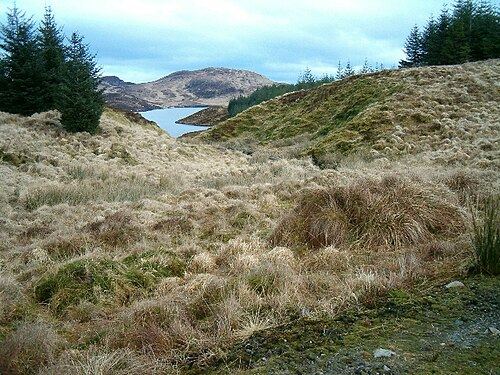
    A stream valley between hills leading down to a lake
    Water collects at the bottom of valleys
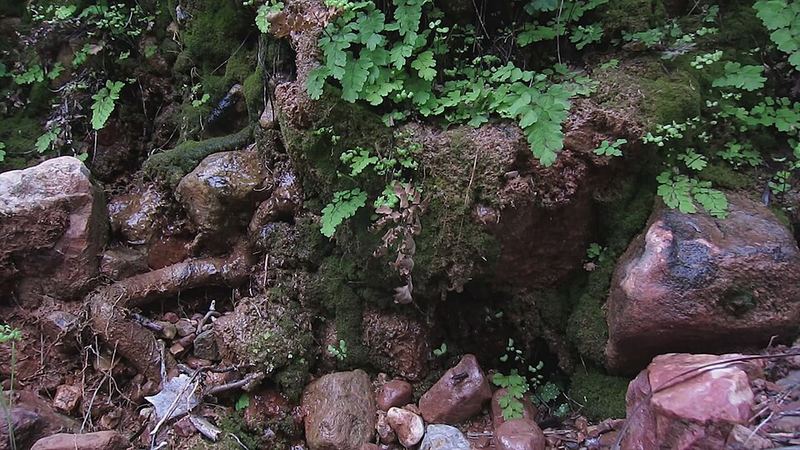
  2. Thick, bright green plants in a dry area mean water close to the surface. Cattails, willows, cottonwoods and reeds grow with their feet wet. Plants that need wet feet only grow where water sits close under the ground. A patch of thick, bright green in an otherwise brown or dry area is a sign worth walking to.

    Bright green ferns growing around a seep spring among rocks
    Bright green ferns around rocks mark a seep spring
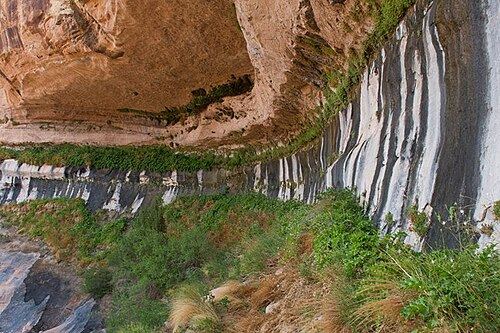
    A band of green plants along a rock wall where water seeps out
    Green band on rock shows where water seeps out
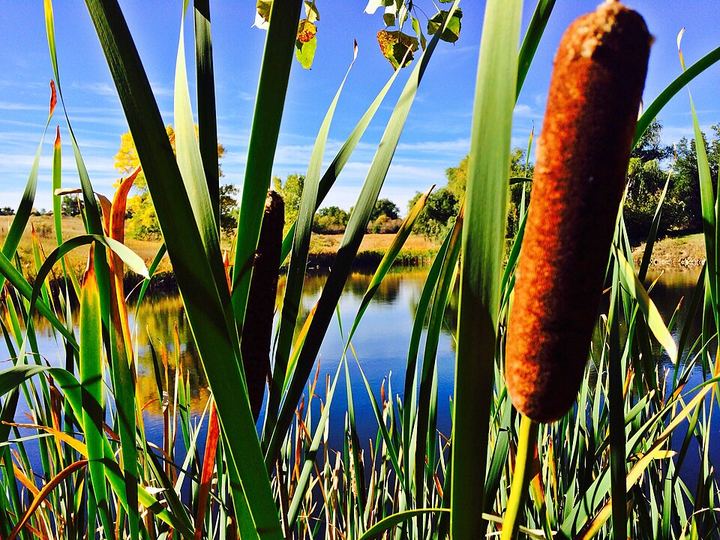
    Cattails with brown seed heads growing at the edge of a pond
    Cattails grow with their feet wet: water is right there
  3. Stop, hold your breath and listen. Running water carries a long way in still air, especially at dawn and dusk. Sound travels well when the air is calm. Stop moving, stop talking and listen for a few minutes before you choose a direction.

  4. Follow game trails downhill. Two trails that meet in a V usually point toward water. Animals drink at dawn and dusk. Grazing animals like deer usually stay near water and drink at dawn and dusk. When two trails join in a V, the point of the V usually aims toward water. Meat eaters are not good guides because they get much of their water from what they catch.

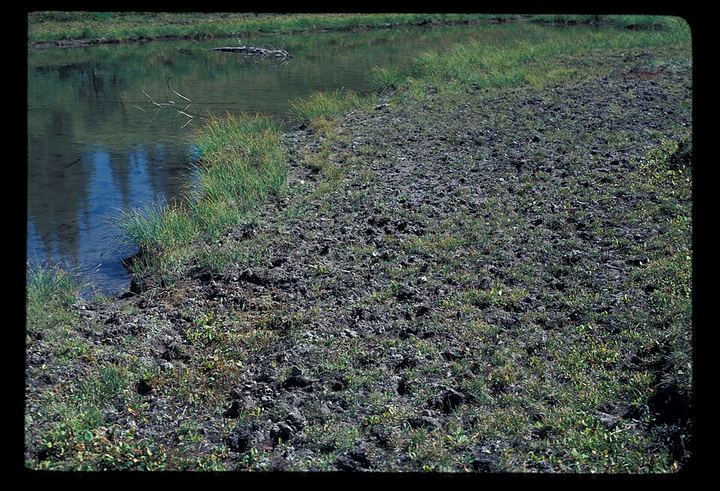
    Hundreds of elk hoof prints in soft mud leading to a lake shore
    Animal tracks crowd the ground where they come to drink
  5. Watch the sky. Birds flying low and straight in the early morning or late afternoon are often going to water. Swarming insects, bees and ants going into a hole in a tree mean water is near. The manual says birds that feed on grain, like finches and pigeons, stay near water. When they fly straight and low they are heading to it; coming back, they hop from tree to tree because they are full. Bees seldom go more than about 4 miles (6 kilometers) from their hive, and a line of ants climbing a tree often leads to water trapped inside it. Water birds and hawks are not good guides.

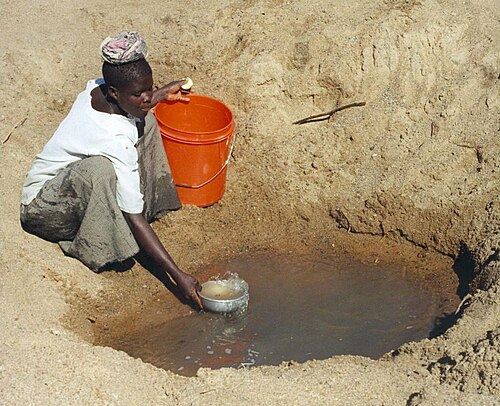
  6. A dry stream bed still holds water under the sand. Dig at the outside of a bend, at the lowest point, until the hole seeps. This is a seep hole or Indian well. Water keeps flowing under the sand after the surface dries. You did it right when the bottom of your hole slowly turns wet and starts to fill.

    A woman scoops water from a hole dug in dry sand with a bowl
    A hole dug in dry sand slowly fills with seep water
  7. Check rock crevices, the crotches of big trees, and hollows after rain. Soak it up with cloth and wring it into a container. Rain and dew collect in cracks in rocks and in the fork where big branches meet. The manual says bird droppingsscat Animal droppings. Fresh, moist scat means the animal used this spot recently. Never touch it with bare hands. around a crack in dry country can mean water is in or near it. A cloth soaks up water you cannot scoop.

  8. On a beach, dig a hole behind the first dune, deep enough that water seeps in. The top layer of fresh rain water floats on the salt water below. Skim it slowly. Fresh water is lighter than salt water, so after rain it can sit as a thin layer on top. Skim slowly so you do not stir up the salty water underneath.

  9. Snow and ice are water too, but only after melting. Never eat snow as it is; it chills you and costs more water than it gives. Eating snow pulls heat out of your body and can give your lips and mouth a minor cold injury. Melt it first. The "Water from snow and ice" lesson shows how.

  10. Any water you find still has to be made safe, except rain caught clean and water from inside living plants. Finding it is only half the job. Germs you cannot see live in clear water too. Plan to clean whatever you find before you drink it.

Tips from survival instructors

  • Green, lush plants in dry country often mean water is just under the ground. Try digging at the outside bend of a dry stream bed.
  • Animal trails that join and head downhill often lead to water, and so do birds flying low and fast at dawn and dusk.

Common mistakes

  • Drinking clear water without treating it because it looks clean. Fix: treat every found source; clear does not mean clean.
  • Following hawks, eagles or water birds. Fix: watch grain-feeding birds, grazing animals and insects instead; the others fly long distances or get water from their food.
  • Wandering in the heat looking for water. Fix: read the land first, then walk with a plan, and rest in shade during the hottest hours.
  • Eating snow or ice to save time. Fix: melt it first, even if it is slow.
  • Camping right in a dry creek bed because the water is close. Fix: FM 21-76-1 lists dry river beds as a place to avoid putting your shelter. Dig your seep hole there, but sleep on higher ground.

Practice it safely

On your next walk in a park, play a "where is the water" game. Before you look at a map, guess where the nearest stream or pond is from the slope of the land, the greenest plants and the animal trails. Then check the map and see how close you were. Stay on marked trails and follow the park rules.

At dawn or dusk, sit still near a park pond for 15 minutes and watch which way birds and insects move. This builds the habit of reading clues before you walk.

Quick check

You find a clear stream. Can you drink it as it is?

  • Yes, clear means clean
  • No, treat it first
  • Only if it is cold
Show the answer

No, treat it first

Take the quiz and earn the badge

The app checks your answers, keeps your place in the Water, and works with no signal once saved.

Before you rely on thisA learning tool, not a replacement for training. In an emergency, call 911.

Sources

Photo credits
Photo: Patrick Mackie, CC BY-SA 2.0, sourcePhoto: Grand Canyon National Park, CC BY 2.0, sourcePhoto: Rebecca Weissinger, Public Domain, sourcePhoto: USFWS Mountain-Prairie, Public Domain, sourcePhoto: Loren Lane (MORA), Public Domain, sourcePhoto: Bob Metcalf, Public Domain, source

More on water