Stay put unless you are certain of your location, have a known destination and the ability to get there; or you can reach water, food, shelter or help; or you are convinced rescue is not coming. Each reason on the list is about knowing. If you are not sure where you are, where you are going and that you can get there, staying is usually safer. Ask yourself honestly whether each condition is true before you move.
Finding your way · Finding your way course
Stay or go, and how to travel if you go
The recovery manual's first travel rule is to stay with the vehicle or aircraft. People who leave get harder to find. When moving is right, it gives a short list of how to do it well, including the oldest advice there is: follow water downstream to find people.
Why this matters
When you are lost, the urge to keep walking is strong. But a car, a plane or a camp is much easier for searchers to find than one person moving through the woods. Each time you move, the place they are searching gets bigger. That is why the recovery manual says to stay with the vehicle or aircraft unless you have a good reason to leave.
Sometimes leaving is the right call: you know exactly where you are and where help is, or you have no water. When that happens, how you travel matters as much as where. Choosing a safe route, pacing yourself and stopping early with daylight to spare keep a walk from turning into a second emergency.
What you need
- To stay: your vehicle or camp, your signals and a shelter.
- To go: a plan, water, warm clothes, spare socks, and a way to leave a note.
- A map and a way to find direction help, but the first choice, to stay or go, needs no gear.
Step by step
Before you leave, leave information at the starting point: where you are going, your route, your physical condition and the supplies you have. Decide which direction and why, and what gear to take. A note at your starting point gives searchers a trailgame trail A narrow path worn through grass or brush by animals using it over and over. A trap goes on a trail an animal already uses. to follow if they find your car or camp. Write it in a place they will see, like on the dashboard or tied to your shelter. Include the date and time you left.
Pick the easiest and safest route, not the shortest. Keep a realistic pace with rest stops. Avoid overdressing and overheating. Take care of your feet and change socks regularly. Go around obstacles, not over or through them. The shortest line on a map often goes over steep ground or through thick brush that wears you out. Sweat soaks your clothes and chills you when you stop, so open a layer before you start to sweat. Wet, rubbing socks cause blisters that can stop you walking.
Travel on trails whenever you can, and through forested country if possible. Stay out of creek bottoms and ravines that have no way out if heavy rain comes. Trails are easier walking and other people use them. Forest often gives shelter from sun and wind. A narrow creek bottom or ravine with steep sides can flood fast in heavy rain, with no way to climb out.
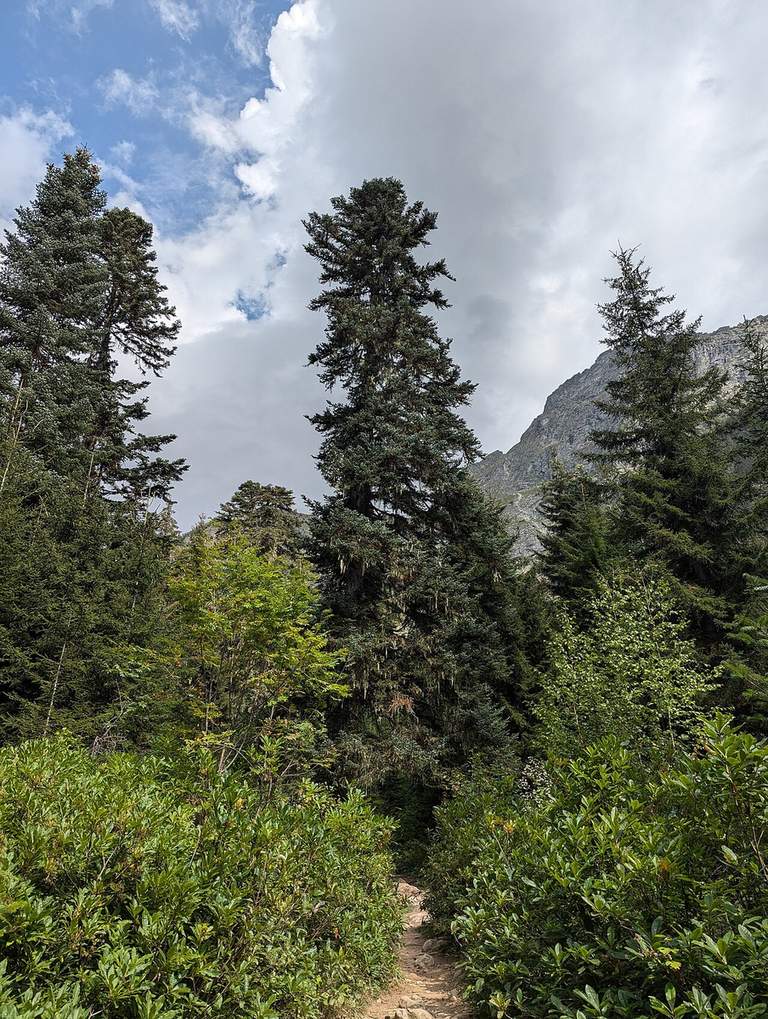
A trail through forested country: the easiest, safest route Go around swamps, lakes and bogs. Follow a stream downstream to find people and slower water. Go upstream to find a narrower, shallower place to cross. Water flows downhill and streams join into bigger rivers, where towns and roads tend to be. Going upstream does the opposite: the stream gets smaller, which is where it is easiest to cross. Swamps and bogs are slow, wet and tiring, so go around.
River travel can be faster and save energy when hypothermiahypothermia Losing body heat faster than you can make it. Shivering first, then confusion and a false feeling of warmth, then unconsciousness. Wet and wind do it even above freezing. is not a risk: use a raft or log, a polepoles Dead, straight sticks about as thick as your wrist and 2 to 3 meters long. Dead standing wood is best: dry, and it snaps clean. in the shallows, an oar in deep water. Stay near the inside of bends where the current is slower and keep near shore. Watch for snags, sweeperssweepers Trees or branches that hang low over or into moving water. The current can pin a person against them., rapidsrapids Fast, rough water flowing over rocks. Never try to cross or float through them. (never try to run them) and waterfalls. Hypothermia means your body getting dangerously cold, and falling in a cold river can cause it fast. A sweeper is a tree or branch hanging low over the water, one of the dangers the manual lists. Rapids are fast, rough water over rocks; the manual says never try to run them.
Winter: do not travel in a blizzard, bitterly cold wind or poor visibility, and never in a whiteoutwhiteout Snow and cloud so thick that the ground and the sky look the same white. You cannot see the ground or judge distance., when you cannot judge the ground. Daylight is short. Deep soft snow calls for snowshoes; the going is easier in early morning or near dusk when the snow is crusted. A whiteout is when snow and cloud are so white you cannot see the shape of the ground, or where it drops away. In early morning or near dusk the top of the snow is often frozen hard, so it holds you up better than soft snow at midday.
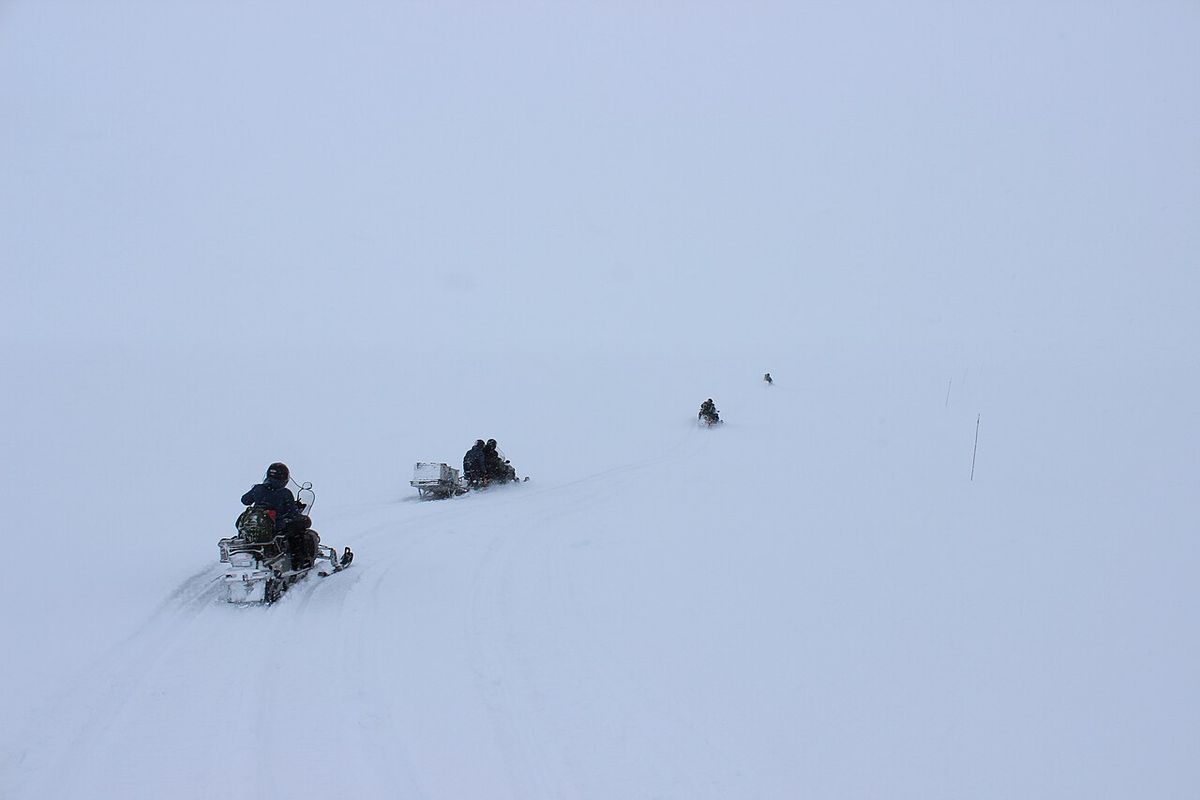
Near whiteout: do not travel in this Avoid avalancheavalanche A large mass of snow sliding fast down a slope. Most happen on slopes of 30 to 45 degrees. ground: slopes of 30 to 45 degrees or steeper, trees stripped of uphill branches (a sign of past slides) and heavy snow loading on ridge tops. Snow cornicescornice A shelf of snow the wind builds out over the edge of a ridge or cliff. It can break off under your weight. overhang the lee sidelee side The side sheltered from the wind. Snow drifts pile up there, which is where you dig a snow cave, and where cornices overhang a ridge. of ridges and break off if stepped on. Cross a snow bridge at right angles, probing ahead with a pole and spreading your weight. An avalanche is a mass of snow sliding down a slope. The manual warns about slopes of 30 to 45 degrees or steeper. A cornice is a lip of snow that the wind builds out over the edge of a ridge, with nothing under it. A snow bridge is snow covering a stream or gap; a pole poked ahead finds the strong part.
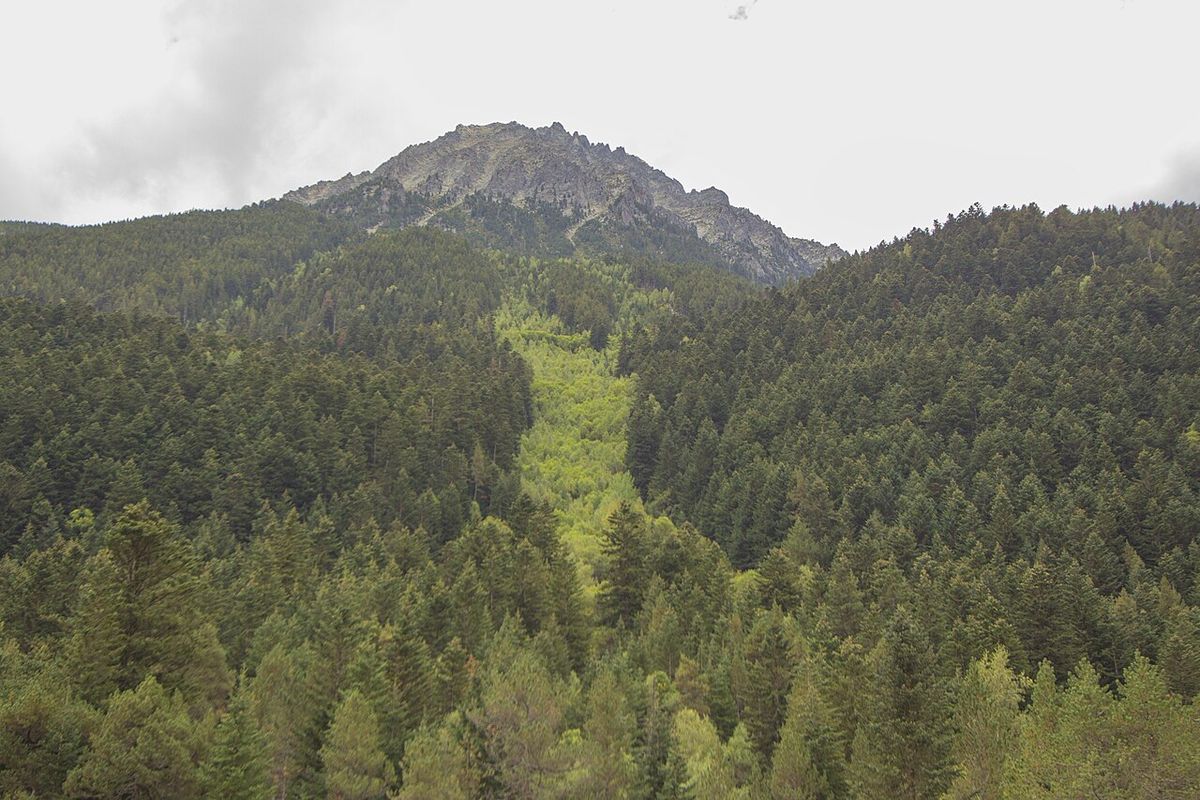
An avalanche chute: a slope stripped of trees Clear cold air makes distances look shorter than they are; you will underestimate more often than not. Cross streams when the water is lowest, and lie flat and crawl on thin ice. Clear, cold air makes far things look close, so a peak you think is an hour away can take much longer. Stream levels go up and down through the day, so wait for the lowest point to cross. Lying flat spreads your weight so thin ice is less likely to break.
Make camp early, with plenty of daylight left to build a shelter. Building a shelter and gathering wood take longer than you expect, and they are much harder in the dark. Stop while you still have plenty of light.
Tips from survival instructors
- When you are lost, going downhill along a stream often leads to a road, a trail or people, but it can also lead into cliffs and thick brush.
- Travel early in the day and stop well before dark to make camp. Walking in the dark is how ankles get broken.
Common mistakes
- Leaving the vehicle in a panic. Fix: stay unless you are sure of your location and destination and can get there, can reach water, food, shelter or help, or are convinced rescue is not coming.
- Leaving no note. Fix: leave your destination, route, condition and supplies at your starting point.
- Taking the shortest route. Fix: take the easiest and safest one, and go around obstacles instead of over them.
- Overdressing and sweating. Fix: dress so you stay slightly cool while moving, and take rest stops.
- Traveling in a blizzard, bitter wind or whiteout. Fix: stay in shelter until visibility returns.
- Walking until dark. Fix: make camp early with plenty of daylight left to build a shelter.
Practice it safely
Before every hike, practice the note rule: tell someone at home where you are going, your route and when you will be back, and leave the same on a card on your dashboard. On the hike, notice which way the streams flow and say out loud which way would lead downstream.
Talk through a stay-or-go decision with your family: if the car broke down on a back road in winter, what would make you stay and what would make you leave? In a park, practice choosing the easiest route between two points instead of the shortest, and stay on marked trails.
Quick check
When is leaving the vehicle the right call?
- As soon as it gets dark
- When you know where you are and where you are going and can get there, or rescue is clearly not coming
- Whenever you feel restless
Show the answer
When you know where you are and where you are going and can get there, or rescue is clearly not coming
Take the quiz and earn the badge
The app checks your answers, keeps your place in the Finding your way, and works with no signal once saved.
Before you rely on thisA learning tool, not a replacement for training. In an emergency, call 911.
Sources
- Military Survival and Rescue Guide, pages 15 (stay or move), 24 to 25 (travel considerations, river travel, ice and snow travel)
- US Army Survival Manual, pages 206 to 207 (cold weather travel)
- Military Survival and Rescue Guide, page 15 (stay or move, what to leave at your starting point)
- Military Survival and Rescue Guide, pages 24 to 26 (travel considerations, river travel dangers, ice and snow travel, avalanche signs, thin ice)
- US Army Survival Manual, pages 206 to 207 (cold weather travel: blizzards, thin ice, stream levels, clear arctic air, whiteout, snow bridges, make camp early, cornices)