Safety first: wear splash goggles, rubber gloves and long sleeves, and work with the window open or outside. Keep kids and pets away. Use stainless steel or heavy plastic tools you use only for soap, never aluminum, which reacts with lye.
Home Prep · Home Prep: grow and make course
How soap is made (and how to make it safely)
Soap is fat or oil mixed with lyelye A strong chemical (sodium hydroxide) that turns oil into soap. It burns skin and eyes, so goggles and gloves always., a strong base. The lye turns the oil into soap and glycerin, a reaction called saponificationsaponification The chemical reaction where lye and fat or oil turn into soap.. Lye can burn skin and blind you, so this is a lesson in doing a dangerous job safely: goggles, gloves, a weighed recipe, and patience while it cures.
Why this matters
Soap is one of the most important health tools there is. Washing hands stops many of the germs that make people sick, especially when clean water and doctors are hard to find.
Making soap is also a real chemistry lesson. It must be done carefully, because lye can burn skin and eyes badly.
What you need
- Splash goggles, rubber gloves, long sleeves, a kitchen scale, stainless steel or heavy plastic tools used only for soap, and a mold.
- Lye (sodium hydroxide), oils, and distilled water, measured with a tested recipe.
About an hour to make; 3 to 6 weeks to cure.
Step by step
Always add lye to water, never water to lye. Add it slowly while stirring. It gets very hot and gives off fumes; do not breathe them.
If lye splashes on skin, rinse it with lots of running water for 15 minutes. In the eyes, rinse for at least 15 minutes and call 911 or poison control (1-800-222-1222).
Use a tested recipe and weigh everything on a kitchen scale. Too much lye makes harsh soap that burns skin. Free online lye calculators work out the amount for each oil.
Basic steps: melt and warm the oils, mix the lye into the water and let it cool, then slowly pour the lye water into the oils while stirring or using a stick blenderstick blender A hand-held blender you put right into the pot. In soapmaking it brings the mix to trace in minutes instead of an hour of stirring..
Stir until it reaches "trace," when it thickens like thin pudding and a drizzle leavesdebris Dry leaves, pine needles, grass and ferns. Piled deep they trap still air, which is what keeps you warm. a faint line on top. Pour it into a mold.
After a day or two, cut it into bars. Let them cure on a rack for 3 to 6 weeks, turning them now and then. Curing finishes the reaction and makes the bar milder and harder.
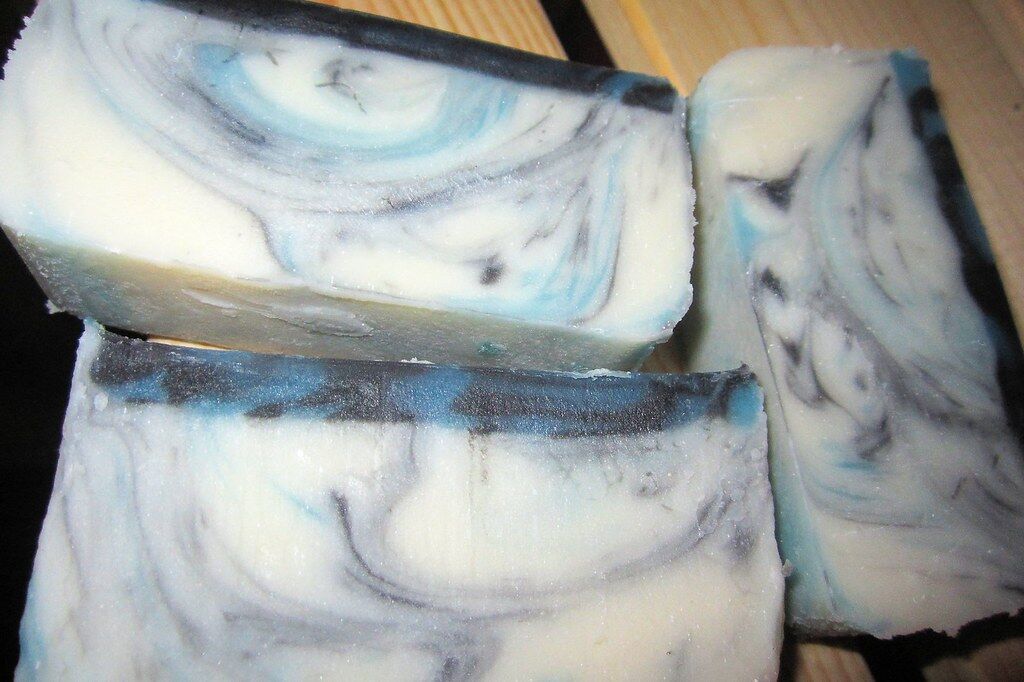
Cut bars cure for weeks before they are mild enough to use Why soap works: each soap molecule has one end that loves water and one end that loves grease. The grease end grabs dirt and germs, and the water end lets it all rinse away.
Tips from survival instructors
- Set up your whole work area before you open the lye, so you never have to walk away from it.
- Label the lye container clearly and store it high, locked away from children.
Common mistakes
- Working without goggles and gloves. The fix: always wear them.
- Pouring water into lye. The fix: always lye into water, slowly.
- Guessing amounts. The fix: weigh everything with a tested recipe or lye calculator.
- Using soap before it cures. The fix: wait 3 to 6 weeks.
Practice it safely
Adults only: watch a full soapmaking demonstration or take a class before trying it. Then make a small, tested batch outside with goggles and gloves, and keep vinegar and running water nearby.
Quick check
Why let soap cure for weeks?
- To finish the reaction so it is mild and hard
- To make it smell
- It does not need to
Show the answer
To finish the reaction so it is mild and hard
Take the quiz and earn the badge
The app checks your answers, keeps your place in the Home Prep: grow and make, and works with no signal once saved.
Before you rely on thisA learning tool, not a replacement for training. In an emergency, call 911.
Sources
Photo credits
Photo: Erin Costa, CC BY 2.0, source