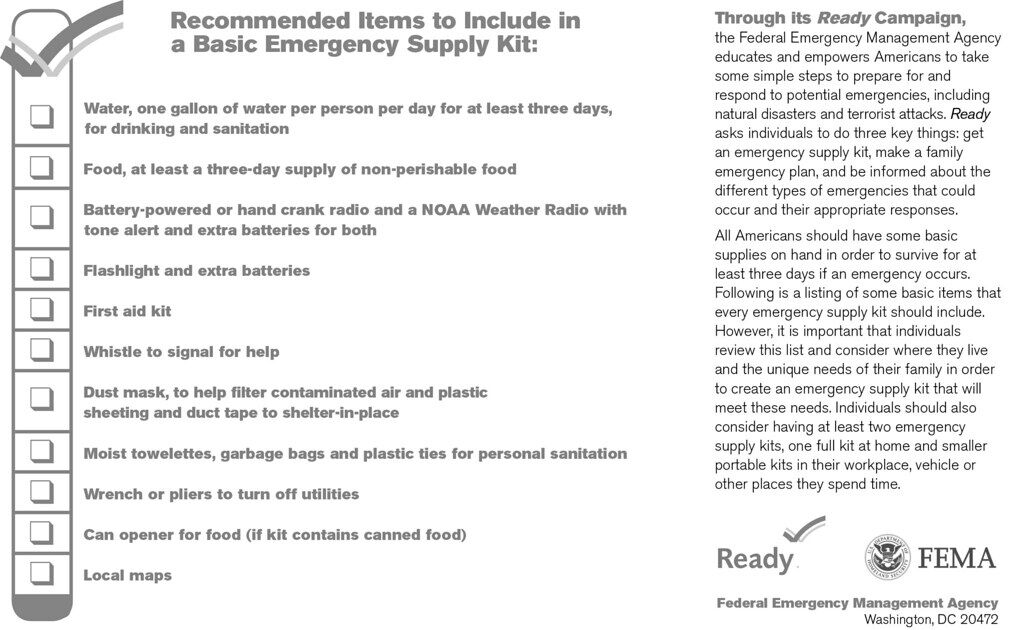
Water and food for 3 days: 1 gallon of water per person per day, and food that needs no cooking.
Home Prep · Home Prep: ready at home course
A go-bag is a packed bag you can grab in two minutes if you have to leave home fast, for a fire, flood or chemical spill. A 72-hour kit is the same idea sized for three days. Keep one at home, a smaller one at work, and one in the car.
When you have to leave fast, there is no time to look for medicine, chargers or papers. A packed bag means you grab one thing and go.
Three days is how long it can take for help to reach everyone after a big disaster.
An afternoon to pack; 30 minutes a year to check.
Water and food for 3 days: 1 gallon of water per person per day, and food that needs no cooking.
Light and news: a flashlight, a battery or hand-crank radio (a NOAA Weather RadioNOAA Weather Radio A radio that plays the National Weather Service's warnings around the clock, even when power and phones are out. if you can), and extra batteries.
First aid kit, and a 7-day supply of any medicines, glasses or medical supplies.
Phone charger and a charged power bank, a whistle to signalsignal Anything in threes means help: three fires, three whistle blasts, three piles of rocks. for help, a dust mask, and a multi-tool or wrench to turn off utilities.
Copies of important papers in a waterproof bag (IDs, insurance, prescriptions), a list of phone numbers on paper, some cash in small bills, and a local paper map.
Warmth and cleanliness: an emergency blanket, a change of clothes, sturdy shoes, wet wipes, garbage bags and plastic ties, and hygiene items.
Add for your family: baby supplies, pet food and leashes, spare keys, and comfort items for children.
Keep it where everyone knows, and check it once a year. Swap out expired food, water, medicine and batteries, and update clothes as kids grow.
Pack one go-bag this week, then time how fast each person can grab their bag and get to the car. Under two minutes is the goal.
How often should you check your kit?
Once a year, swapping expired items
The app checks your answers, keeps your place in the Home Prep: ready at home, and works with no signal once saved.
Before you rely on thisA learning tool, not a replacement for training. In an emergency, call 911.