Where it strikes: feet, hands and exposed face. Ears, nose, fingers and toes go first. Wind makes it far more likely; the cold weather manual says to check more often as the windchillwindchill The effect of moving air on bare skin. Wind makes a given temperature freeze flesh faster, and you make your own wind by moving fast. rises. Fingers, toes, ears, nose and cheeks are far from the body's corecore temperature The heat deep inside your body, around your heart, lungs and brain. About 98.6 F when you are healthy. and have little fat, so they freeze first. Windchill is how cold the air feels on skin when the wind blows; the stronger the wind, the more often you should check.
Cold and weather · Cold and weather course
Frostbite: prevent it, spot it, and when not to thaw it
Frostbitefrostbite Frozen tissue, usually ears, nose, fingers or toes. Numb, then pale gray or waxy white. Superficial frostbite thaws with body heat; deep frostbite is never thawed in the field. is frozen tissue, and the manuals are far more interested in preventing it than treating it. The key decision in the field is whether it is superficialsuperficial On the surface only, not deep. Superficial frostbite affects only the skin. or deep, because deep frostbite is not thawed in the field at all.
Why this matters
Frostbite is skin and the tissue under it freezing. Wind makes it much more likely, and the scary part is that it often does not hurt, so people do not notice until a friend sees a white patch on their face. That is why the manuals put most of their effort into preventing it and checking each other.
The most important choice in the field is telling light frostbite from deep frostbite. Light frostbite you can warm with body heat. Deep frostbite you protect and do not thaw, because thawing it outdoors and then letting it freeze again does much more harm than leaving it frozen until you reach medical care.
This is a learning tool, not medical training. If someone may have frostbite and you have a signalsignal Anything in threes means help: three fires, three whistle blasts, three piles of rocks., call 911.
What you need
- Nothing but your hands and a friend. Warm hands, armpits and a buddy's belly are the manual's tools for light frostbite.
- Dry socks and mittens, a face covering for wind, and loose boots and gloves.
- Sunglasses for snow, or cardboard or barkbark slabs Big sheets of bark peeled off a dead log. Laid like shingles, bottom row first, they shed rain. to cut eye slits in, plus sunscreen and lip balm.
Step by step
What it feels like: an uncomfortable cold, then numbness, with tingling, stinging or aching along the way. The skin reddens, then goes pale gray or waxy white. Often there is no pain at all, which is why you watch each other's faces and hands. Waxy means the skin looks pale, smooth and shiny, like candle wax. On darker skin, the first aid manual says to look for a grayish color. Numbness is the warning sign: if you cannot feel a part, check it.
Prevent it: enough clothing and the face protected in wind; stay dry, taking off outer layers for hard work and putting them back on when you stop; change socks whenever they get moist; nothing tight on feet or hands; never touch cold metal with bare skin. Shelter and clothing matter most when you are sitting still. Prevention is mostly about keeping warm blood flowing to the skin and keeping it dry. Tight boots or gloves squeeze blood vessels, and wet socks pull heat away. When you stop moving, your body makes less heat, so add layers and get to shelter.
Keep the blood moving. Make faces to work the skin of your face, wiggle your ears, move your hands inside your gloves and swing your arms, wiggle your toes inside your boots, rub your ears with your hands. Use the buddy system; alone, cover your nose and lower face with a mitten now and then. Moving your face, ears, fingers and toes pushes warm blood into them and lets you feel any numb or hard spot early. The buddy system means pairing up and looking at each other's faces often for white patches.
Superficial or deep? Ask how long the part has been numb. A very short time means probably superficial. Any longer, assume it is deep and serious. The recovery manual's test: a nipped spot rewarmsrewarming Warming a person back up after they got too cold. Done slowly and from the core outward. with body heat in 15 to 20 minutes; if it does not, it is frostbite. Superficial means only the skin is frozen; deep means it goes below the skin and the part feels solid, like wood. The longer a spot has been numb, the more likely it is deep. If body heat does not rewarm a nipped spot within 15 to 20 minutes, treat it as frostbite.
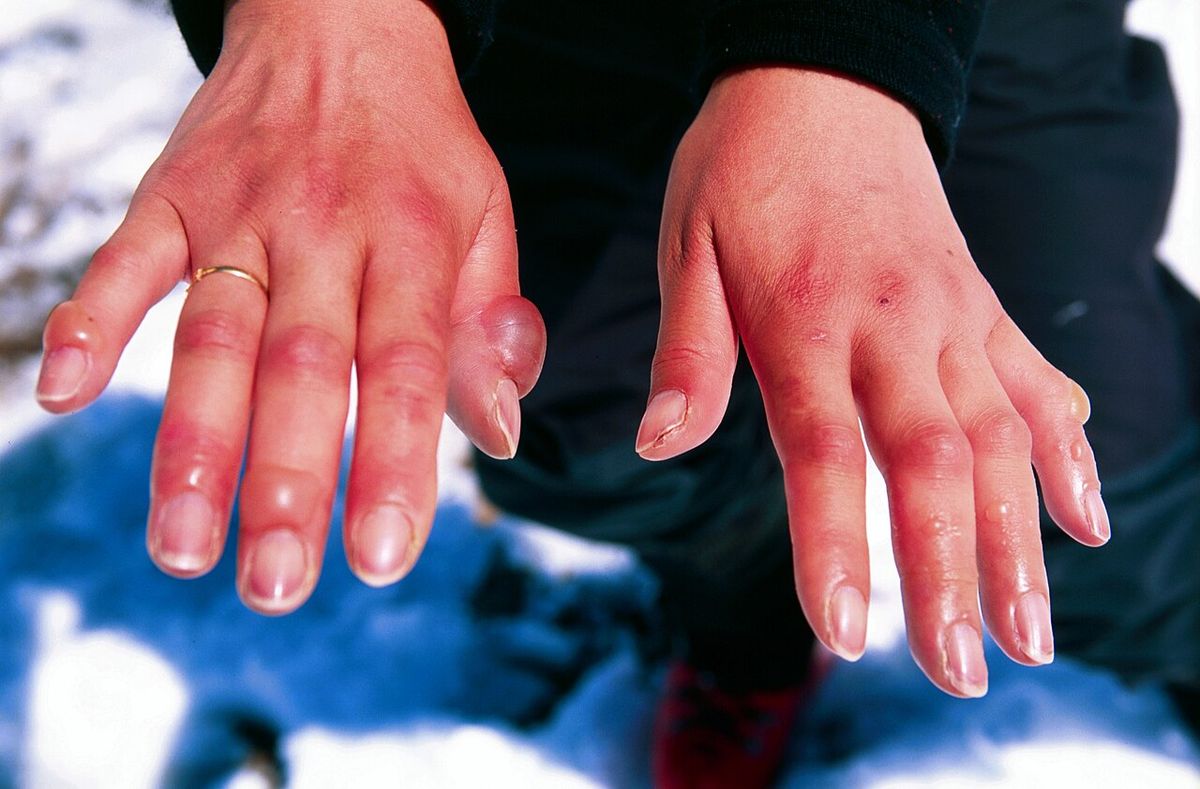
Fingers after frostbite on a mountain descent Superficial frostbite, in the field: warm cheeks with warm hands until pain returns; put bare fingers in the opposite armpits against the skin; put bare feet under a companion's clothing against their belly. Expect pain as it thaws. Body heat is gentle and safe. Hold warm hands over a white cheek, tuck cold fingers into opposite armpits against the skin, or put bare feet against a friend's belly under their clothes. It will hurt as it warms, and that pain is normal. Blisters may appear afterward.
Never rewarm by rubbing or massage, open fire or stove, cold water, rubbing with snow, or slapping. All of them damage frozen tissue. Frozen tissue is fragile and easy to damage. The manuals list rubbing, massage, snow, cold water, slapping and an open fire or stove as things that damage it. Slow, gentle body heat is the only field method the manuals give.
Deep frostbite: do not try to thaw it in the field. Protect the part from further injury and get to medical care by the fastest means. Thawing in the field increases pain and invites infectioninfection Germs growing in a wound. Watch for redness that spreads, swelling, heat, pus, a bad smell or a fever. and gangrenegangrene Body tissue that dies because blood stopped reaching it. It turns black and can spread. A medical emergency., and tissue that thaws and refreezes is damaged worse than tissue left frozen. There is less harm in walking on frozen feet than on thawed ones; frozen feet need a litter once thawing starts. If it might refreeze, leave it frozen and keep the rest of the person warm. Protect the part with loose, dry covering and get to medical care. Frozen feet will need carrying once they start to thaw, so it is better to walk out before thawing than after. The part may thaw on its own on the way; that cannot be helped.
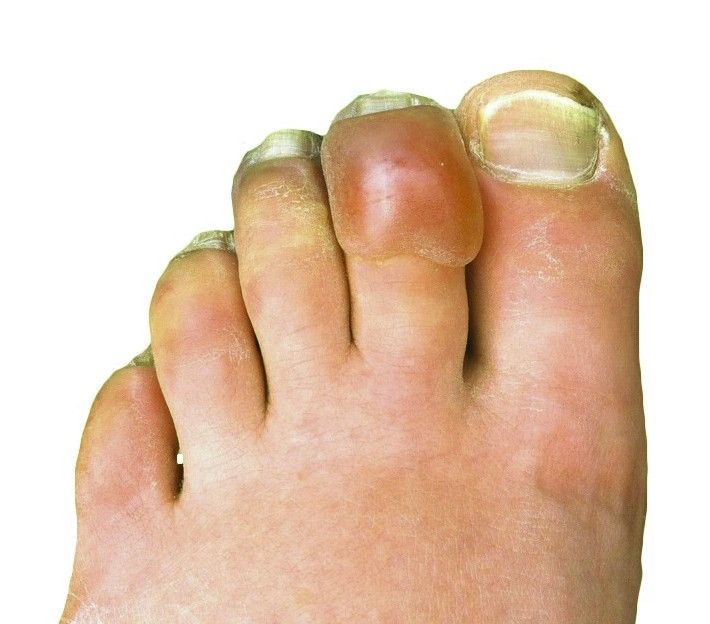
Deep frostbite of the toes: do not thaw it in the field Snow blindnesssnow blindness Sunburn of the eyes from light bouncing off snow. Gritty, painful, teary eyes and a headache that gets worse in light. Sunglasses or slit goggles prevent it. and sunburn are cold injuries too. Wear sunglasses, or cut slits in cardboard, bark or thin wood and put soot under your eyes. Apply sunburn cream and lip salve; sun reflects off snow even when the air is below freezing. Snow blindness is eye damage from the sun's ultravioletultraviolet An invisible part of sunlight that burns skin and eyes. Snow and water bounce it back at you. rays bouncing off snow; it feels like grit in your eyes, with pain and tears. Narrow eye slits cut down the light. Lips, nose and eyelids burn easily on snow, even on freezing days.
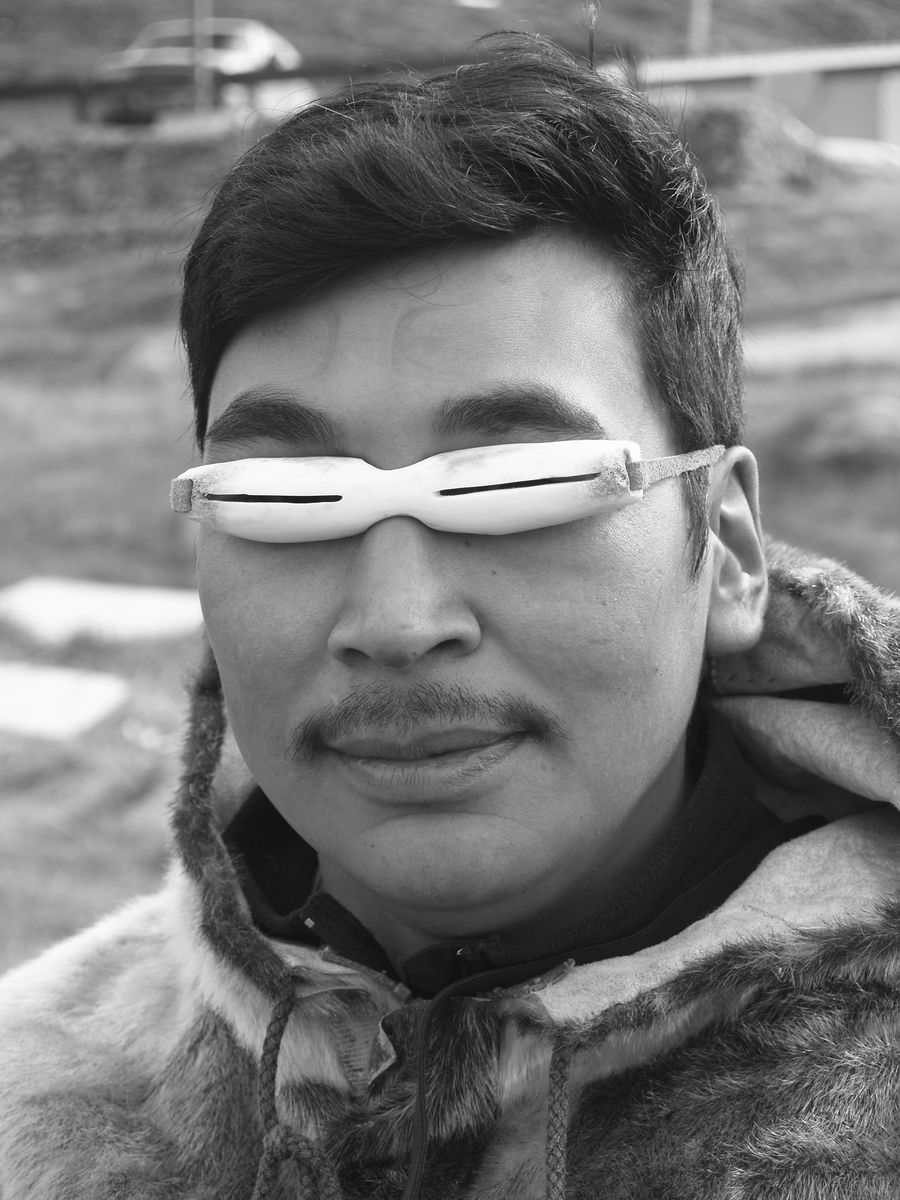
Slit goggles cut the glare that causes snow blindness Trench foottrench foot Damage from wet feet at temperatures just above freezing for hours or days. Pins and needles, numbness, then swelling and pain. Dry socks prevent it. comes from wet feet above freezing for hours or days. Pins and needles, numbness, then pain and swelling. Keep feet dry, carry spare socks in a waterproof packet, dry socks against your body, and change them daily. Trench foot happens in cold, wet weather that is above freezing, about 32 to 50 degrees F (0 to 10 degrees C), when feet stay wet for hours or days. It does not hurt at first, so you have to prevent it on purpose. Dry, warm socks every day are the fix.
Tips from survival instructors
- Check each other's faces in the cold. A white or gray patch on a nose or cheek is frostnip, and the person often cannot feel it.
- Never rub frostbitten skin or rub snow on it. Warm it gently against warm skin, like an armpit or belly.
Common mistakes
- Rubbing a frostbitten spot or rubbing it with snow. Fix: never rub; warm light frostbite with body heat only.
- Warming numb hands or feet at a fire or stove. Fix: use armpits, warm hands or a buddy's belly instead.
- Thawing deep frostbite in the field when it could refreeze. Fix: protect it, keep the person warm and get to medical care by the fastest means.
- Going alone and not checking your face. Fix: use the buddy system, or cover your nose and lower face with a mitten now and then.
- Wearing tight boots or wet socks. Fix: loose footgear and dry socks, changed whenever they get damp.
- Ignoring the sun on snow. Fix: sunglasses or slit goggles, sunscreen and lip balm.
Practice it safely
Learn this at home, before you need it. Practice the warming moves with a partner: hands over cheeks, fingers in armpits, and say out loud the never-do list: no rubbing, no snow, no fire, no slapping, no cold water. Make a pair of slit goggles from cardboard and try them on a bright day.
On cold, windy days outside, play buddy check with your family: every so often, look at each other's noses, cheeks and ears for white or gray spots, and wiggle your toes and fingers. Never expose skin to the cold on purpose to test it. If anyone does get frostbite, get them out of the cold and call 911 if you have signal.
Quick check
Deep frostbite and help is a day away. What do you do?
- Thaw it by the fire now
- Do not thaw it; protect it and get to medical care
- Rub it until feeling returns
Show the answer
Do not thaw it; protect it and get to medical care
Take the quiz and earn the badge
The app checks your answers, keeps your place in the Cold and weather, and works with no signal once saved.
Before you rely on thisA learning tool, not a replacement for training. In an emergency, call 911.
Sources
- Army Cold Weather Manual, chapter 3 pages 24 to 26 (cold injury: frostbite, trench foot) and appendix G pages 2 to 3 (health and first aid)
- US Army Survival Manual, pages 194 to 196 (frostbite, trench foot, sunburn, snow blindness)
- Army First Aid Manual, pages 151 to 155 (cold injury signs and treatment)
- Military Survival and Rescue Guide, page 50 (frostnip and frostbite)
- Army Cold Weather Manual, chapter 3 pages 24 to 26 (beards mask frostbite, frostbite signs, prevention, superficial or deep, field treatment, do not thaw deep frostbite, trench foot 32 to 50 degrees F)
- Army Cold Weather Manual, appendix G pages 2 to 3 (buddy system, check more often as windchill rises, frostbite of the feet needs a litter, do not rub with snow)
- US Army Survival Manual, pages 194 to 196 (frostbite, buddy checks and mitten, face, ears, hands and feet, trench foot, sunburn, snow blindness, slit goggles)
- Army First Aid Manual, pages 151 to 155 (signs on light and dark skin, blisters after rewarming, body-heat rewarming, what never to do, do not thaw feet before walking)
- Military Survival and Rescue Guide, page 50 (frostnip rewarms in 15 to 20 minutes, do not rub, do not thaw)