Poisonous plant
Wild parsnip: the yellow roadside plant that burns skin
Wild parsnip lines roadsides, ditches and old fields over much of the US. Brushing it on a sunny day can leave stinging burns and long-lasting dark streaks on the skin.
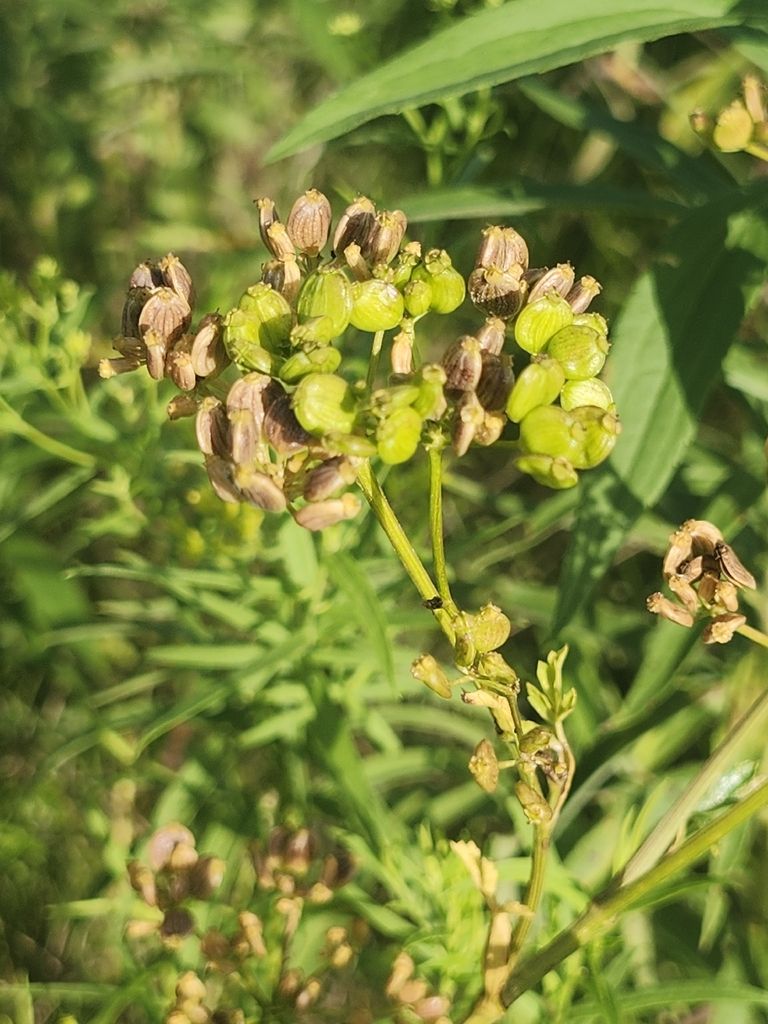
How to tell it
- Usually 2 to 5 feet tall in its flowering year.
- Flat-topped umbrella clusters of small yellow flowers in early to mid summer.
- Hairless, grooved stem.
- Leaves made of several toothed leaflets in pairs along a central stalk.
Where you find it
A plant from Europe and Asia that has spread widely across North America. Look in sunny, disturbed ground: road edges, ditches, fence lines, old pastures and trailheads.
Scientific name: Pastinaca sativa
Look-alikes
A smaller native wildflower, under 3 feet, with yellow flowers in early spring and leaves split into threes.
These have white flowers. Yellow flowers are one of the easiest ways to recognize it.
Why it is dangerous
Like giant hogweed, the sap makes skin burn in sunlight. Burns often show up as blisters in streaks where the stems brushed past, then turn into brown marks that can last for months. Mowing and string trimming spread the sap. Do not try it as food either: the survival manual warns that people have died after mistaking deadly poison hemlock for this plant.
What to do
- Wash the skin with soap and water as soon as possible.
- Cover the area and keep it out of sunlight for a couple of days.
- Cool compresses help the sting. See a doctor for large blisters or burns near the eyes.
- Wear long sleeves, long pants and gloves when working near it, and wash clothes afterward.
The free app reads your photo, names the likely match, shows its look-alikes, and tells you what has been seen near your ZIP code.
Sources
Written in our own words from these public sources.