Poisonous plant
Water hemlock: the most toxic native plant in North America
CDC calls it the most toxic native plant in North America. It grows with its roots in wet ground, and a single bite of the root has killed foragers who thought they had found an edible plant.
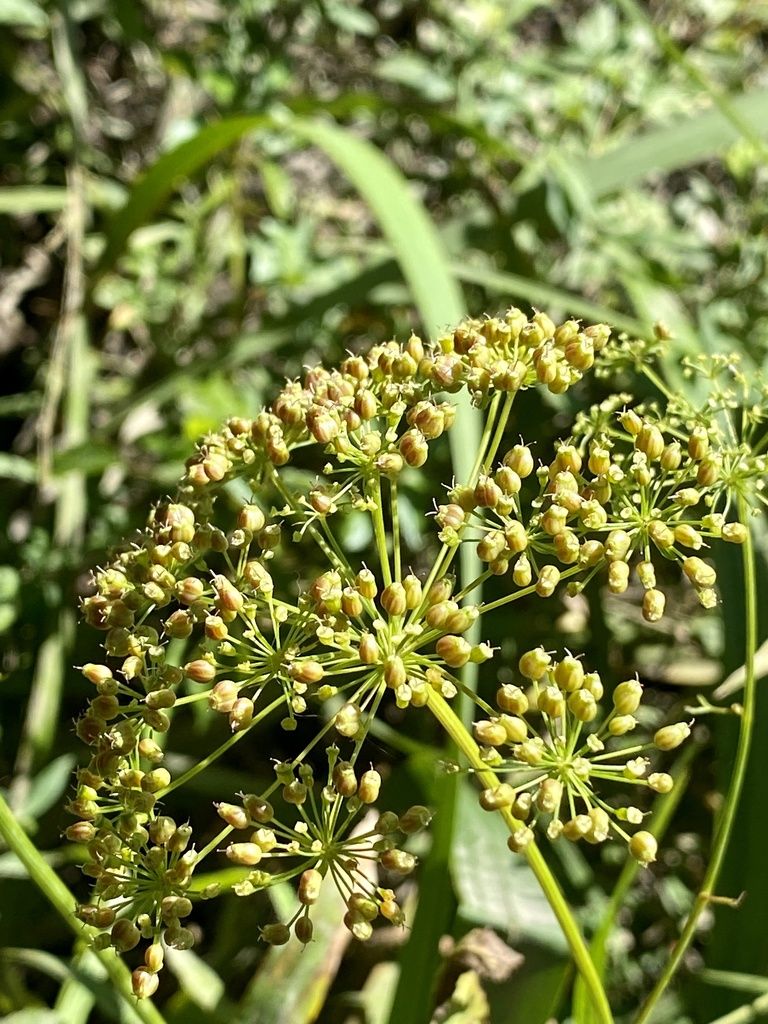
How to tell it
- Usually 3 to 6 feet tall, always in wet places: stream banks, marshes, wet meadows and ditches.
- Smooth, hollow stem, often streaked or blotched with purple.
- Leaves divided two or three times into narrow, toothed leaflets.
- Small white flowers in umbrella-shaped clusters.
- A cluster of thick roots at the base. Cut lengthwise, the base shows hollow chambers and may ooze a yellowish, oily liquid. Do not cut one without gloves.
Where you find it
Native and widespread across most of the US and Canada, wherever the ground stays wet.
Scientific name: Cicuta maculata
Look-alikes
Also deadly. It has a musty smell and grows in drier ground, without the cluster of thick roots.
All in the same family. Any white-flowered, carrot-like plant growing in wet ground should be treated as water hemlock.
Why it is dangerous
In 1992 CDC reported two brothers in Maine who ate the root while looking for wild ginseng. One began having seizures within 30 minutes and died about three hours later. There is no antidote; doctors can only treat the seizures. The cold-weather survival handbook names it as one of the world's most poisonous plants.
What to do
- If anyone may have eaten any part, call 911. Seizures can start within minutes.
- If the person is having a seizure, move hard objects away and do not put anything in their mouth.
- Bring a photo or a bagged sample of the plant, handled with gloves.
- Wash any sap off skin with soap and water.
The free app reads your photo, names the likely match, shows its look-alikes, and tells you what has been seen near your ZIP code.
Sources
- US Army Survival Manual, pages 141 and 438
- Soldier's Handbook for Individual Operations and Survival in Cold-Weather Areas, page 68
- CDC MMWR: Water hemlock poisoning, Maine, 1992
- US Fish and Wildlife Service: Don't touch these plants!
Written in our own words from these public sources.