Dangerous animal
Spider identification: black widows, brown recluses and the harmless rest
Only two groups of US spiders are a real medical worry: widows and recluses. Most spiders people find are harmless, and many sores blamed on spiders turn out to be something else. Knowing the two that matter helps you stay calm and act right.
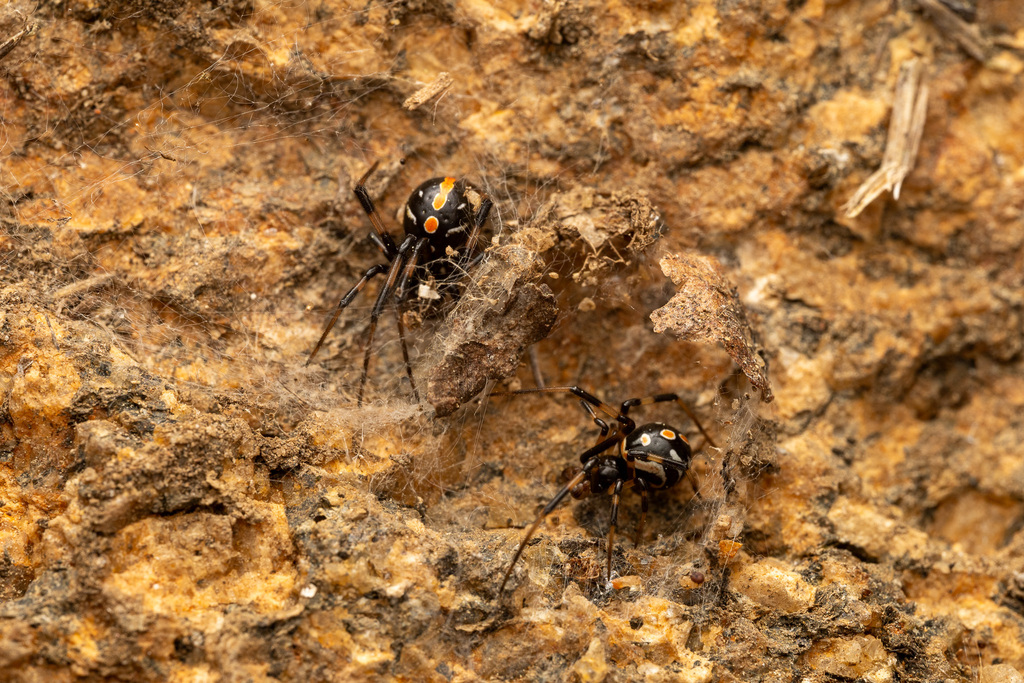
How to tell it
- Black widow: shiny black female with a round belly and a red hourglass underneath, about 1.5 inches across with legs.
- Black widow webs are messy and tangled, low to the ground in sheds, woodpiles, outdoor furniture, meter boxes and crawl spaces.
- Brown recluse: tan to brown with a darker violin shape on its back, the neck of the violin pointing toward the rear.
- Brown recluse: six eyes in three pairs (most spiders have eight) and plain legs with no bands or spines.
Where you find it
Widows live in every state except Alaska. Brown recluses live mainly in the south-central and Midwest states, from Nebraska and Indiana south to Texas and Georgia, hiding in closets, boxes, attics and unused shoes.
Scientific name: Latrodectus and Loxosceles
Look-alikes
Similar round, dark bodies but no clear red hourglass. Their bites are mild.
Brown and fast, but with banded or hairy legs and eight eyes in a different pattern. They are not recluses.
Very long, thin legs and tiny bodies, in loose webs in basements. Harmless.
Why it is dangerous
A black widow bite can bring muscle pain and cramps that spread to the belly or chest, sweating and nausea. A brown recluse bite can turn into a sore that breaks down and heals slowly. Children, older adults and people with heart problems are at the most risk.
What to do
- Wash the bite with soap and water and put a cool, wet cloth or wrapped ice on it.
- Raise the bitten arm or leg if you can.
- Get medical care right away for spreading pain, cramps, trouble breathing, or a sore that grows or darkens.
- If it is safe, catch the spider in a jar for the doctor. Do not handle it.
- Shake out gloves, boots and clothing that sat in sheds or closets, and wear gloves when moving wood or boxes.
The free app reads your photo, names the likely match, shows its look-alikes, and tells you what has been seen near your ZIP code.
Sources
Written in our own words from these public sources.