Food guide
Beechnuts, chestnuts, walnuts and hazelnuts: find, pick and prepare
These nuts are full of oil, so a small pile feeds you a lot, and none of them need soaking like acorns do.
Page numbers below are from the US Army Survival Manual (FM 21-76) unless another source is named. Each one opens that page.
On private land, ask the owner first. Some state parks let you pick fruit, nuts and mushrooms for your own use. Many state nature preserves ban picking anything. City, county and national parks set their own rules, so check the rules of the park you are in.
Ways to find and pick it
Look under big beech trees with smooth, light-gray bark. In fall the prickly husks open and small, three-sided brown nuts drop out. Pick them off the ground.
p. 329Ripe chestnuts fall in autumn inside spiny burs. Green, unripe ones can be eaten too. Most wild American chestnut trees died of a disease long ago, so the chestnuts you find in many states are usually planted trees (general knowledge, not the manual).
p. 341Black walnut trees are common in many states. In fall they drop round nuts the size of a tennis ball inside a thick green husk. Gather them off the ground under the tree.
pp. 404 to 405Hazelnuts grow on bushes 2 to 4 meters (6 to 12 feet) tall in thickets along streams and open edges, not deep forest. Each nut sits in a bristly husk that narrows into a long neck. Pick them in autumn.
p. 357Clean and prepare it, step by step
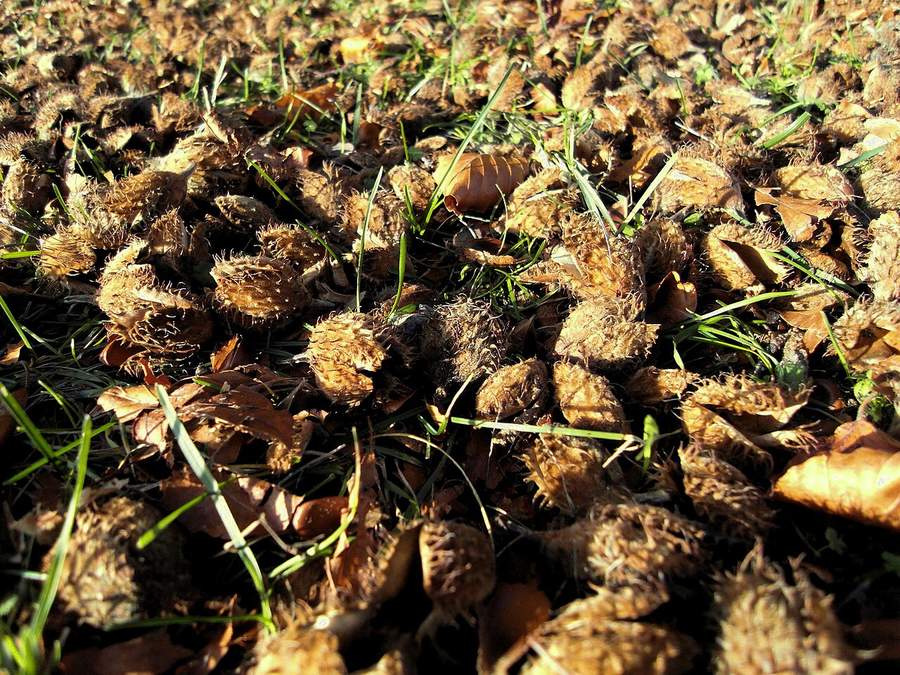
Sort what you gathered. Throw away nuts with holes, mold, or that feel light and empty.
p. 127Beechnuts: break the thin shell with your fingernail and take out the sweet white kernel.
p. 329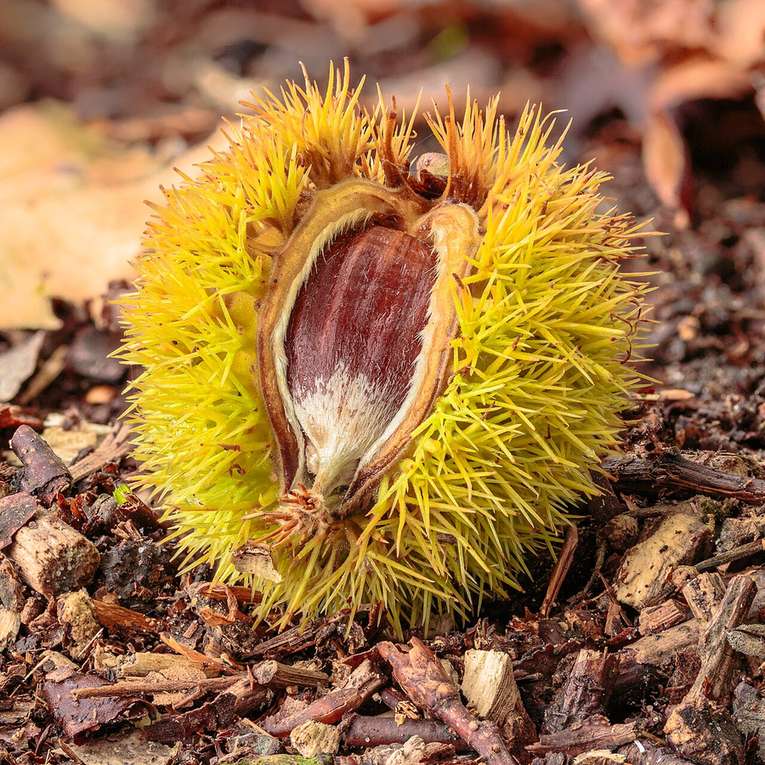
Chestnuts: step on the spiny bur with your boot heel, or wear gloves, to open it and pull out the shiny brown nuts (general knowledge, not the manual).
p. 341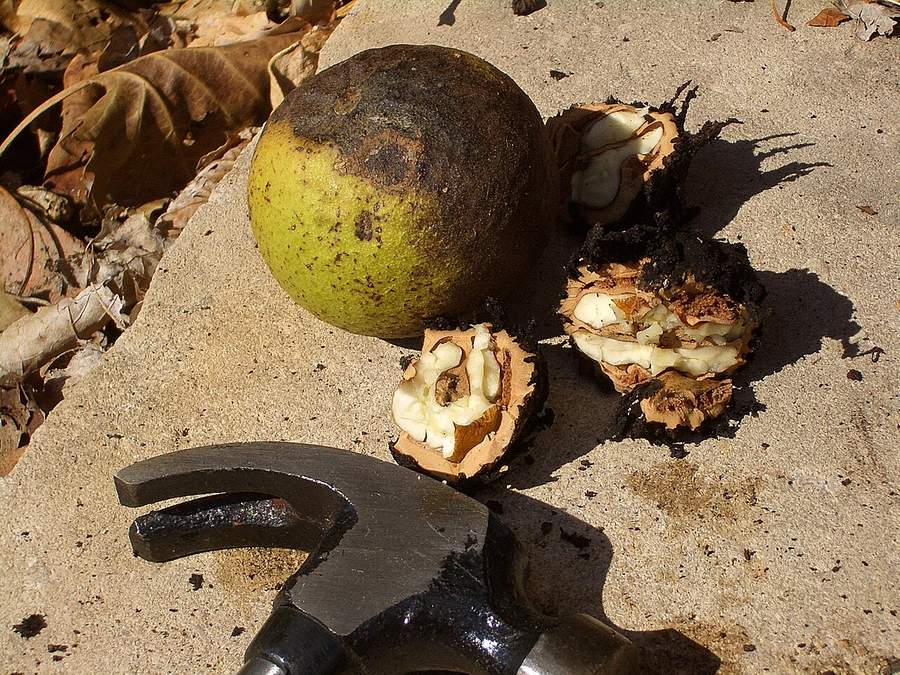
Walnuts: peel or stomp off the thick green or black outer husk first. Wear gloves: the husk stains skin and clothes dark brown for days (the manual uses it as a dye).
p. 405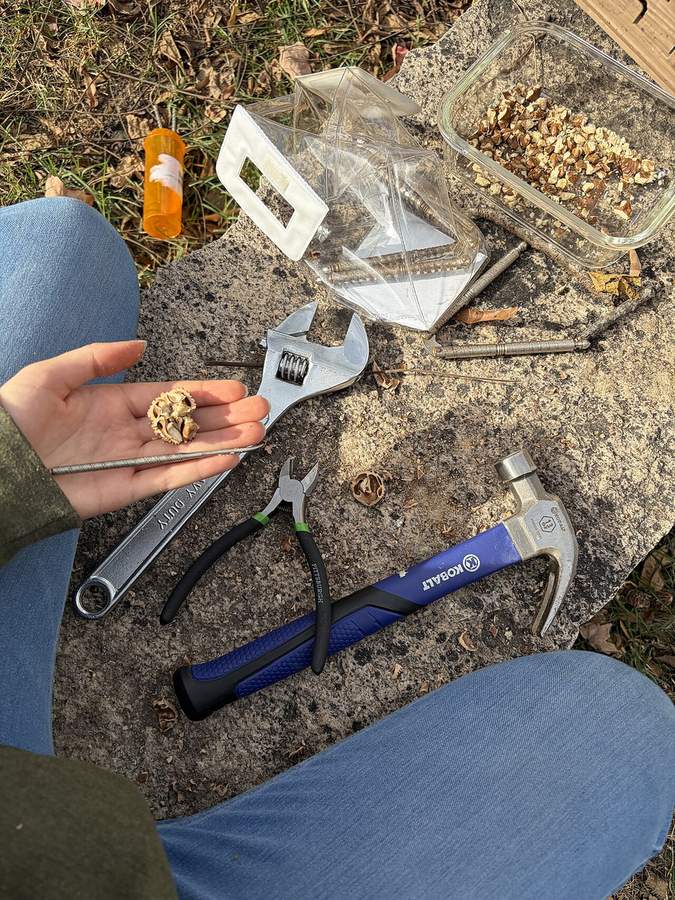
Set the hard walnut shell on a flat rock and crack it with another rock or a hammer. Pick the meat out with a nail or a thin stick.
p. 405Hazelnuts: pull off the bristly husk and crack the shell between two stones.
p. 357To keep nuts, dry them in a warm, airy spot. The manual calls dried hazelnuts extremely delicious.
p. 357
Cook or eat it, step by step
Beechnuts, hazelnuts and walnuts can be eaten raw, right out of the shell.
Military Survival and Rescue Guide, page 87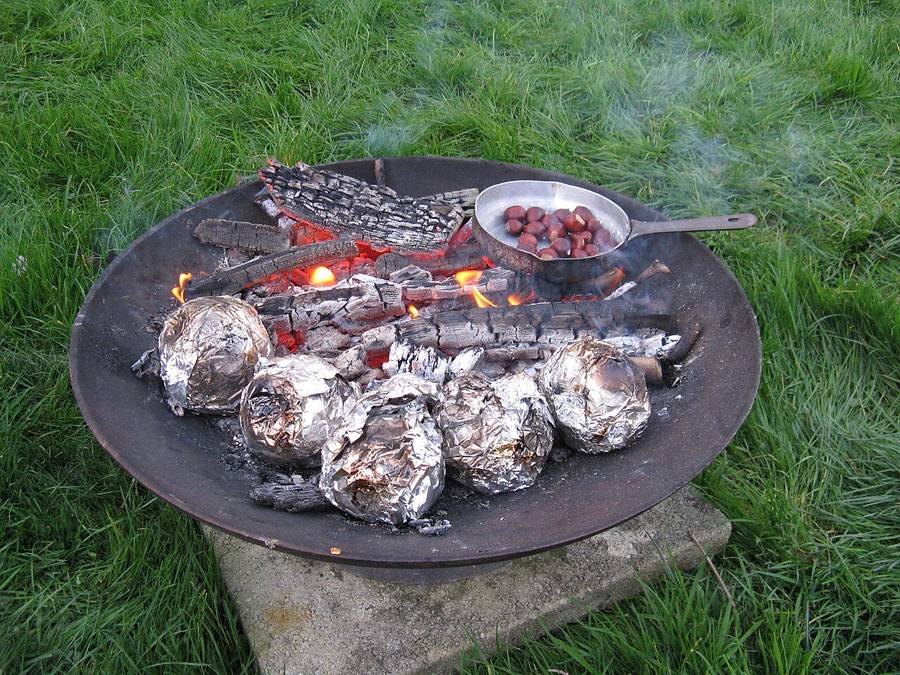
Roast chestnuts in the hot embers of a fire. Cut a small slit in each shell first so it does not burst (the slit is general knowledge, not the manual).
p. 341Or take the shells off chestnuts, boil the kernels until soft, and mash them like potatoes.
p. 341Roast any shelled nuts by shaking them in a can with a few hot coals.
Military Survival and Rescue Guide, page 88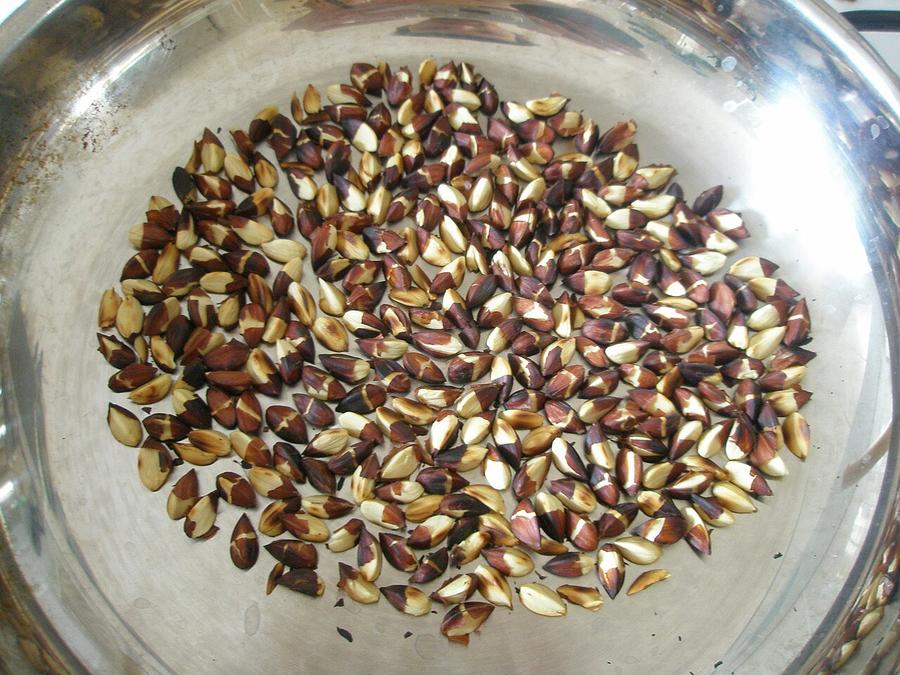
Beechnut coffee: roast the kernels until golden brown and hard, crush them, and boil or steep them in hot water.
p. 329
Stay safe
- Be 100% sure of the tree. Buckeye and horse chestnut nuts look like chestnuts but are poisonous. A real chestnut bur is covered in long, sharp needles and its nuts have a pointed tip; a buckeye husk is leathery with a few short bumps and holds a round, shiny nut with a pale spot (general food safety, not the manual). p. 127
- Never eat walnut husks. Crushed green black walnut husks are strong enough to poison fish, the manual says. p. 405
- The manual's Universal Edibility Test is only for an emergency when you cannot name a plant at all. It tests one part of one plant at a time and takes more than 24 hours for each part. It is not a shortcut, and it never works for mushrooms. pp. 128 to 131
- This app's photo reader never tells you a plant in your photo is safe to eat. Check the plant in person, from every side, with a field guide or someone who knows it. p. 137
The app shows what has been seen near your ZIP code, with photos, and can read a photo you take.