Stay put once you know you are lost. Searchers look where you were last seen. Two survival handbooks say to stay with your vehicle or aircraft when you can, because somebody likely knows where it was going. Leave only if you are sure where you are and how to get somewhere better, or you are certain rescue is not coming. Before any trip, tell someone your destination and route, so they know where to send searchers.
Signals and rescue · First hour lost course
Get found
Why this matters
Being found is how most people get home. The manuals put signaling near the top of the list because rescuers have to notice you first, then understand that you need help. Big shapes, bright contrastcontrast How much something stands out from what is behind it: dark on light, bright color on green, straight lines in a natural place., fire and flashes of light get attention. A pattern of three tells people it is a call for help.
Signals only work if they are ready when someone is close. A plane or a search team can pass in a minute. That is why the manual says to build signalsignal Anything in threes means help: three fires, three whistle blasts, three piles of rocks. fires early and protect them until you need them, and to have both a visual signal (something seen) and an audio signal (something heard) ready at all times.
What you need
- With no gear at all: your voice, rocks, sticks, brush, snow or clothing to make shapes on the ground, and a fire if fires are legal and safe where you are.
- Better if you have them: a whistle, a signal mirror or any shiny object, bright clothing or a bright cloth, and a flashlight.
Step by step
Three of anything means help: three fires, three whistle blasts, three piles of rocks. This is the international distress signal: a set of three tells people you need help. The manual uses three fires, three columns of smoke, and three shots spaced apart. The MWTC handbook gives the whistle distress call as six blasts in a minute, which a rescuer answers with three. Either way, a repeated pattern stands out from normal noise.
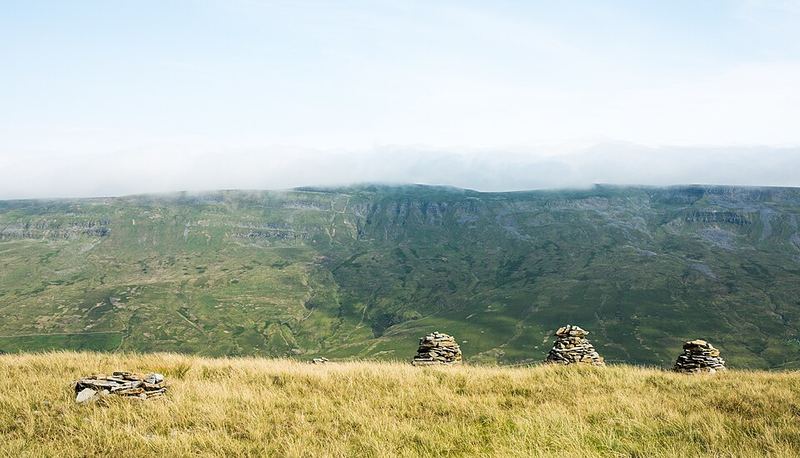
Three piles of rocks mean help 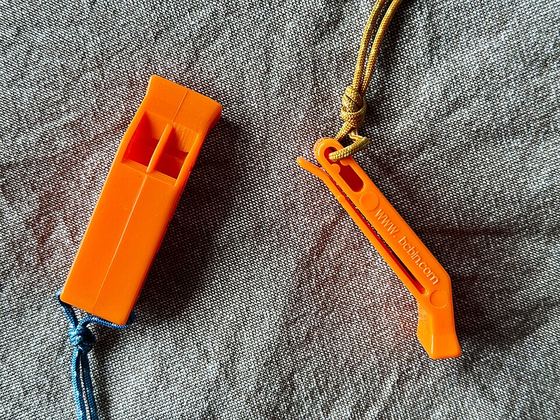
A whistle carries farther than your voice. Blow three times At night, fire is the best signal. Three fires in a triangle, about 25 meters apart. The manual says fire is the best visual signal in the dark. About 25 meters is roughly 80 feet. If you are alone and three fires are too much work, keep one signal fire going. On snow, build the fire on a platform so melting snow does not put it out.
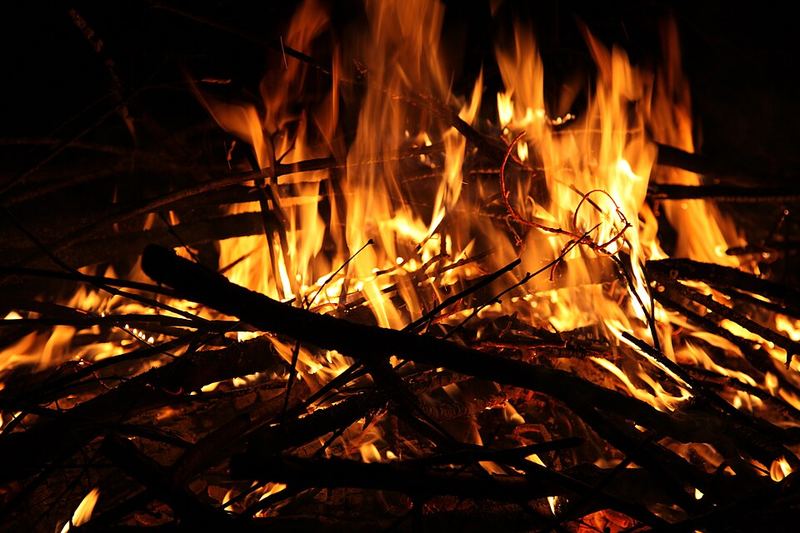
At night a bright fire is the best signal In the day, use an open spot: a clearing, a road, a field. Bright colors help. Rescuers in the air look for things that do not look natural: straight lines, sharp corners, circles, triangles and X shapes, and strong contrast in color or shadow. Pick the biggest clear, flat area on the highest ground you can reach. Spread bright clothing in a large shape, and on a sunny day a mirror is the best signal you have.
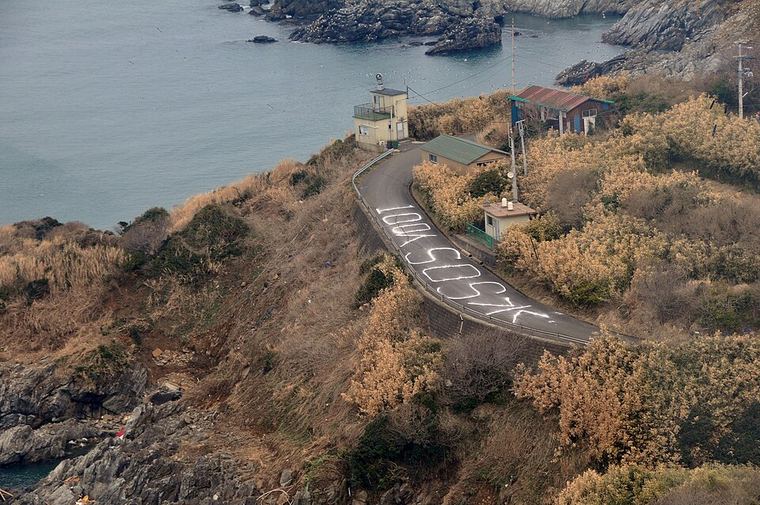
Big letters on open ground can be seen from the air 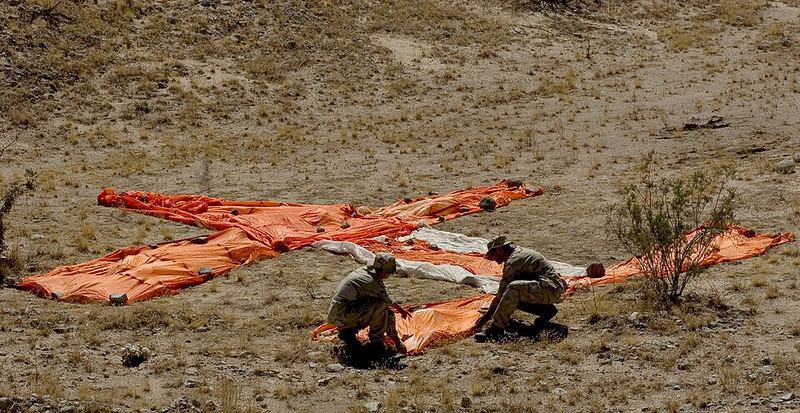
Bright cloth spread on open ground catches a pilot's eye
Tips from survival instructors
- Three of anything, three fires, three whistle blasts or three flashes, is the signal for help almost everywhere.
- Get your signals ready before you hear an aircraft. A plane passes over in seconds, and you will not have time to build anything then.
Common mistakes
- Wandering away from where you were last seen. The fix: stay put, especially near a vehicle, and make yourself easy to find there.
- Building a signal fire under thick trees, where the leavesdebris Dry leaves, pine needles, grass and ferns. Piled deep they trap still air, which is what keeps you warm. hide it. The fix: use a natural clearing or the edge of a stream, and on snow build a platform under it.
- Waiting until you hear a plane to start. The fix: build and protect signal fires and ground shapes early so they are ready in seconds.
- Making ground signals too small or the same color as the ground. The fix: the manual says make each symbol at least 1 meter wide and 6 meters long (about 3 feet by 20 feet) and use materials that contrast strongly with the ground.
- Smoke on a windy or snowy day. The manual says smoke works only on fairly calm, clear days, because wind, rain and snow spread it out. Use a mirror, bright shapes or fire instead.
- Flashing a mirror fast or holding the flash on the cockpit. The manual warns a pilot can mistake rapid flashes for gunfire, and a beam held on the cockpit for more than a few seconds can blind the pilot.
Practice it safely
In a yard or a park, lay out a big X or a triangle with light-colored sheets or towels on dark grass, then look at it from a window or a hill to see how much size and contrast matter. Practice aiming a mirror at a fixed spot on a fence or wall, never at people, cars or aircraft. Try your whistle in an open field and notice how far it carries; the manual says a whistle has been heard up to 1.6 kilometers (about 1 mile) away in some cases.
Practice building a signal fire only where fires are allowed, such as a campground fire ring, with water nearby. Do not light three fires for practice where someone could think it is a real call for help, and put every fire out cold before you leave: drown it, stir it, and feel for heat.
Quick check
What does three of anything mean?
- I am fine
- I need help
- Food here
Show the answer
I need help
Take the quiz and earn the badge
The app checks your answers, keeps your place in the First hour lost, and works with no signal once saved.
Before you rely on thisA learning tool, not a replacement for training. In an emergency, call 911.
Sources
- US Army Survival Manual, pages 259 to 260
- US Army Survival Manual, pages 259 to 262 and 266 to 267 (attention-getters, site, signal fires, smoke, clothing, natural materials, whistles, gunshots, ground-to-air code size)
- US Army Survival Manual, pages 263 to 264 (mirror, pilot cautions, 160 kilometers)
- Military Survival and Rescue Guide, page 15 (stay with the vehicle; leave information at your starting point) and pages 33 to 35 (pattern signals: size, shape, contrast; fire at night, smoke by day)
- Marine Corps Winter Survival Handbook, page 07-1 (stay with the aircraft or vehicle)
- Marine Corps Winter Survival Handbook