Poisonous plant
Poison ivy identification: leaves, vines and what to do after touching it
Poison ivy grows in almost every state and causes more rashes than any other plant in the US. It can be a low plant, a shrub, or a hairy vine climbing a tree, so the leaves are only part of the story.
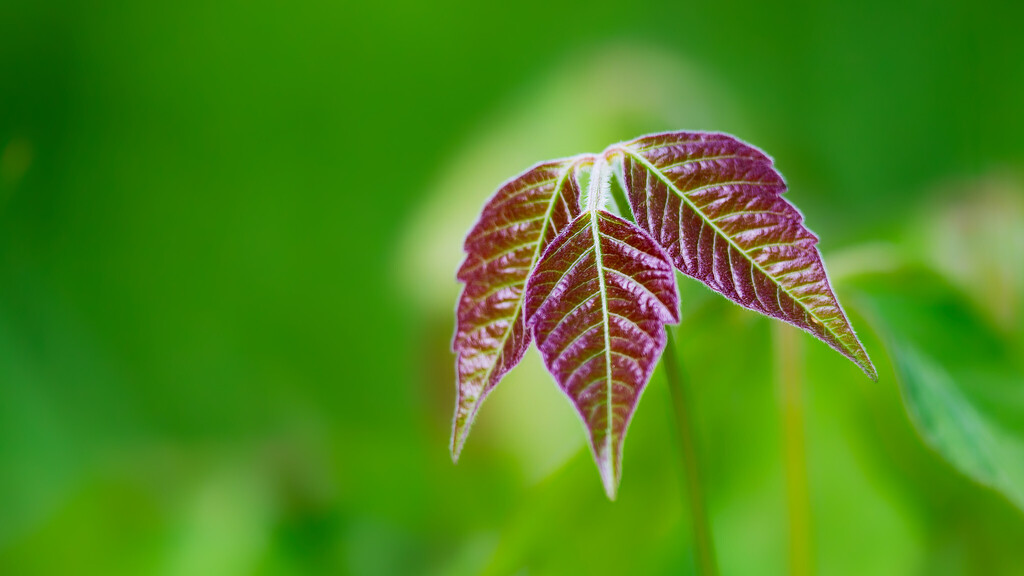
How to tell it
- Three leaflets on each leaf stem. The middle leaflet has a longer stalk than the two side ones.
- Leaflet edges can be smooth, toothed or lobed, and leaves can be shiny or dull. They often turn red in early spring and in fall.
- On trees, the vine is covered in brown, hairy rootlets that make it look like a fuzzy rope.
- Clusters of small, waxy, whitish berries in late summer and winter.
Where you find it
In woods, along trails and fences, at the edges of yards and fields, and on riverbanks, in every state except Alaska and Hawaii. A shrubby kind grows in the northern states and the mountains of the West.
Scientific name: Toxicodendron radicans and T. rydbergii
Look-alikes
Five leaflets spreading from one point like a hand, not three. It does not carry the rash oil, though its berries are poisonous.
Also three leaflets, but the leaves grow in pairs across from each other on the stem. Its leaves take turns up the stem.
Often three leaflets, but the stems have thorns. Poison ivy has none.
Why it is dangerous
The oil, urushiol, is in the leaves, stems, roots and berries all year, even on bare winter vines. CDC NIOSH says less than a grain of salt is enough to cause a rash in most people. It sticks to clothes, tools and pet fur, and smoke from burning it can harm the lungs.
What to do
- Wash the skin as soon as you can with rubbing alcohol, a poison plant wash, or dish soap and plenty of cool water.
- Scrub under your fingernails, then wash clothes, gloves, tools and pets that touched it.
- Ease the itch with cool, wet cloths, calamine lotion or hydrocortisone cream. Do not scratch the blisters open.
- Get medical care for a rash on the face, eyes or genitals, or one that covers much of the body.
- Call 911 for swelling of the face or throat or any trouble breathing, especially after breathing smoke from burning plants.
The free app reads your photo, names the likely match, shows its look-alikes, and tells you what has been seen near your ZIP code.
Sources
- CDC NIOSH: Poisonous Plants and Work
- NC State Extension Plant Toolbox: Poison ivy
- US Army Survival Manual, page 140
Written in our own words from these public sources.