Animal sign
Bear scat: what bear poop looks like and what it tells you
Black bears live in most US states, and their droppings are the sign hikers find most often. Bear scat changes with the season, so knowing what bears eat helps you read it.
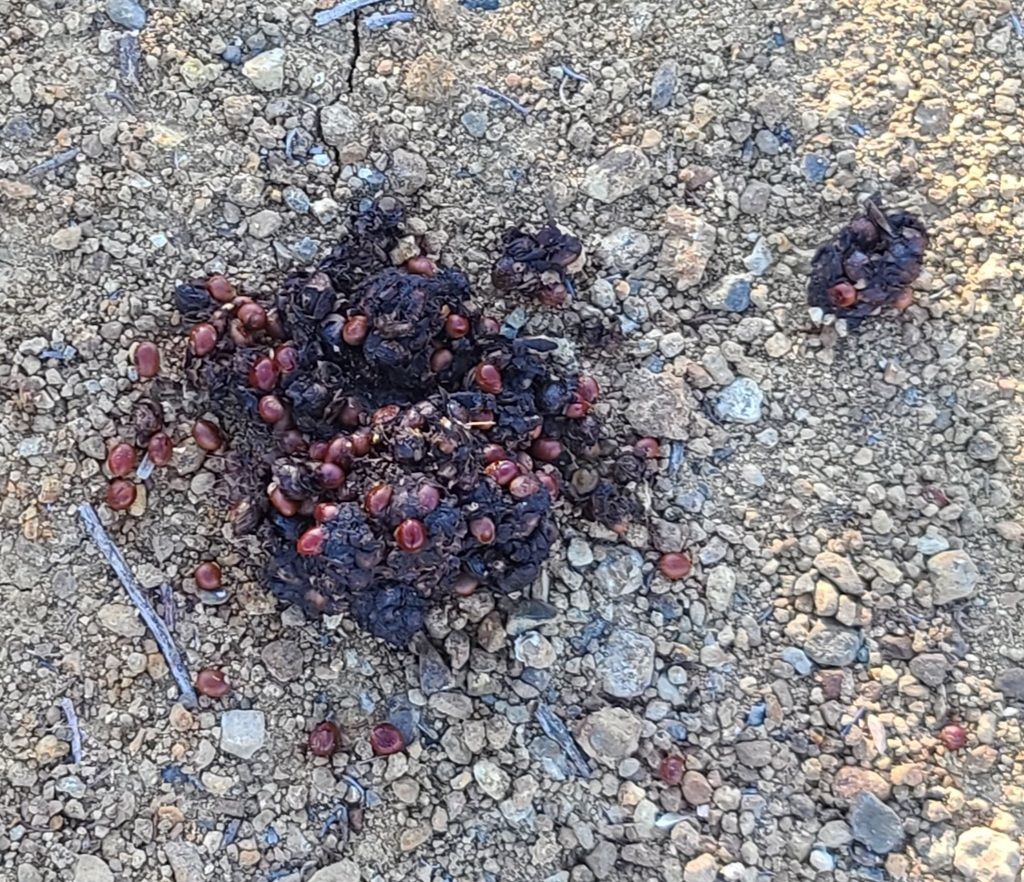
How to tell it
- Big: larger than any coyote, raccoon or bobcat dropping, usually in a thick tube or a heap.
- Spring: green and tube-shaped, full of grass, since bears eat lots of grass and insects then.
- Late summer and fall: looser piles packed with berries, seeds, apple pieces or nut shells.
- Can also hold hair, insect parts or bits of bone from carcasses.
Where you find it
Black bears range from Florida to Alaska and across the mountains and forests of the West, Northeast, Great Lakes and Appalachians. Grizzlies live in parts of the Northern Rockies and Alaska.
Scientific name: Ursus americanus
Look-alikes
Smaller, rope-like and twisted, often with hair and bone.
Smaller tubes left in piles at the same spot again and again.
Firm, segmented pieces that do not flatten when stepped on, often partly covered with scratched dirt.
What it tells you
Fresh, moist scat means a bear has been there recently, maybe within hours. It tells you to make noise as you walk, keep children close, keep dogs leashed, and store food and trash where bears cannot reach them. Do not run if you see a bear. Back away slowly and give it room.
What to do
- Do not touch it. Take a photo with a boot or stick for size.
- Check whether it looks wet and fresh. If so, consider a different trail or turn back.
- At camp, cook and store food away from tents, and follow local food-storage rules.
- Carry bear spray where park rangers recommend it, and know how to use it.
The free app reads your photo, names the likely match, shows its look-alikes, and tells you what has been seen near your ZIP code.
Sources
- National Park Service, Yosemite: The scoop on bear poop
- National Park Service: Hiking in bear country
Written in our own words from these public sources.